





Cornish Harbour Scene Artwork
Cornish harbour scene artwork captures the enduring charm of coastal fishing communities through the eyes of artists drawn to the rugged southwest peninsula.
Cornish Harbour Scene Artwork
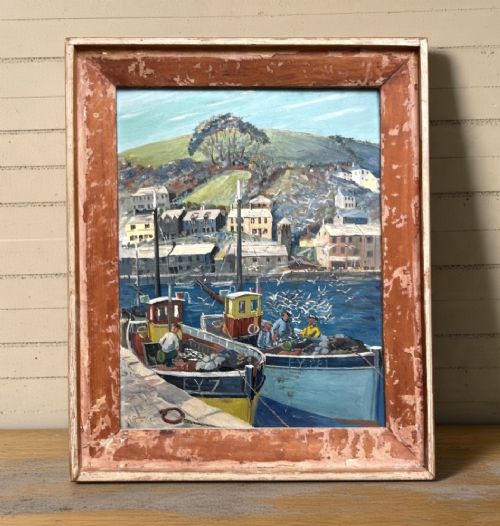
Cornish harbour scene artwork depicts maritime life, fishing vessels, and coastal topography across the fishing ports and villages of Cornwall, including St Ives, Newlyn, Mousehole, and Polperro. These pieces record the daily routines of fisherfolk, bustling quaysides, and tidal harbours against the dramatic light of the Atlantic coast.
The selections available here span from the late nineteenth century through to the mid-twentieth century, capturing shifts in artistic approach from Victorian fine art to Modern British and impressionistic styles. Watercolours on paper and oil paintings on canvas form the core of what collectors encounter in this genre.
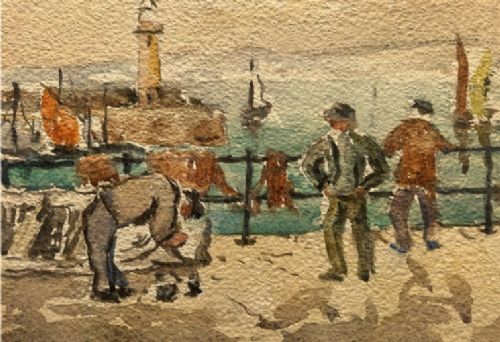
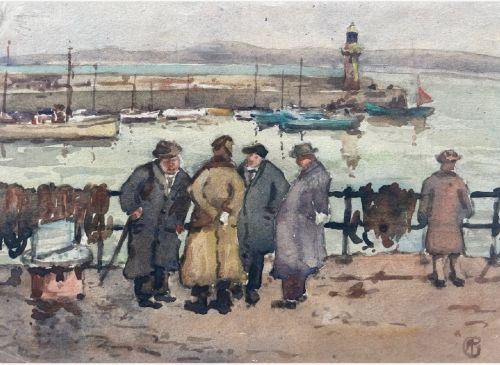
Works range from intimate watercolours recording specific moments like mending nets to larger oil paintings on canvas framing panoramic views of trawling luggers and harbour walls. Each piece serves as a historical document of maritime heritage alongside its aesthetic value.
Materials and techniques
Artists working along the Cornish coast relied upon watercolour pigment applied to paper or oil paint laid onto canvas and wood panels. Watercolours allowed for rapid outdoor sketching to capture changing coastal light, while oil paint offered richer textures for depicting heavy seas and weathered stone quays.
Pintings were characteristically housed in timber frames, sometimes protected beneath glass in the case of works on paper and pastels. The combination of traditional pigments and canvas supports ensured these coastal records survived decades of exposure to maritime environments.
Cornish Harbour Scene Artwork Retail Price Guide 2026
Typical asking prices for cornish harbour scene artwork among the pieces listed under this phrase on Sellingantiques today, from the lower quarter to the upper quarter. They describe what is for sale here now, not the wider market.
Overcoats appear frequently in early twentieth-century harbour scenes, proving that even artists valued warmth while painting breezy Cornish quaysides.
Assessing quality
The strength of a piece rests upon the artist's command of light and atmosphere, distinguishing evocative coastal impressions from routine topographical illustration. Brushwork that successfully conveys the movement of water and the weight of fishing vessels separates finer compositions from simpler records.
Provenance and documentation elevate certain works, particularly when signed by established practitioners associated with regional artistic centres such as the Newlyn School or St Ives. The preservation of the medium, whether watercolour pigment or oil paint, maintains the visual impact intended by the artist.
George F Pennington·William Banks Fortescue·Richard Harry Carter·Gyrth Russell·George Turland Goosey·Ernest F Hill·Frederick Stuart Richardson·Ralph Todd·Jack R Mould·William Lee Hankey·Walter Sweet·William Edward Webb
The Cornish Harbour Scene Artwork Glossary
- Watercolour
- A paint consisting of pigment suspended in a water-based solution, traditionally applied to paper. This medium was favoured by artists for capturing transient effects of coastal light.
- Oil paint
- A slow-drying paint made by mixing pigments with a drying oil, typically applied to canvas or wood. It allows for deep colour saturation and textured brushwork.
- Newlyn School
- An art colony established in the late nineteenth century in the Cornish fishing village of Newlyn. Artists focused on plein-air painting of local life and maritime subjects.
- Canvas
- A heavy woven fabric stretched across a wooden frame to serve as a durable support for oil paintings. It provides a textured surface that interacts with layered paint strokes.
- Trawling lugger
- A traditional two-masted fishing boat common in West Country waters during the nineteenth and early twentieth centuries. These vessels frequently feature as focal points in maritime scenes.
Cornish Harbour Scene Artwork: Frequently Asked Questions
What periods do these paintings date from?
The works span from the late nineteenth century through the Edwardian era and into the mid-twentieth century. This timeline covers key movements including Victorian fine art and Modern British developments.
Earlier examples often reflect traditional marine art conventions, whilst mid-century pieces lean towards impressionistic interpretations of the same coastal subject matter.
Where were these scenes typically painted?
Artists focused heavily on specific Cornish fishing ports renowned for their colonies and striking topography, particularly St Ives, Newlyn, Mousehole, Polperro, and Mevagissey. These locations offered bustling quays and dramatic tidal variations.
Depicting local activities like mending nets and trawling provided authentic narratives for visiting and resident painters alike.
How should works on paper be displayed?
Watercolours and pastel drawings require framing beneath glass to protect the paper and pigment from dust, moisture, and handling. Direct sunlight should be avoided to prevent fading of delicate watercolours.
Maintaining stable environmental conditions ensures the paper support and pigments remain preserved for the long term.
What distinguishes oil paintings from watercolours here?
Oil paintings utilise oil paint on canvas or wood panels, offering heavier textures and deeper colour layers suited to robust maritime seascapes. Watercolours employ pigment on paper, yielding lighter, more translucent atmospheric effects.
Both mediums were utilised concurrently by artists recording the Cornish coast depending on their immediate stylistic goals.