






Corner Whatnot Shelf
A corner whatnot shelf puts idle room angles to work, offering stepped tiers of mahogany or burr walnut for displaying treasured objects.
Corner Whatnot Shelf
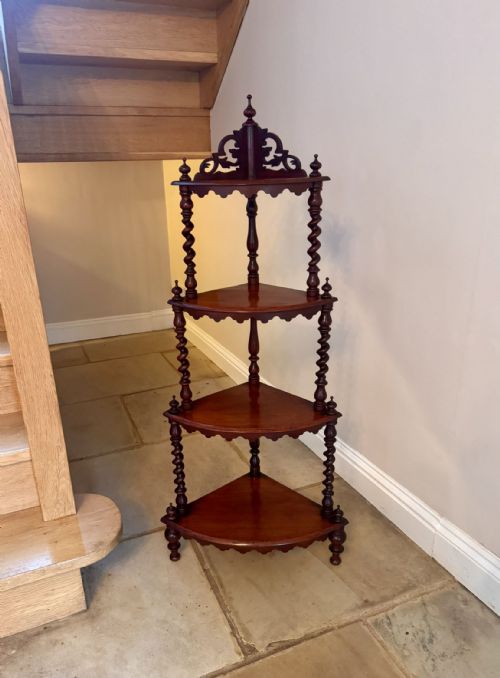
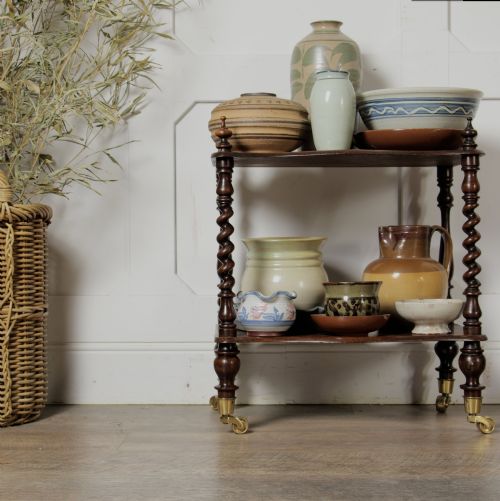
A corner whatnot shelf transforms a neglected wall junction into a display space, utilising tiered wooden platforms arranged in a tapering stack. Most examples encountered here belong to the Victorian and Georgian periods, constructed to fit snugly into 90-degree room angles.
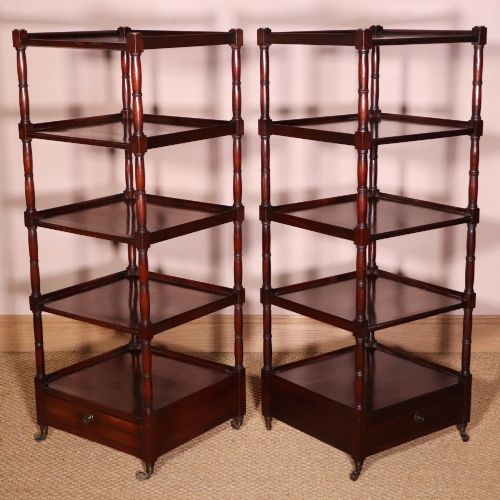
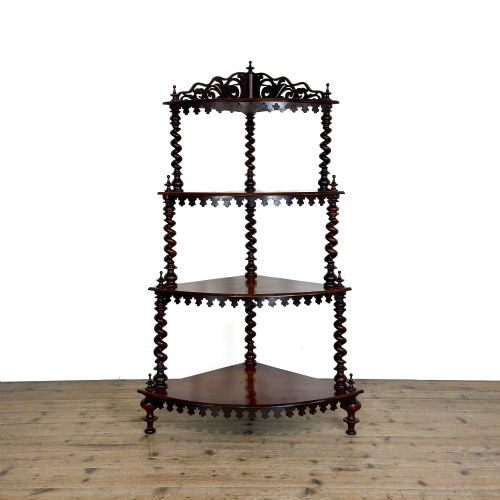
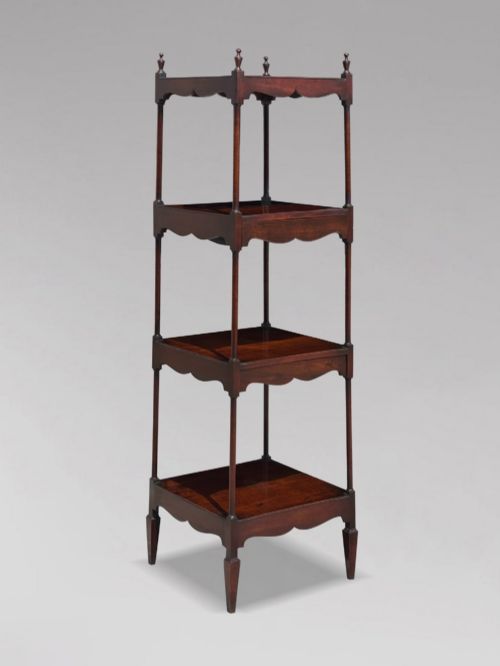
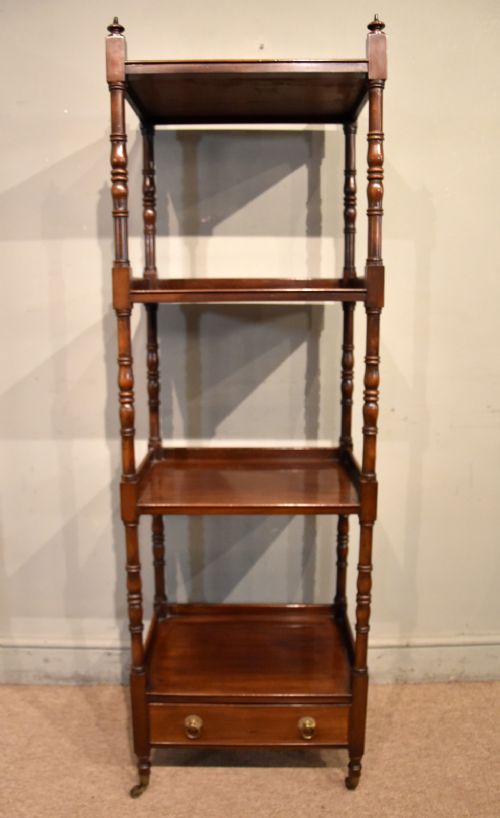
Makers designed these multi-tiered stands in various formats, ranging from three-tier models to taller four-tier shelving units. The architectural layout keeps decorative ceramics, books and ornaments visible from multiple angles within a room.
While freestanding etageres and standard display stands appear in the evidence, the specific corner whatnot shelf remains distinct for its triangular footprint. This shape anchors itself firmly against intersecting walls while preserving floor space.
How they were made
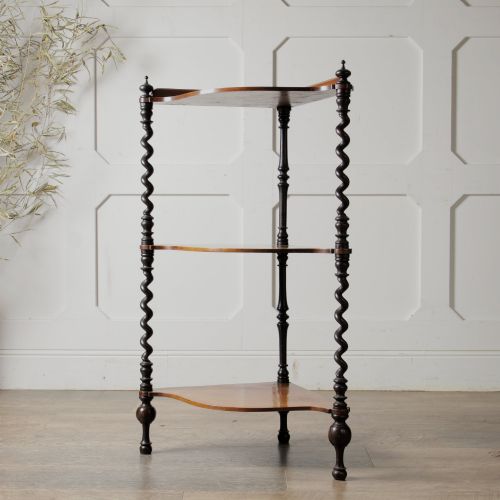
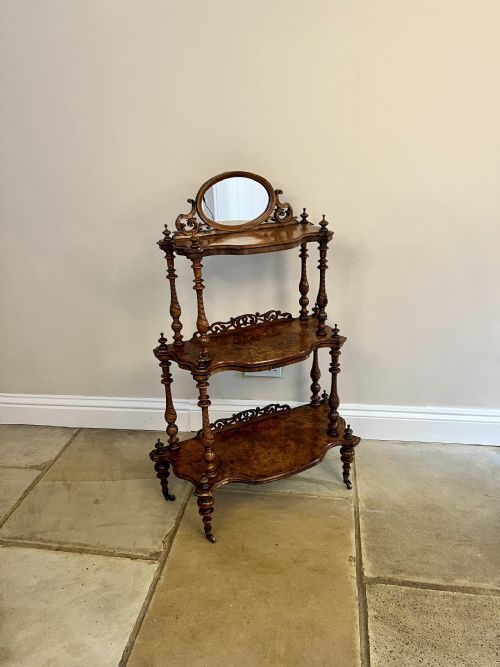
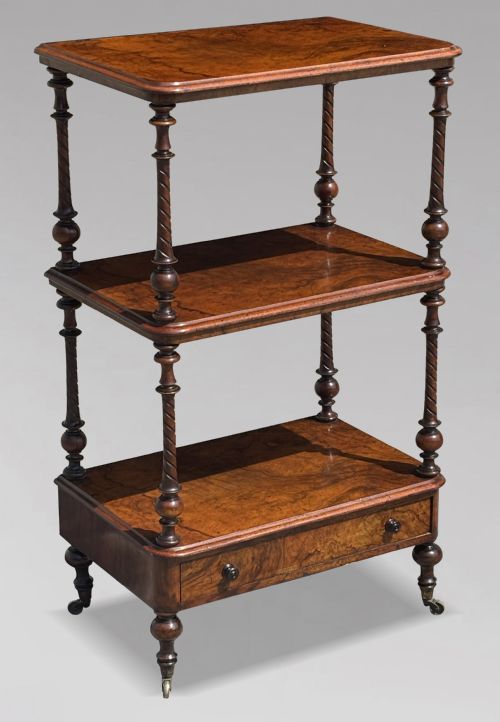
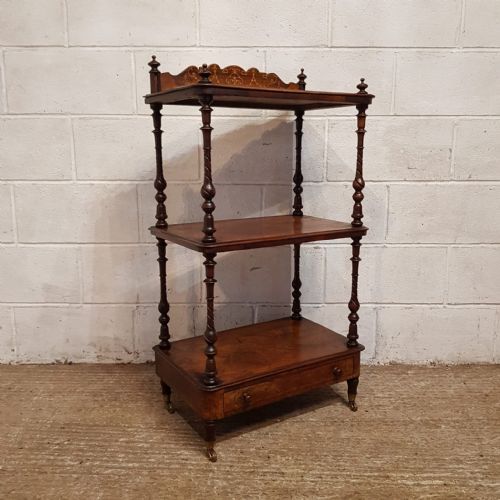
Cabinetmakers built these corner units using dense hardwoods such as mahogany, rosewood and walnut, frequently applying burr walnut veneers to the visible tier surfaces. Supporting uprights take the form of turned columns, barley twist shafts or simple wooden uprights joined securely to each shelf.
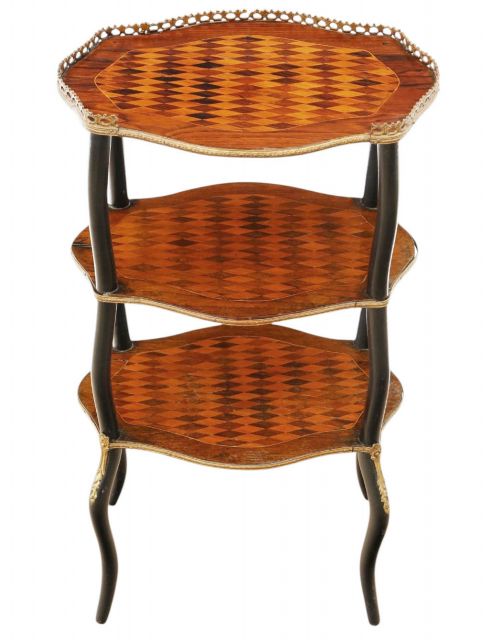
Fretwork galleries, pierced wood panels and delicate brass or gilt metal accents frequently embellish the edges of the tiers. Selected pieces incorporate inlaid wood details, parquetry or ebonised highlights to create contrast against the primary timber grain.
Corner Whatnot Shelf Retail Price Guide 2026
Typical asking prices for corner whatnot shelf among the pieces listed under this phrase on Sellingantiques today, from the lower quarter to the upper quarter. They describe what is for sale here now, not the wider market.
Early owners used these stepped shelves to hold everything from porcelain teacups to geological specimens, proving that the Victorians collected dust collectors with absolute devotion.
What varies in quality
The distinction between standard utility pieces and superior examples rests in timber selection and decorative restraint. Finely figured burr walnut or rich rosewood veneer elevates a simple shelving unit into a polished piece of interior furnishing.
Structural refinement also defines the better tiers, seen in crisp turning on barley twist supports and cleanly pierced fretwork galleries. Subtleties in joint construction and the harmony of the wood grain across multiple shelves separate workshop output.
Gillows
The Corner Whatnot Shelf Glossary
- Whatnot
- A multi-tiered piece of furniture designed for displaying ornaments, books or small objects. It originated in the 18th century and gained widespread popularity during the Victorian era.
- Etagere
- A French term for a piece of furniture consisting of a set of open shelves for displaying small articles. These often share similar multi-tiered characteristics with whatnots.
- Burr walnut
- Timber taken from the warted excrescence on a walnut tree, yielding intricate, swirling grain patterns. Cabinetmakers sliced this wood into veneers for high-status surfaces.
- Barley twist
- A decorative turning technique resembling a spiralling rope carved into wooden support columns. This style appears frequently on Victorian stands and uprights.
- Fretwork
- Ornamental design perforated through thin wood using a scroll saw or piercing tools. It creates light, openwork galleries around the edges of display shelves.
Corner Whatnot Shelf: Frequently Asked Questions
How were whatnots used originally?
Originally, these tiered stands served as household repositories for the miscellaneous small items that accumulated in entertaining rooms and parlours. Families placed porcelain, silver, books and curiosities upon the shelves for easy viewing.
As domestic spaces evolved, the furniture transitioned from general storage surfaces into dedicated display units for showing off prized possessions.
How do I style a corner whatnot?
Styling a corner whatnot involves balancing heavier books or ceramic pieces on the lower, wider tiers while placing lighter glassware and small ornaments near the top. Leaving adequate space around items prevents the stacked shelves from looking cluttered.
The triangular geometry allows the tiers to draw the eye upward, making effective use of vertical wall space in compact rooms.
How can I tell Victorian from Georgian?
Georgian corner whatnots generally exhibit simpler architectural lines, straight supports and understated mahogany or oak construction dating from the 18th or early 19th century. They prioritise structural joinery and classic proportions.
Victorian examples frequently introduce more ornate elements such as burr walnut veneers, barley twist uprights, pierced fretwork galleries and ebonised or inlaid details reflecting later revival styles.