




Copper Standing Lamp
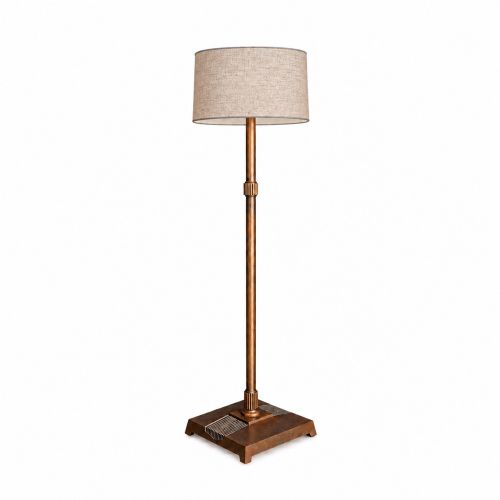
A copper standing lamp brings warm metallic reflection and purposeful height to a room, offering both character and directed illumination.
Copper Standing Lamp
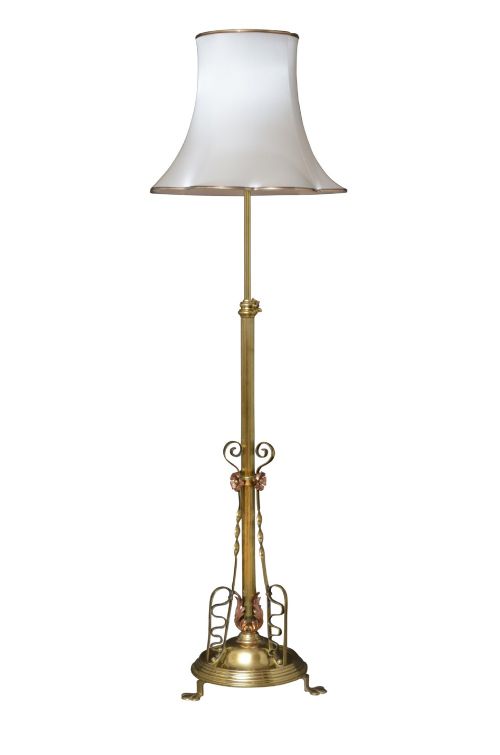
A copper standing lamp combines vertical reach with the warm metallic lustre characteristic of nineteenth and early twentieth century lighting. Buyers hunting for a copper standing lamp encounter tall floor-standing designs that often incorporate telescopic adjustment and contrasting brass components.
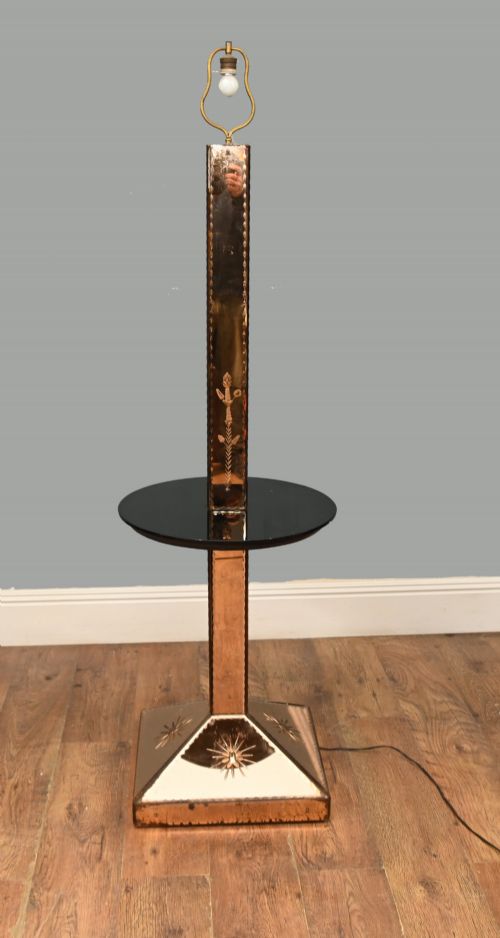
The pieces on this page span several distinct periods, most notably the Victorian era, Edwardian period, and the early twentieth century. Common stylistic expressions include flowing Art Nouveau motifs, honest construction from the Arts and Crafts movement, and geometric Art Deco lines.
Forms vary from practical oil lamps adapted for modern use to standard lamps designed for domestic sitting rooms. Occasional unusual variants appear, including ceremonial horns repurposed as lamp standards and standard lamps integrated with glass cocktail tables.
How they were made
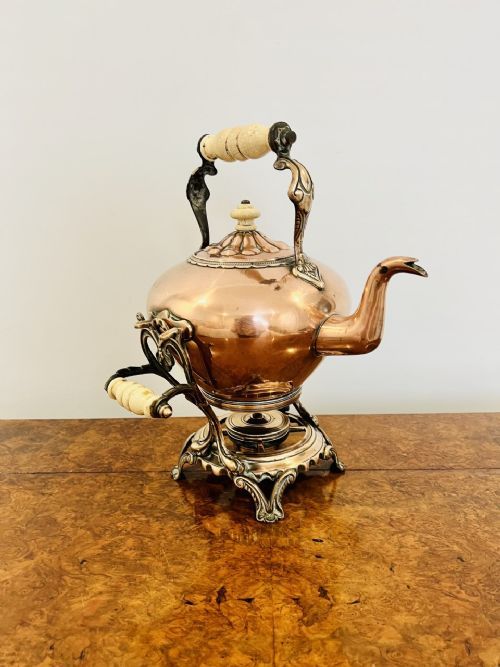
These lamps rely on combinations of copper and brass, frequently paired with glass elements such as cranberry glass reservoirs and mirrored glass reflectors. Makers utilised the malleability of copper to create adjustable shafts and supportive bases.
Construction techniques involve mechanical joining, telescopic extension mechanisms, and detailed metalworking associated with Arts and Crafts and Art Nouveau workshops. Many examples incorporate fabric shades alongside metal and glass structures.
One unexpected variant repurposes a Tibetan ceremonial copper horn into a striking floor standing lamp.
What varies in quality
Quality in a standard lamp is visible in the substance of the metalwork and the rigidity of the telescopic extension mechanisms. Heavier gauge copper and brass provide better stability for tall shafts.
The distinction between ordinary production and finer work lies in the execution of stylistic details, such as the rhythmic plant-form whip lines on Art Nouveau examples or the clean geometry of Art Deco tables.
W A S Benson
The Copper Standing Lamp Glossary
- Standard lamp
- A tall floor lamp designed to illuminate a room from standing height. These pieces often feature weighted bases to ensure stability.
- Telescopic
- An adjustable shaft mechanism allowing the height of the lamp to be altered. This feature uses nested tubes secured by a key or screw.
- Cranberry glass
- A rich red glass created by adding gold chloride to the molten batch. It frequently appears in Victorian oil lamp reservoirs.
- Arts and Crafts
- A design movement valuing honest construction and visible craftsmanship over machine-made ornamentation. Objects from this tradition emphasise simple utility.
Copper Standing Lamp: Frequently Asked Questions
How do I date a copper standing lamp?
Dating relies on stylistic clues, manufacturing techniques, and materials. Art Nouveau and Arts and Crafts examples generally point towards the turn of the twentieth century.
Heavier cast brass bases and cranberry glass reservoirs typically indicate Victorian origins. Examining the mechanical fittings and extension keys also helps narrow the production era.
Were these lamps originally electric?
Many older examples began life as oil lamps before undergoing conversion to electricity in later decades. Telescopic standards and burners were frequently adapted to take modern wiring.
Some retain their original oil mechanisms or glass fonts, showing how domestic lighting evolved through the nineteenth and twentieth centuries.
How do I maintain copper and brass?
Regular dusting with a soft cloth preserves the surface finish of mixed metal lamps. Avoid harsh chemical cleaners that strip away natural aged patination.
Leaving the metal to age gracefully maintains the historic character valued by collectors. Gentle cleaning is sufficient to keep the reflective quality of the copper visible.
Are these lamps stable enough for daily use?
Most standard lamps incorporate heavy weighted bases designed to prevent tipping. Telescopic models require proper tightening of the adjustment collar to maintain rigidity.
Placement on level flooring ensures safe everyday operation in a modern room. Their robust metal construction makes them practical for functional daily lighting.