
Copper Log Planter
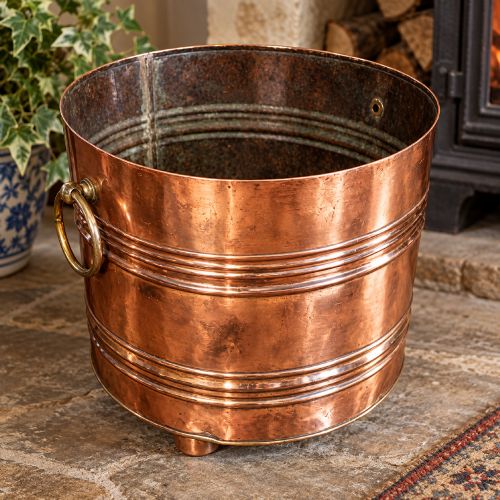
A copper log planter brings substantial weight and warm metallic tone to a fireside or garden.
Copper Log Planter
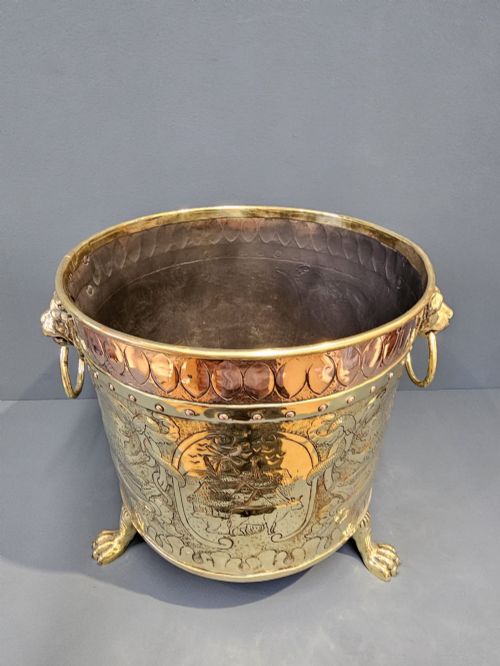
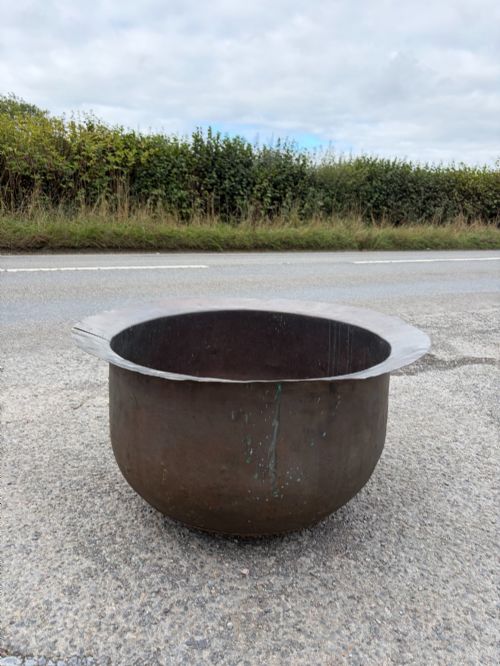
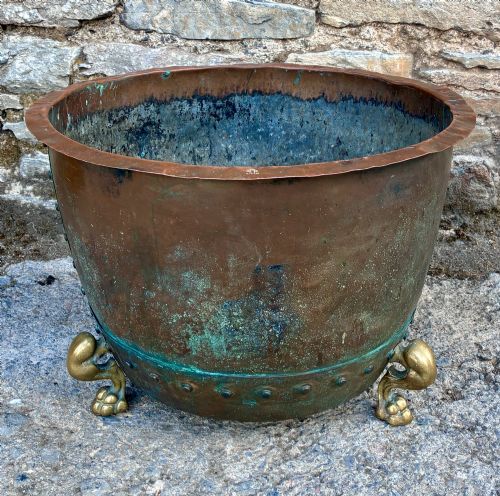
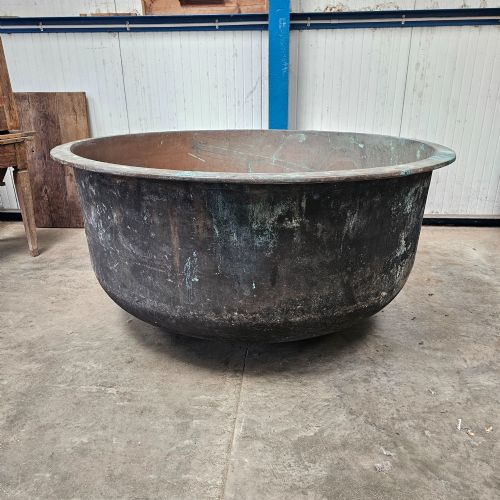
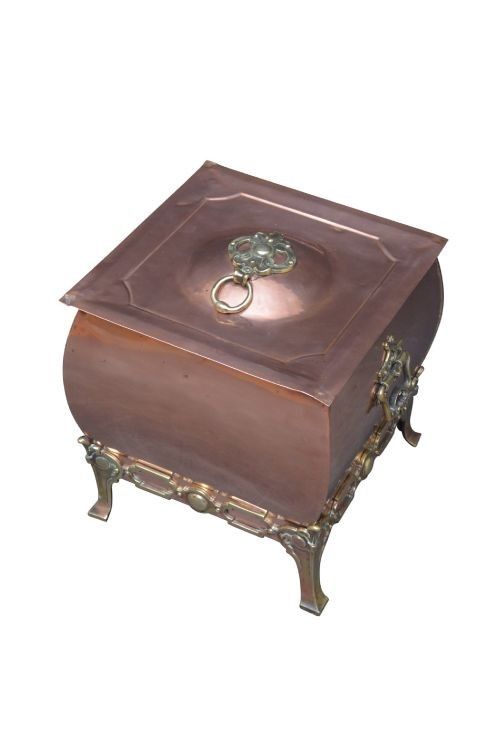
A copper log planter serves primarily as a heavy vessel for holding firewood beside a hearth or housing plants indoors and out. When searching for a copper log planter, buyers encounter substantial domestic pieces originally fashioned as wash tubs, coal buckets, cheese vats, and grain measures, alongside objects specifically created as jardinières or log bins.
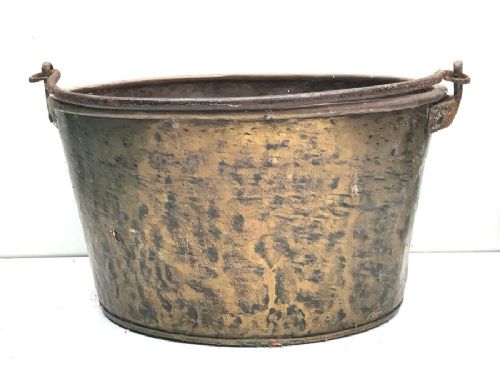
The material spans the eighteenth, nineteenth, and early twentieth centuries, drawing heavily on Victorian and Georgian craftsmanship. English and French examples dominate the selection, appearing in forms ranging from simple cylindrical pots to handled cauldrons and handled buckets.
Many items perform double duty in historical records, functioning alternately as coal scuttles, waste bins, or large garden display pots. Buyers frequently select these substantial vessels to anchor rustic farmhouse schemes or traditional country interiors.
Materials and construction
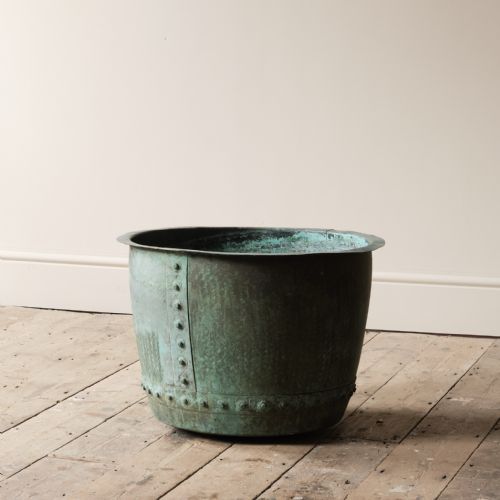
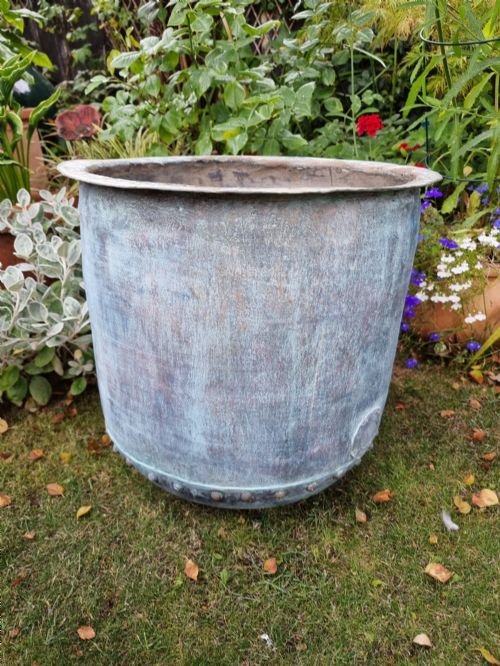
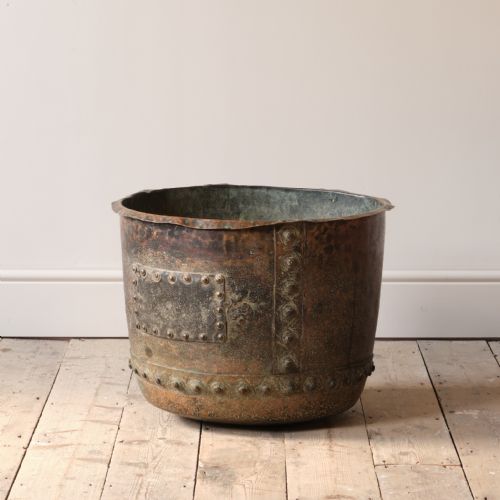
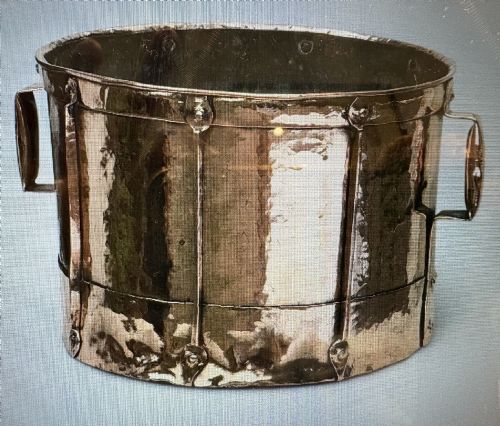
Construction relies heavily on sheet copper shaped by hand, often joined with visible hand-riveting that provides structural strength along the seams. Smiths incorporated contrasting metals such as brass bands, wrought iron handles, and swing bails to reinforce heavy vessels meant for daily utility.
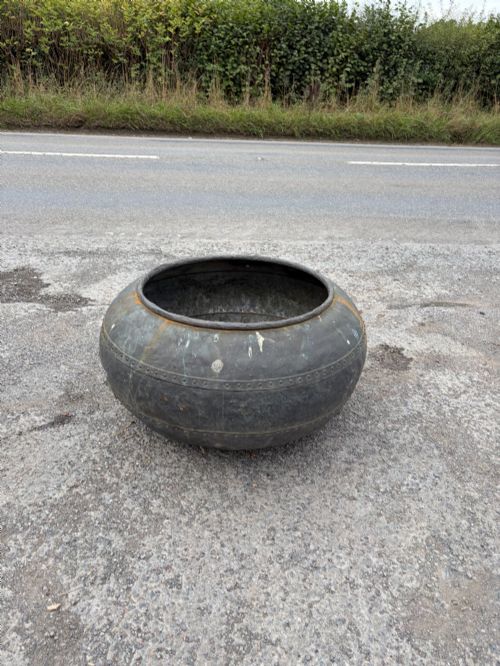
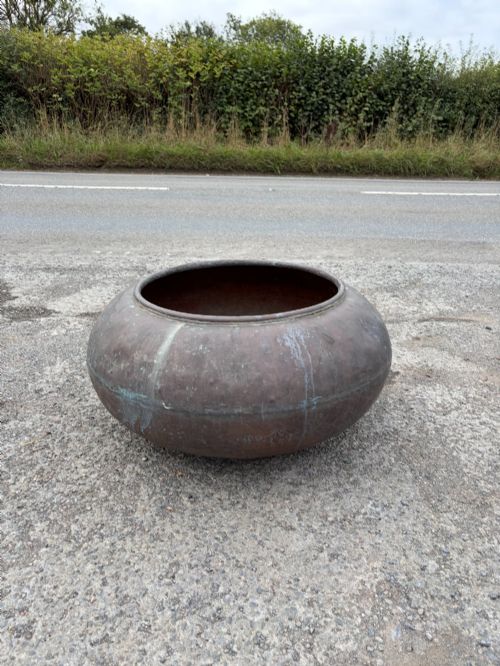
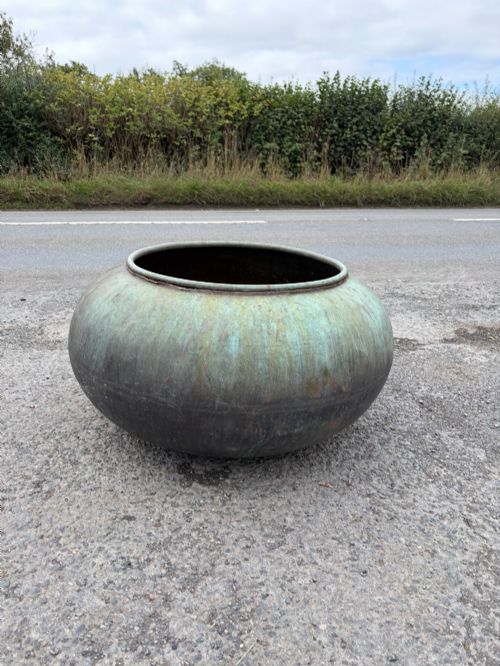
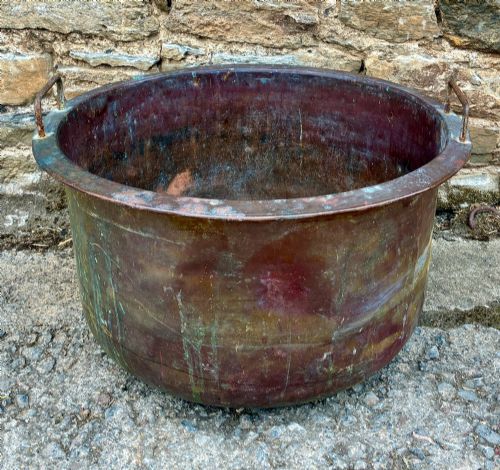
Surfaces display natural ageing processes, including rich patinas, hammer marks from hand-beating, and occasional verdigris finishes resulting from long exposure to moisture and air. Bases frequently incorporate iron or timber elements to support the considerable weight of stored timber or wet soil.
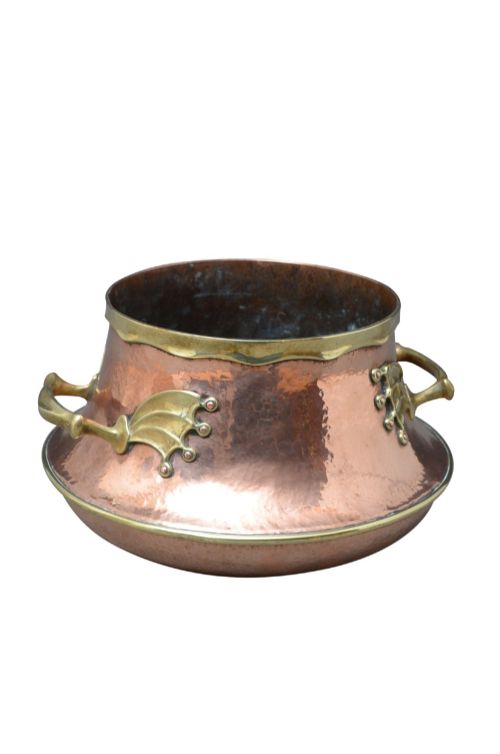
Listings feature eighteenth-century Georgian pans alongside nineteenth-century Victorian coal buckets, French cheese vats, and Arts and Crafts log bins.
Assessing quality and character
Quality rests in the integrity of the metalwork, distinguishing heavy-gauge copper vessels with crisp hand-beaten hammering from lighter stamped containers. Superior examples retain original iron or brass fixings, uncompromised riveted seams, and balanced proportions that reflect their functional origins.
The depth of the natural patina and the presence of makers' marks or regional characteristics elevate certain pieces above standard utility items. The visual impact depends on the harmonious ageing of the copper body alongside contrasting brass or wrought iron details.
The Copper Log Planter Glossary
- Jardiniere
- An ornamental pot or stand for holding plants or flowers. These vessels often feature decorative brass or copper bodies designed for indoor display.
- Verdigris
- A green patina formed naturally on copper or brass through atmospheric weathering and oxidation. This surface layer indicates considerable age and exposure.
- Cauldron
- A large metal pot with a swing handle, traditionally used over an open fire. In domestic settings, these pieces were frequently repurposed for storage.
- Ferrat
- A traditional French grain measure utilised for agricultural bulk storage. Such cylindrical vessels share heavy riveted construction suited to modern fireside use.
Copper Log Planter: Frequently Asked Questions
How were copper log planters originally used?
Many of these vessels started life as utilitarian agricultural or domestic items, including grain measures, wash tubs, and cheese vats. Over time, their generous proportions and durable metal construction made them natural choices for gathering firewood by the hearth.
Industrial and domestic workshops produced these containers for heavy daily tasks, which explains their rugged build and reinforced handles. Today, buyers adapt them for logs, coal, or large botanical displays.
Are these pieces waterproof for plants?
Original riveted copper and brass vessels were designed to hold bulk items or liquids, meaning many retain solid structural bases. However, historic seams can develop minor seepage over extended periods of holding wet soil.
Placing a modern liner inside the vessel protects the historic metal interior from continuous moisture and mineral buildup. This simple precaution preserves the antique fabric while allowing the container to function safely as a planter.
How do I clean a copper log planter?
Maintaining these pieces usually involves removing dust with a soft, dry cloth while preserving the accumulated patina. Aggressive chemical polishing strips away the historic surface character that collectors value.
Leaving the natural verdigris and dark oxidation intact highlights the age and hand-worked nature of the metal. Gentle dusting is all that is required to keep the surface stable in a living space.
How can I tell a Victorian piece from an earlier one?
Eighteenth-century and early Georgian pans and log bins often display heavier gauge hand-hammered panels and simpler, robust iron fittings. Victorian examples frequently incorporate decorative brass bands, more complex handles, and varied aesthetic influences from the Arts and Crafts movement.
Examining the construction of the riveted seams and the style of any attached handles helps pinpoint the manufacturing era. Comparing the weight and rim profiles further distinguishes early utilitarian work from later decorative production.