
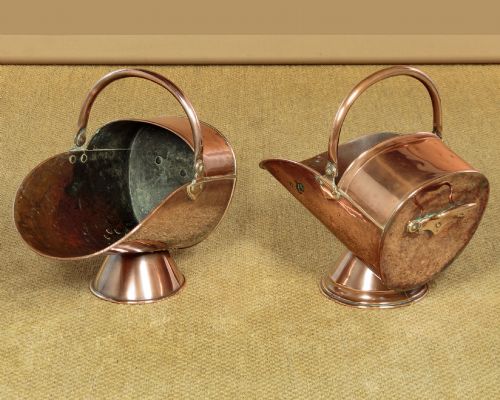


Copper Fireside Log Bin
A copper fireside log bin brings warmth and practical storage to a hearth, combining robust metalwork with everyday utility.
Copper Fireside Log Bin
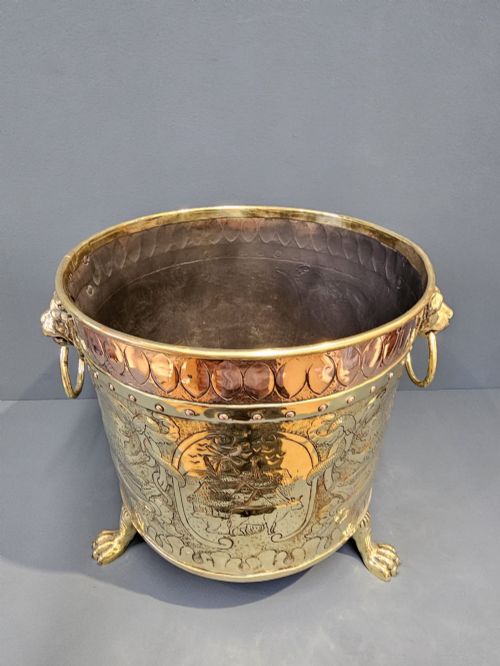
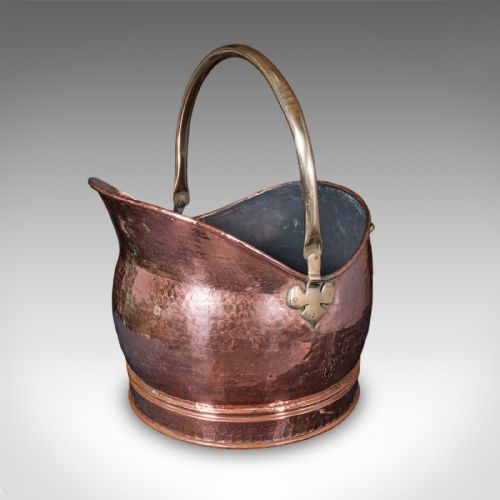
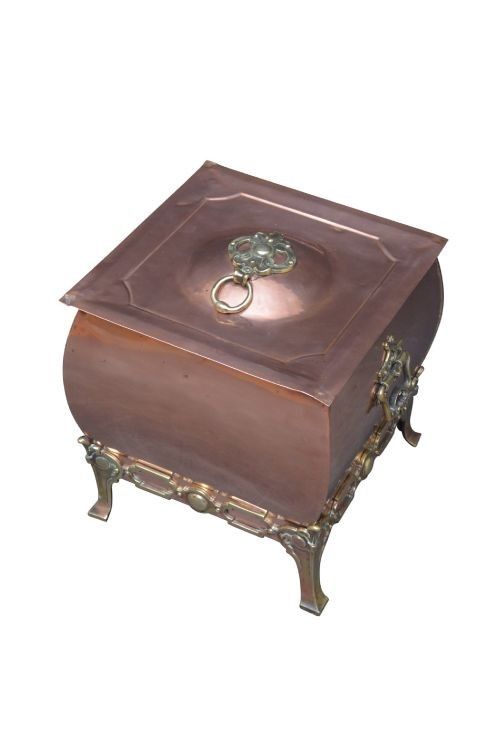
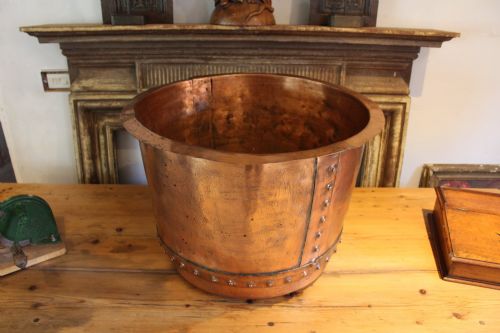
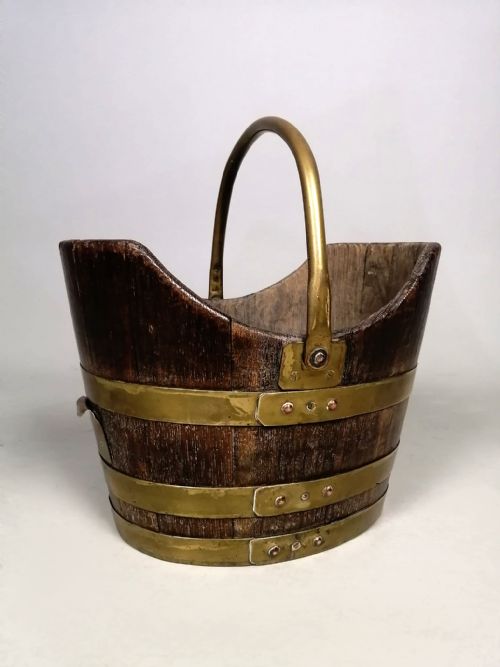
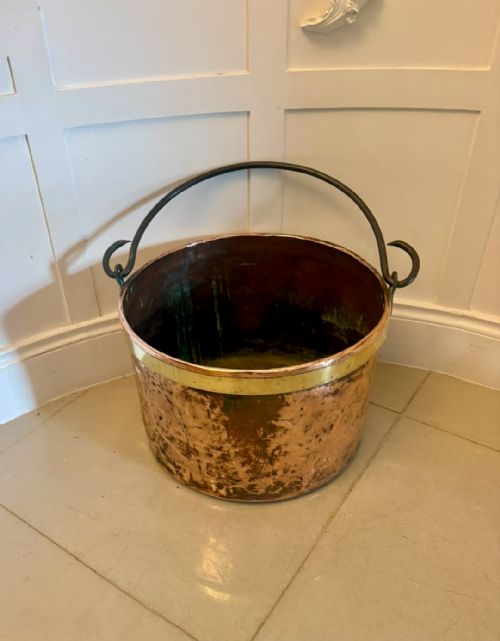
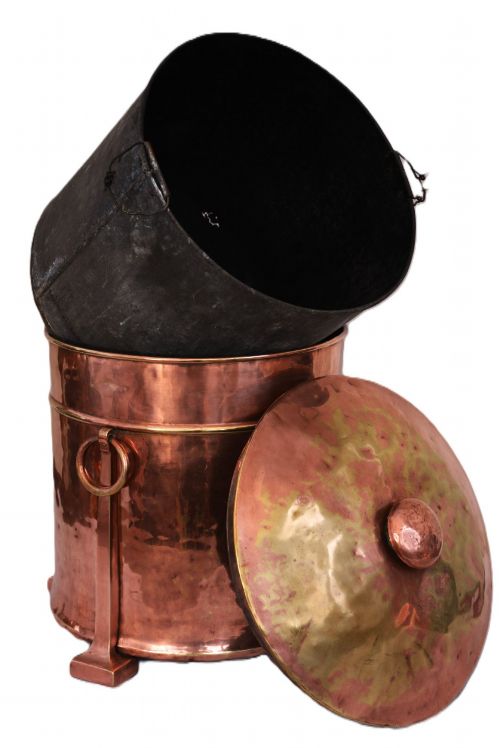
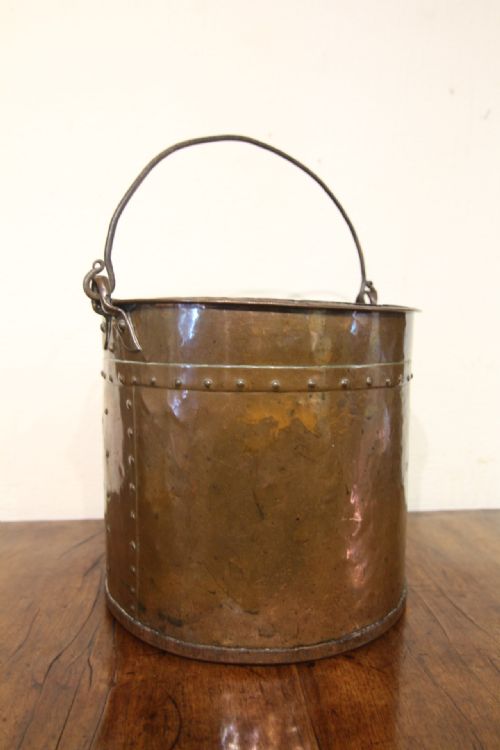
A copper fireside log bin is a heavy-duty container designed to hold firewood, kindling or coal near an open hearth. These pieces range from cylindrical buckets and riveted cauldrons to lidded boxes and helmet-shaped scuttles.
The version most commonly met on this page is the Victorian or Arts and Crafts vessel, often hammered by hand and trimmed with brass or iron details. They bridge the gap between utilitarian coal storage and decorative metalwork.
Many examples double as planters or general storage containers when they are retired from active fireside service. Their metal bodies offer a durable structure that withstands the weight of heavy logs and dry fuel.
How they were made
Makers formed the primary bodies from sheet copper, joining the seams with visible rivets or brazing. Wrought iron or brass handles, bands and swing bails were then attached to bear the weight of heavy fuel.
Surface texture arrived through hand-beating, embossing or planishing, methods that hardened the metal while leaving a record of the craftsman's hammer. Some iterations combined timber frames, such as oak, with applied copper panels or decorative brass mountings.
Materials recorded on this page include hand-beaten copper, planished sheets, and riveted iron frames designed for heavy fireside use.
What varies in quality
Quality rests in the weight of the metal gauge and the integrity of the construction, such as whether the base is reinforced to handle the impact of dropped logs. Thicker copper resists denting and holds its shape under heavy daily use.
The finesse of the hand-beating and the detailing of the handles distinguish standard utilitarian scuttles from finer Arts and Crafts or Georgian pieces. Riveting patterns and the selection of contrasting metals like brass or wrought iron show the maker's attention to design.
William Soutter & Sons
The Copper Fireside Log Bin Glossary
- Purdonium
- A specialised coal box featuring a sloping front and a hinged lid, designed to feed fuel downward. They often incorporate a matching interior shovel.
- Helmet scuttle
- A coal bucket shaped with a flared rim resembling a medieval helmet, intended to direct fuel neatly into a grate. They usually feature a raised foot and a looped rear handle.
- Planishing
- A metalworking technique using a smooth-faced hammer to refine the surface of sheet copper. This process removes minor imperfections and hardens the metal.
- Cauldron
- A round, deep metal vessel with a rounded base and a swinging iron handle. These pieces are typically riveted and date from earlier nineteenth-century workshops.
Copper Fireside Log Bin: Frequently Asked Questions
How do I clean a copper log bin?
Wipe the surface with a damp cloth and mild soap to remove soot and dust. Avoid harsh abrasives that strip away the natural patination built up over decades of use.
Allow the metal to dry completely before placing logs inside. A light application of microcrystalline wax can help protect the finish from further tarnishing without creating a false gloss.
Can I use these bins for actual logs?
These vessels were originally built to store coal, kindling or logs beside an active fireplace. Their robust metal construction and reinforced bases make them well-suited for holding heavy firewood.
Ensure the interior is completely dry before loading timber to prevent moisture damage. Placing a protective mat inside can protect the base from heavy impacts.
How do I date an antique copper bin?
Dating relies on construction methods, handle styles and decorative motifs seen across different eras. Hand-beated surfaces and specific riveted joints often point toward nineteenth-century production or the Arts and Crafts movement.
Georgian examples tend to feature heavy brass banding and simpler, heavier proportions. Examining any stamped marks or stamps on the base can also provide clues to the age.
Why do some bins have iron frames?
Wrought iron frames provided additional structural support for exceptionally large copper containers. This combination kept heavy loads from distorting the softer copper walls.
Such framing is particularly common in larger nineteenth-century and early twentieth-century examples intended for heavy fuel storage. The contrast between dark iron and polished copper was also an aesthetic choice.