




Copper Candle Holders Pair
These copper candle holders pair selections bring warmth and character to a room through domestic lighting forms spanning several centuries.
Copper Candle Holders Pair
When you search for a copper candle holders pair, you encounter dual lighting forms manifested as candlesticks, wall sconces, candelabra, and taper holders. The pieces on this page span diverse periods including the Georgian era, the nineteenth century, and early twentieth-century design movements.
The versions you are most likely to meet combine copper with brass, silver, or Sheffield plate, reflecting domestic lighting needs across generations. Makers utilised these materials to create functional objects that double as decorative metalwork for domestic interiors.
Forms range from simple domestic tapers to large pricket candlesticks and telescopic designs. These dual lighting items appear across Arts and Crafts, Art Nouveau, Aesthetic Movement, and Georgian styles.
Materials and construction
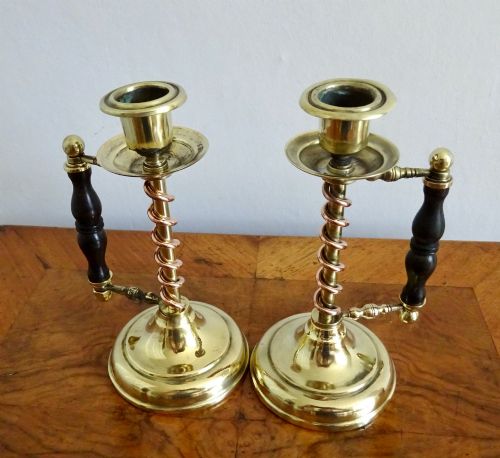
Makers constructed these pairs using base metals such as copper and brass, often combining them with silver, silver plate, or Sheffield plate for surface contrast. Some examples incorporate decorative elements of turquoise, glass, or wood.
The manufacturing techniques visible across the listings involve metalworking methods characteristic of the Arts and Crafts movement and earlier periods, joining copper bodies with contrasting mounts and fittings.
Listings feature copper alongside silver plate, brass, turquoise, and glass across Georgian, Victorian, and Arts and Crafts periods.
Evaluating quality and design
Quality in these dual lighting pieces rests on the weight of the metal, the integrity of construction, and the clarity of stylistic execution. Pieces associated with specific design idioms or attributed designers show greater sculptural ambition in their metalwork.
The distinction between standard domestic items and superior examples lies in the balance of the paired objects, the harmony of mixed metals such as copper and brass, and the retention of original surface finishes.
The Copper Candle Holders Pair Glossary
- Sheffield Plate
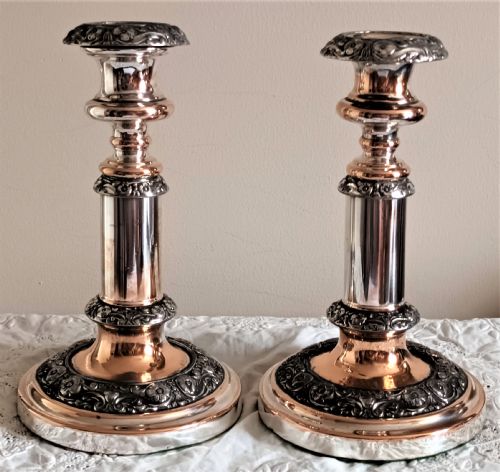
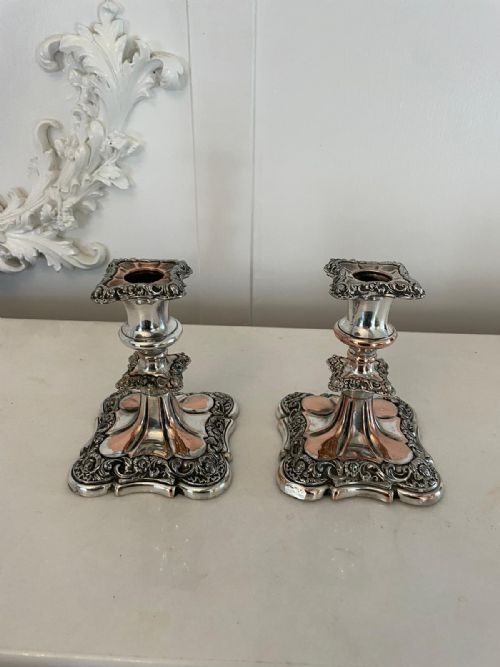
- A composite material made by fusing a thin sheet of silver to a thicker copper base, common in eighteenth and nineteenth-century domestic metalwork.
- Pricket Candlestick
- A candlestick featuring a sharp spike on the top to secure a candle, rather than a socket to hold it.
- Telescopic Candlestick
- A lighting form with an adjustable shaft that extends or contracts to alter the height of the candle.
- Arts and Crafts
- A design movement of the late nineteenth and early twentieth centuries emphasising handcraftsmanship, simple forms, and visible structural honesty.
- Aesthetic Movement
- A late nineteenth-century movement prioritising visual and sensory beauty over narrative or moral function in design.
Copper Candle Holders Pair: Frequently Asked Questions
What periods do these pieces date from?
The pieces span from the eighteenth century through the Georgian and Victorian eras into the early twentieth century.
Design influences include the Aesthetic Movement, Arts and Crafts, and Art Nouveau styles.
How were these candle holders used?
These pairs provided domestic illumination in rooms before the widespread adoption of gas and electric lighting.
They stood on tables, mantels, or were mounted to walls as sconces to cast ambient light.
What metals are typically combined with copper?
Makers frequently paired copper with brass to create tonal contrast in the stems, bases, and drip pans.
Silver, Sheffield plate, and silver plating also appear alongside copper on many examples.
How do I identify Arts and Crafts pairs?
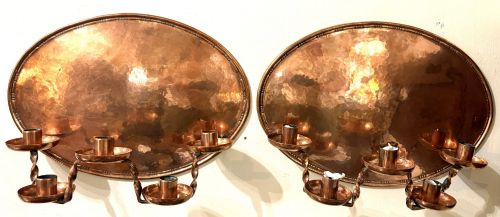
Arts and Crafts pieces often display hand-beaten copper surfaces, rivets, and simple structural lines.
They frequently draw inspiration from traditional metalworking guilds and domestic utility.