

Copper Art Metalwork
Copper art metalwork brings together hand-hammered chargers, repoussé boxes and fluid botanical planters shaped during the late nineteenth and early twentieth centuries.
Copper Art Metalwork
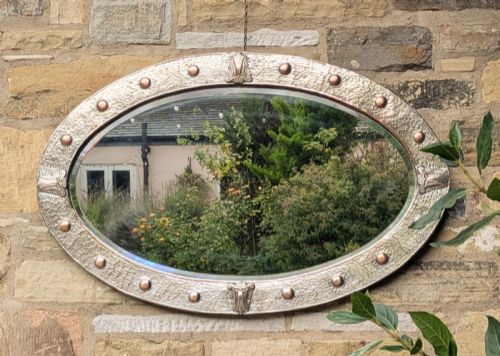
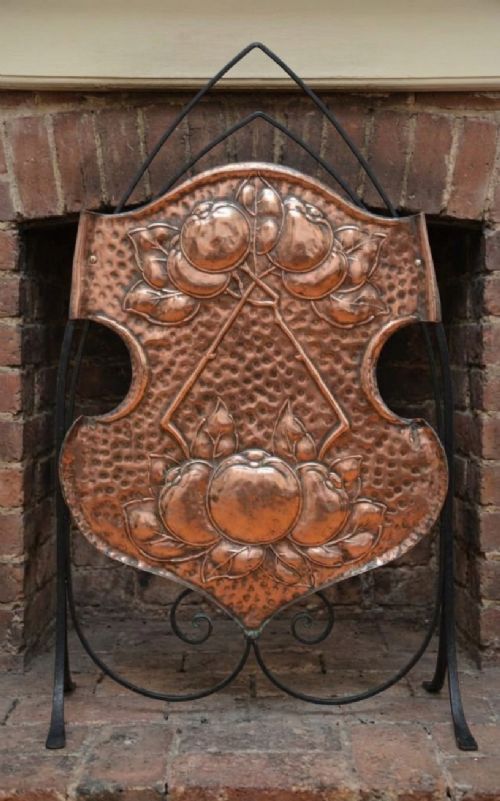
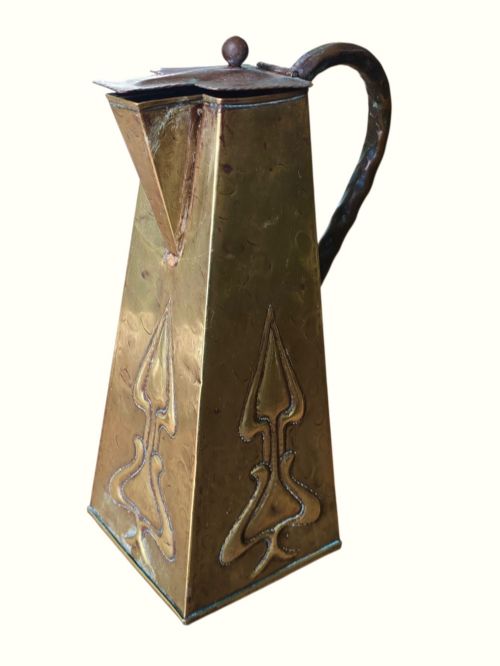
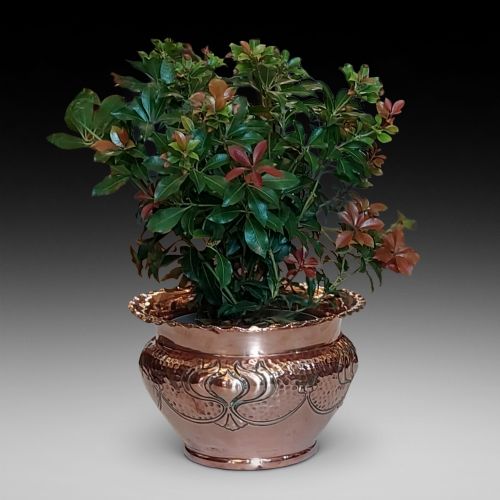
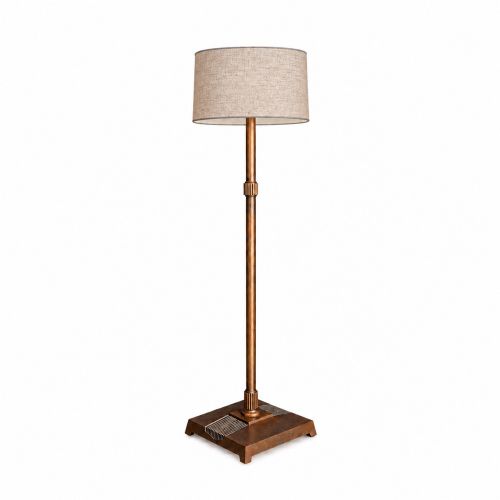
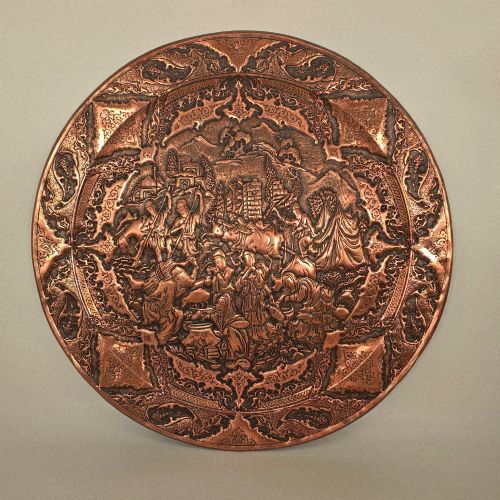
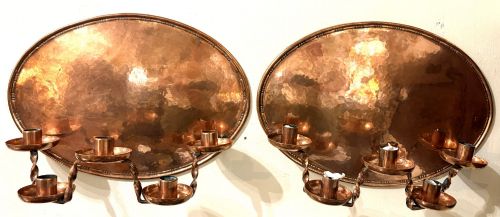
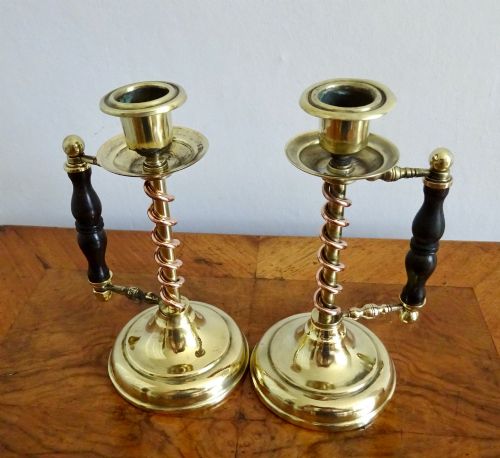
When you search for copper art metalwork, you encounter domestic items and decorative objects produced predominantly during the Arts and Crafts and Art Nouveau movements. The pieces on this page span table accessories such as candlesticks, trays and letter racks, alongside larger forms like wall mirrors, chargers and planters.
The aesthetic is grounded in the turn of the twentieth century, bridging late Victorian production with Edwardian design and later Amsterdam School influences. British workshops feature prominently alongside continental European pieces and Japanese export metalwork.
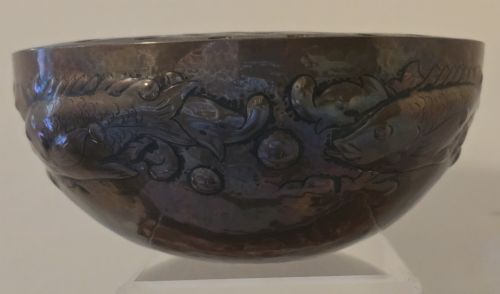
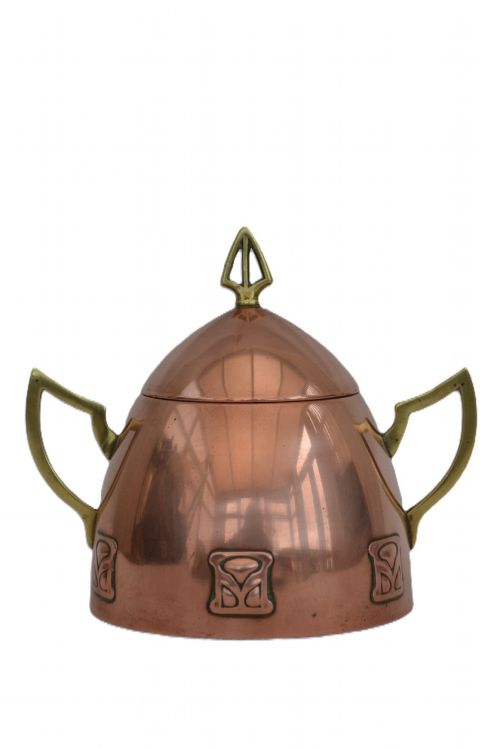
Utility meets decoration in vessels designed to be handled daily, from rose bowls to umbrella stands. The surviving items demonstrate the shift from mass factory output to skilled workshop creation.
Materials and Construction
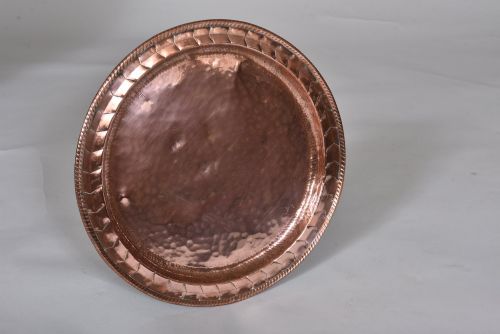
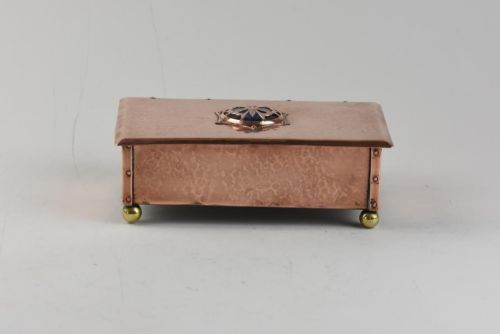
Makers shaped sheet copper by hand, utilising hammering techniques that left characteristic facets across the surface. Repoussé decoration pushed the metal from the reverse to create raised motifs on the front.
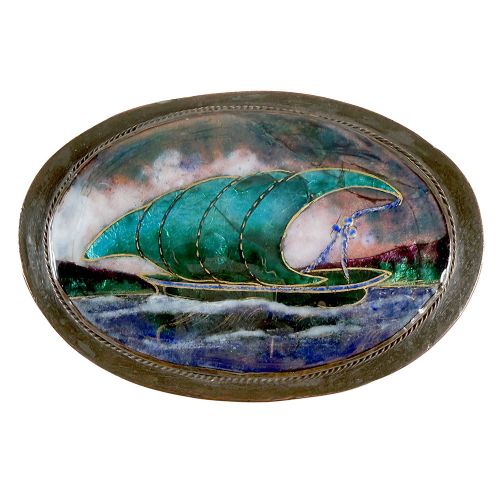
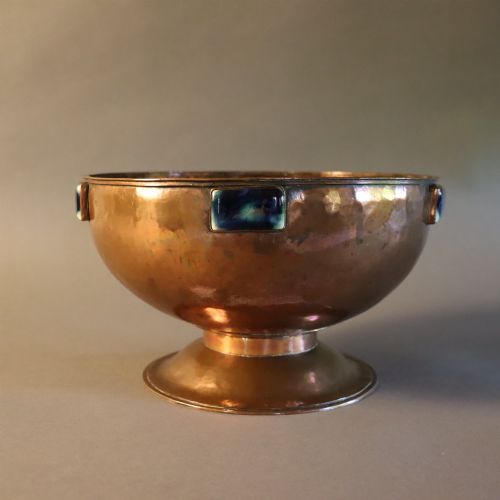
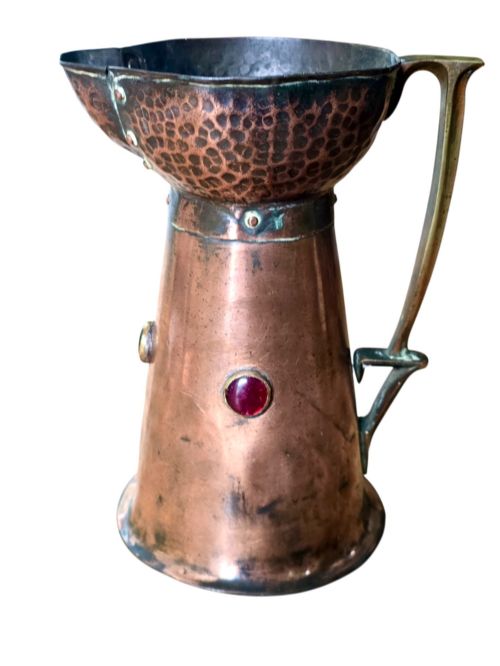
Secondary materials such as brass, wrought iron and wood provide structural contrast in candlesticks and plant holders. Enamel cabochons, silver overlays and gold leaf add colour and texture to the metallic fields.
Surface treatments varied from polished finishes to intentional patination that darkened recesses and highlighted raised details.
Copper Art Metalwork Retail Price Guide 2026
Typical asking prices for copper art metalwork among the pieces listed under this phrase on Sellingantiques today, from the lower quarter to the upper quarter. They describe what is for sale here now, not the wider market.
Some copper boxes carry secret butterfly overlays ready to flutter off the lid at a moment's notice.
Distinctions in Quality
The division between standard commercial production and superior craftsmanship rests upon the confidence of the hammer work and the depth of the repoussé relief. Finer pieces display deliberate, rhythmic texturing rather than uniform mechanical pressing.
Integration of decorative elements reveals the maker's hand, particularly where enamel cabochons, butterfly overlays or wrought iron mounts join the primary copper body. Harmony between the metalwork and secondary materials dictates the aesthetic success of the object.
Preservation of the original surface patina and absence of excessive cleaning maintain the integrity of the piece over time.
Newlyn Copper·Keswick Arts And Crafts·Hugh Wallis·WMF·Birmingham Guild of Handicraft·Faulkner Bronze Company
The Copper Art Metalwork Glossary
- Repoussé
- A metalworking technique where the artisan hammers the metal from the reverse side to form a raised design on the front. Fine chiselling is often applied to the front surface afterwards to sharpen details.
- Cabochon
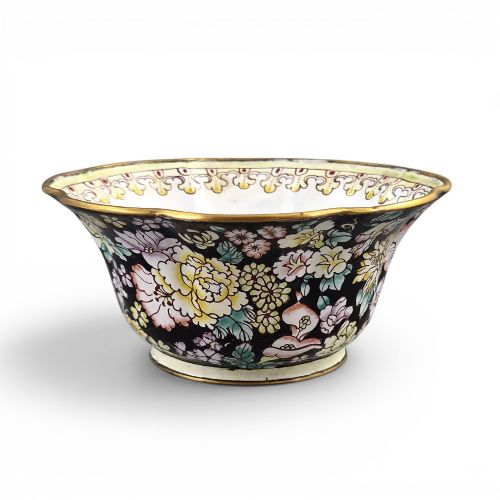
- A polished, convex gem or enamel piece lacking facets, frequently mounted centrally on boxes and bowls. It provides a focal point of colour against the plain metal.
- Pricket
- A sharp vertical spike on a candlestick that impales the base of a candle to hold it upright. This form is common in larger altar and floor candlesticks from the period.
- Dinanderie
- A term for various objects made of brass, copper or bronze, named after the Belgian town of Dinant. It encompasses medieval and later beaten metal vessels.
- Cloisonne
- Enamelwork in which thin metal wire is soldered to a metal base to form compartments that are filled with coloured glass paste and fired. Japanese examples frequently feature intricate floral and avian motifs.
Copper Art Metalwork: Frequently Asked Questions
What is copper art metalwork?
These items are decorative and utilitarian domestic objects shaped by hand from sheet copper during the late nineteenth and early twentieth centuries. They encompass vessels, mirrors and wall plaques produced under the influence of the Arts and Crafts and Art Nouveau movements.
Craftsmen utilised techniques like hammering, repoussé and enamelling to transform plain metal into expressive furnishings for the home.
How do I clean copper antiques?
Antique copper objects generally require minimal intervention to preserve their historic surface appearance and natural dark patination. Harsh chemical polishes strip away the aged character accumulated over a century.
Gentle dusting with a soft, dry cloth is usually sufficient for regular maintenance, avoiding abrasive materials that scratch the hand-beaten finish.
How do I date an arts and crafts copper piece?
Dating relies on stylistic markers, construction methods and occasional maker marks or signatures stamped into the metal. The fluid, organic lines of Art Nouveau contrast with the structural honesty and visible hammer marks of the Arts and Crafts movement.
Comparison with documented workshop patterns helps narrow the period of production between the late Victorian era and the 1930s.
Where were these metal items made?
Production centres included specialised guilds and cottage industries across Britain, particularly in Cornwall, the Lake District and the Midlands. Continental workshops in Germany, France and the Netherlands also contributed significant quantities of plated and beaten wares.
Japanese export metalwork from the Meiji period introduced sophisticated enamelling techniques that heavily influenced Western designers.