

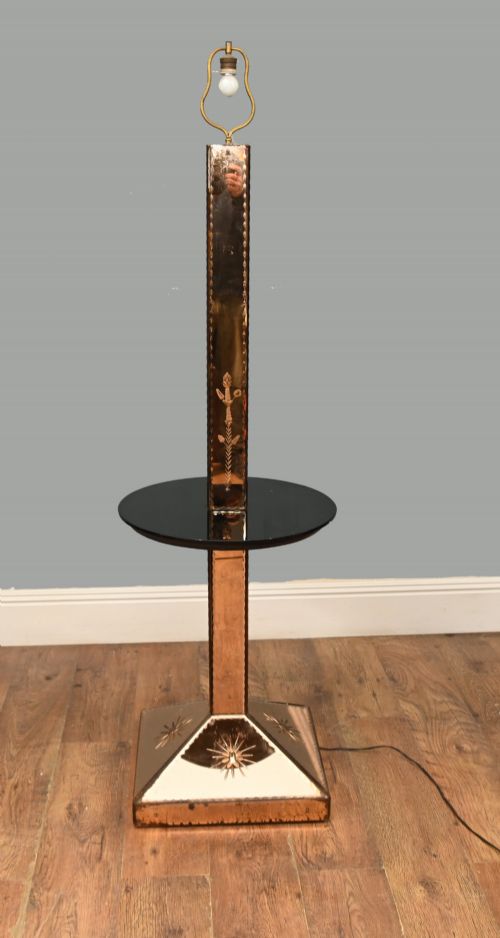


Copper Art Deco Lighting
Copper art deco lighting brings warm metallic tones and geometric form to a room through period ceiling lights, desk lamps, and wall sconces.
Copper Art Deco Lighting
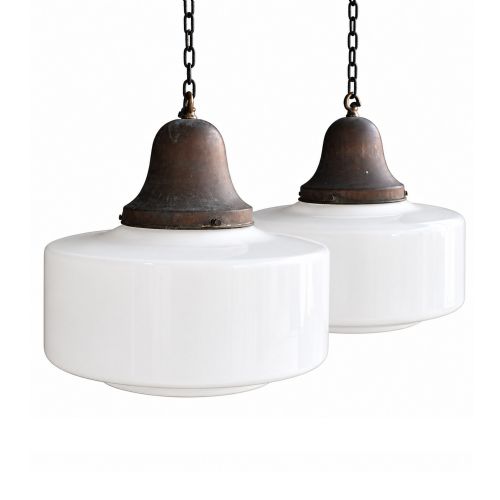
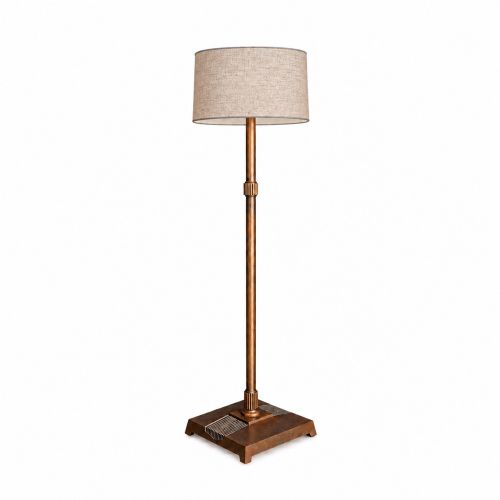
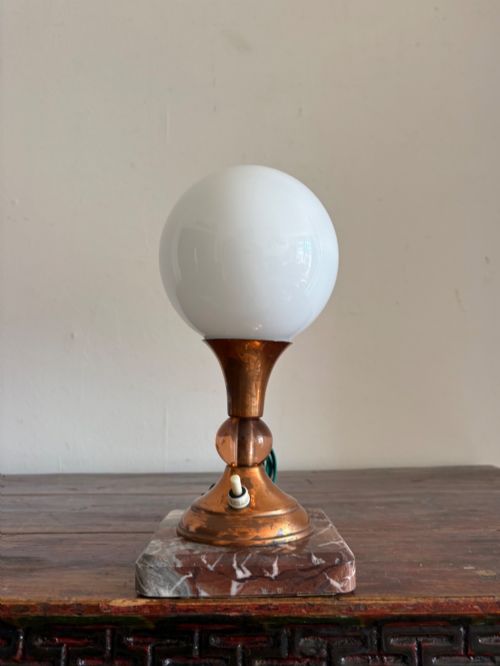
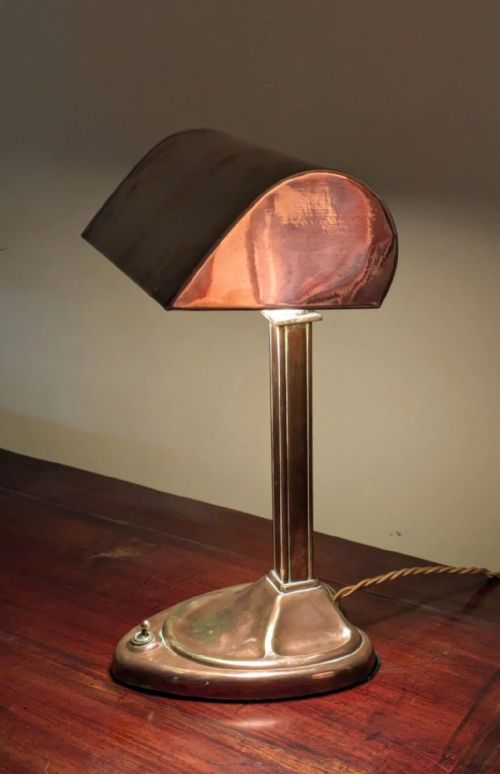
When you search for copper art deco lighting, you encounter functional domestic fittings shaped by the design movements of the early twentieth century. The selections available encompass table lamps, floor lamps with glass cocktail tables, and substantial pendant lights suited for hallways and living spaces.
The objects stem predominantly from the 1920s and 1930s, alongside earlier Amsterdam School and Art Nouveau transitional pieces dating from around 1900. French and Dutch workshops dominate the origins, producing everything from modest desk lamps to impressive large pricket candlesticks adapted for modern interiors.
Materials and construction methods
Makers utilised patinated copper and polished brass as primary metals, often combining them to create contrasting visual lines within a single fitting. Hand chasing techniques appear on wall lamps and candlesticks, showing direct metalwork skill rather than mass-produced stamping.
Glass forms an essential component of these fixtures, featuring opaline glass, frosted glass, and French tulip shades designed to diffuse the electric or candle illumination. Bases frequently incorporate heavy materials such as marble to anchor taller table and floor lamps securely.
Materials paired with copper across these pieces include brass, opaline glass, frosted glass, fabric, and marble.
Distinctions in quality and execution
Superior examples reveal themselves through substantial weight, heavier gauges of metal, and the integration of secondary materials like genuine marble bases and signed glass shades. The crispness of hand-chased surface detail separates standard commercial production from bespoke or architect-designed pieces.
The harmony between the metal body and the paired shade dictates the overall coherence of the object. Pieces that retain their original signed components, such as specialised French glass bowls, demonstrate a higher tier of period craftsmanship.
Jean Gauthier
The Copper Art Deco Lighting Glossary
- Amsterdam School
- An architectural and design style originating in the Netherlands during the early twentieth century, characterised by expressive brickwork, organic forms, and rich metalwork. It heavily influences the patinated copper lamps and candlesticks found in this category.
- Opaline Glass
- A milky, semi-translucent glass that diffuses light evenly without harsh glares. It is frequently moulded into shades for period ceiling lights and table lamps.
- Pricket Candlestick
- A candlestick featuring an upright spike upon which a candle is impelled, rather than a socket. Several large examples in this category utilise copper and brass construction.
- Up-lighter
- A lighting fixture designed to direct illumination upwards toward the ceiling. The French tulip lamp form frequently serves this decorative function.
Copper Art Deco Lighting: Frequently Asked Questions
How do I clean copper art deco light fixtures?
Maintenance requires gentle dusting with a soft, dry cloth to preserve existing patination on the metal surfaces. Avoid abrasive polishes that strip away historical ageing and character.
Glass shades can be removed and washed in warm, soapy water before being dried thoroughly and reattached to the metal frame.
Are these lamps wired for modern UK electricity?
Many surviving fixtures retain vintage wiring that should be inspected or replaced by a qualified electrician before daily use. Rewiring ensures compliance with current safety standards without altering the exterior appearance of the metalwork.
Lampholders are typically updated to take standard modern bulbs while keeping the original decorative copper housing intact.
What is the difference between Amsterdam School and Art Deco?
Amsterdam School design, emerging around 1900, leans towards sculptural, organic, and handcrafted metal manipulation with a heavier emphasis on patinated surfaces. Art Deco, coming to the fore in the 1920s and 1930s, favours streamlined symmetry, geometric precision, and industrial styling.
Both styles frequently overlap in European lighting through the use of copper and brass materials.
Can exterior wall lamps be used outside today?
Outdoor lamps from the 1940s require professional assessment of their weatherproofing seals and electrical insulation before exterior installation. Modern garden wiring regulations must be met to ensure safe operation in wet conditions.
Proper placement under sheltered porches helps protect the historic copper surfaces from excessive moisture accumulation.