




Copper and Glass Lamp
A copper and glass lamp brings together warm metal and translucent panels to light a room with genuine period character.
Copper and Glass Lamp
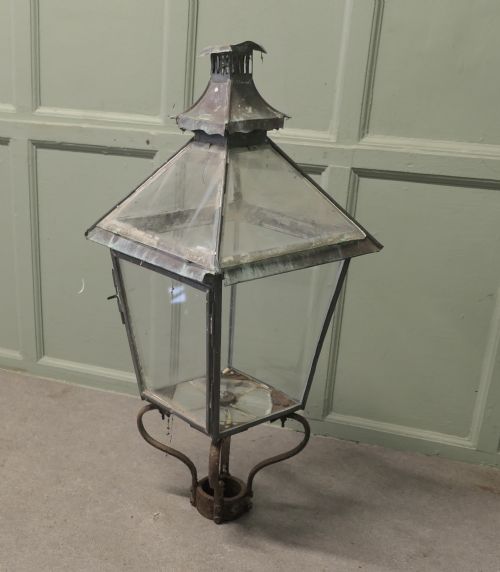
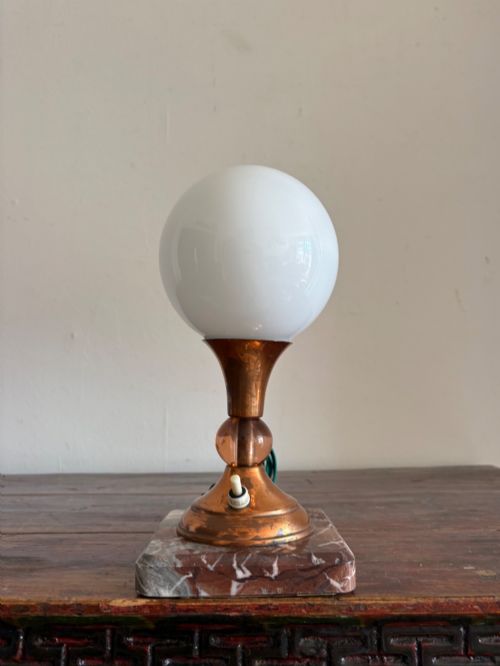
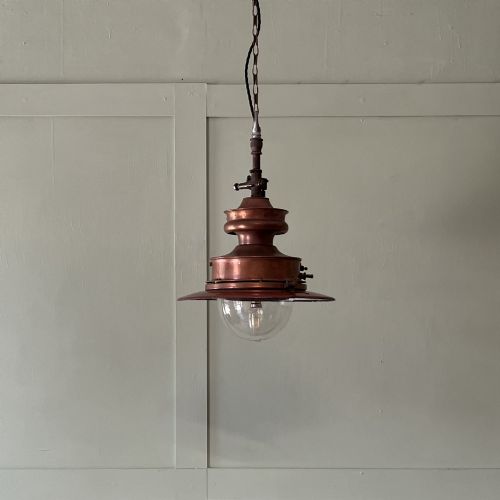
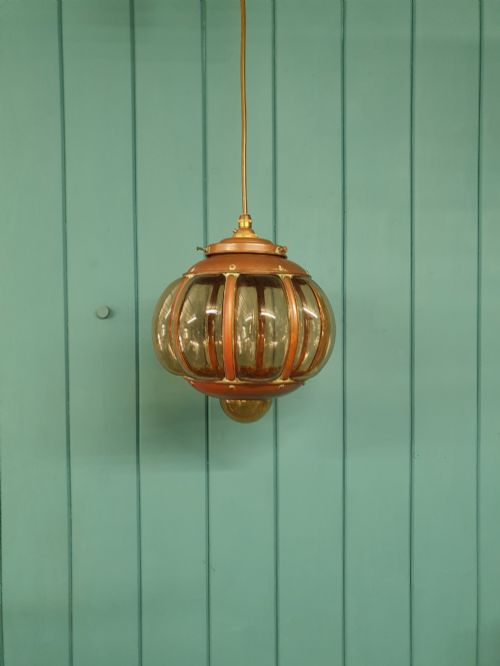
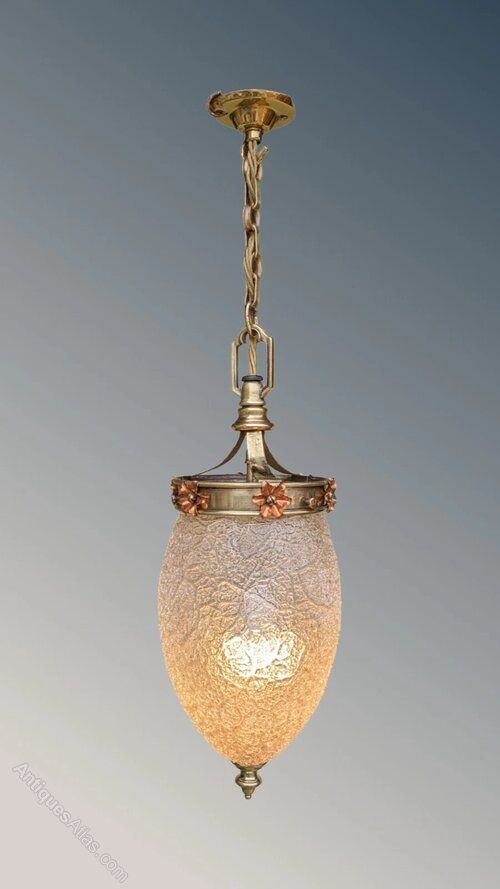
A copper and glass lamp combines metalwork with transparent or tinted panels, appearing in forms such as hanging pendants, street lanterns, and table lamps. These pieces originate from periods spanning the Victorian era through the mid-twentieth century.
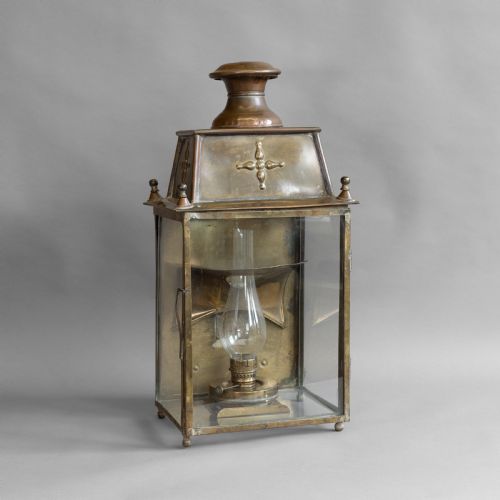
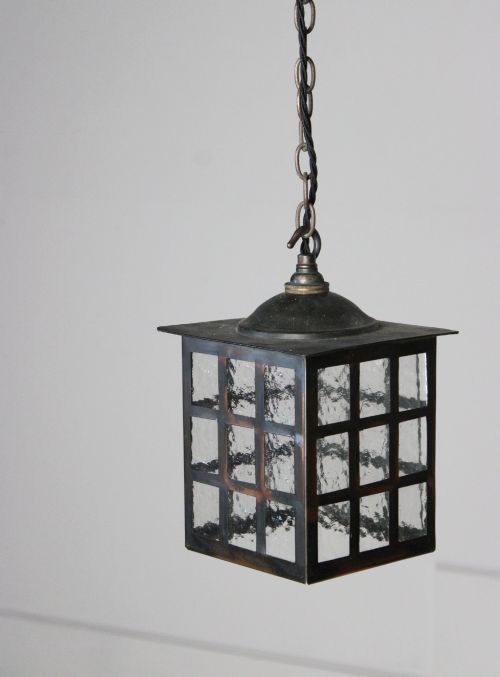
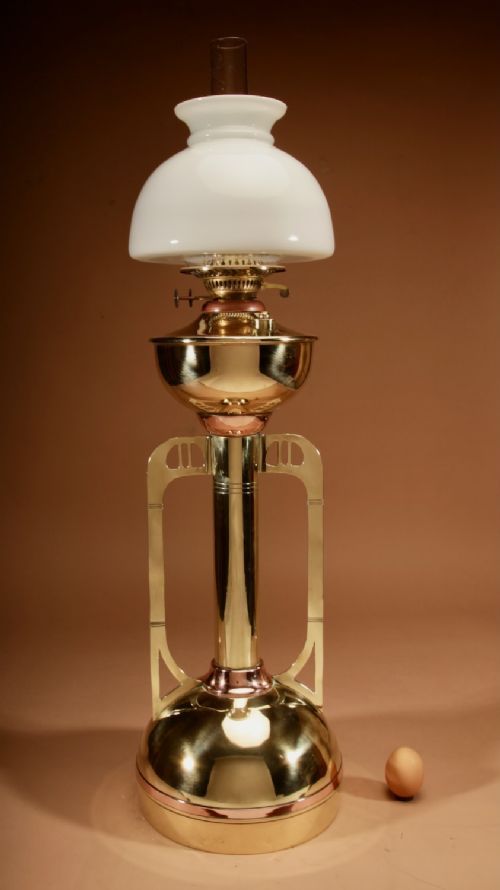
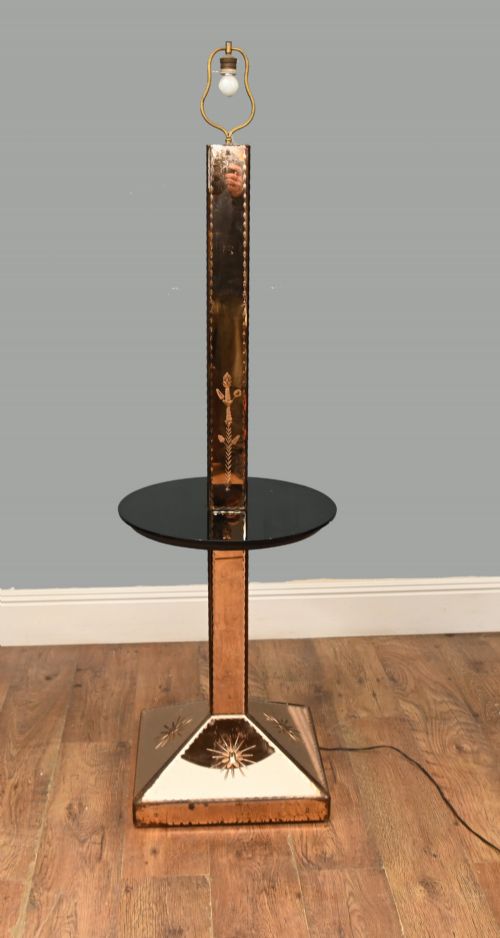
The version most commonly met on this page is the hanging lantern or pendant light, often framed in beaten or planished copper. Alongside these, buyers encounter floor-standing oil lamps and table designs utilising brass and iron alongside the primary metal.
Stylistic influences range from the robust utility of Victorian industrial and nautical pieces to the geometric lines of Art Deco and the hand-finished details of the Arts and Crafts movement. Each style reflects the lighting technology and aesthetic priorities of its decade of manufacture.
Materials and construction
Makers shaped the bodies using sheet copper, frequently employing planishing hammers to create textured surfaces on Arts and Crafts lanterns. Structural elements often incorporate brass, iron, and steel to provide rigidity and secure mounting points.
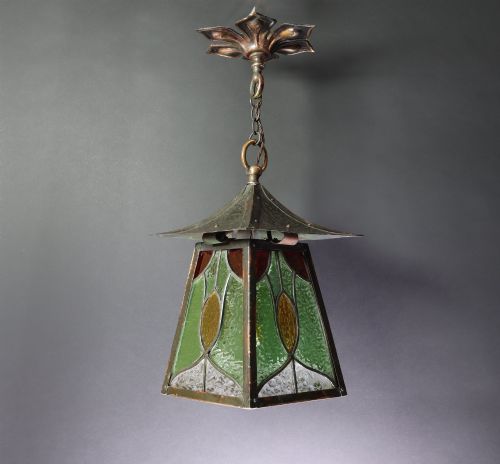
The glazing involves leaded stained-glass panels, opaline glass, or smoked glass held within metal frames. Oil lamps and table variants frequently utilise specialised blown shades in vaseline or cranberry glass to diffuse the light source.
Copper and Glass Lamp Retail Price Guide 2026
Typical asking prices for copper and glass lamp among the pieces listed under this phrase on Sellingantiques today, from the lower quarter to the upper quarter. They describe what is for sale here now, not the wider market.
Street lights found their way indoors long before electric conversion, occasionally retaining traces of soot from nineteenth-century gas flames.
Assessing quality and execution
The distinction between standard utility lighting and superior examples lies in the weight of the copper and the precision of the metalwork. Hand-beaten surfaces and integrated decorative motifs show a higher level of workshop involvement than mass-produced frames.
Glass selection significantly influences the overall merit of a piece, with leaded stained-glass panels and original coloured shades representing more thoughtful design. The survival of original fittings, matching pairs, and authenticated maker attribution elevate the standing of individual lamps.
Gustave Serrurier Bovy·Jean Gauthier·A Benson
The Copper and Glass Lamp Glossary
- Planished
- Metalwork beaten with a smooth-faced hammer to create a faceted, textured surface that catches the light. This technique is characteristic of Arts and Crafts metalwork.
- Opaline glass
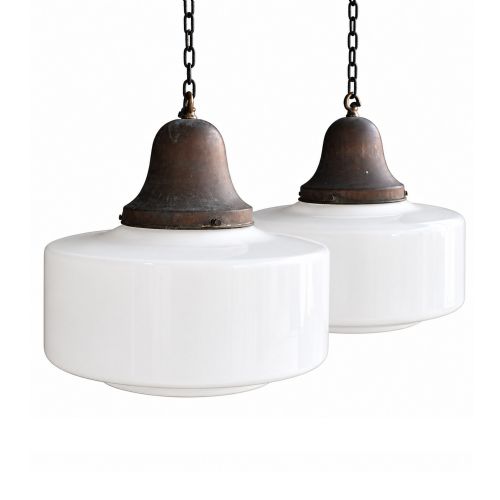
- An opaque or translucent white glass used for shades to diffuse light evenly without harsh glare. It appears frequently in French and English lighting of the early twentieth century.
- Vaseline glass
- A yellow-green glass containing uranium dioxide, which glows under ultraviolet light. It is often found in decorative shades from the Victorian and Edwardian periods.
- Secessionist
- A stylistic movement of the early twentieth century focusing on geometric forms and clean lines rather than ornate Victorian revivalism. It shares close ties with Art Nouveau and Arts and Crafts design.
- Pendant light
- A hanging luminaire suspended from the ceiling by a chain, cord, or rigid metal rod. These pieces were standard in hallways, streets, and domestic interiors.
Copper and Glass Lamp: Frequently Asked Questions
What rooms suit a copper and glass lamp?
Hanging lanterns and pendants work effectively in hallways, kitchens, or high-ceilinged living spaces where their drop can be appreciated.
Table lamps and floor-standing variants fit well on side tables or in reading corners, providing concentrated ambient light.
How do I identify an Arts and Crafts lamp?
Look for visible hand-working marks such as planished hammer blows on the copper frame and leaded stained-glass panels.
These pieces often display a focus on honest construction rather than concealed machine-made joints.
Were these lamps originally for oil or electricity?
Many older examples began life as paraffin or oil-burning lamps, featuring internal fonts and burners before later conversion to electricity.
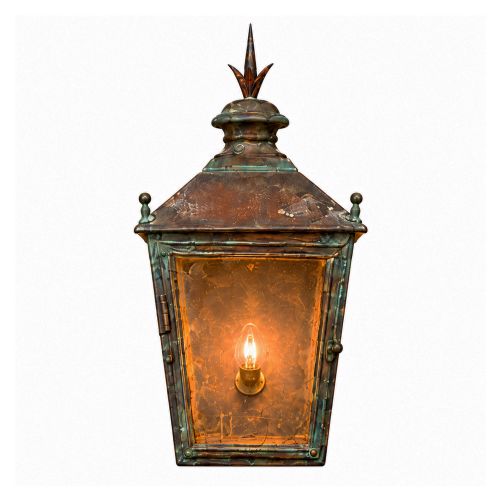
Street lamps and industrial lanterns were designed to house gas burners or early incandescent bulbs.
How should I clean copper and glass?
Dust the metal and glass components gently with a dry or slightly damp cloth to preserve the accumulated patina.
Avoid aggressive metal polishes that remove historical surface character from antique copper.