

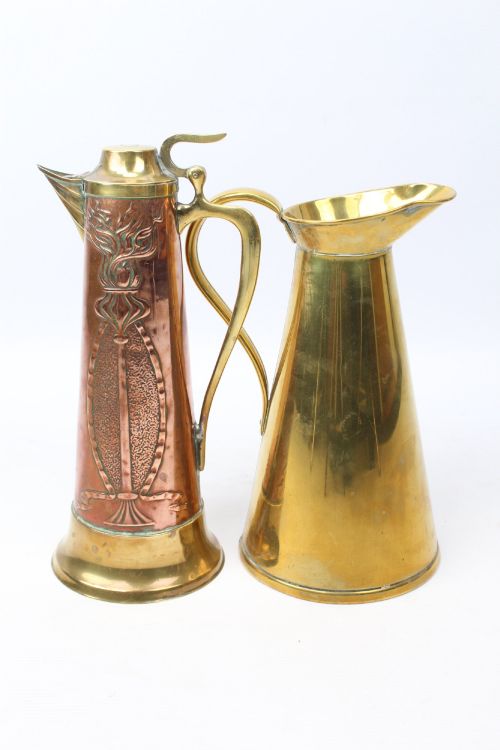
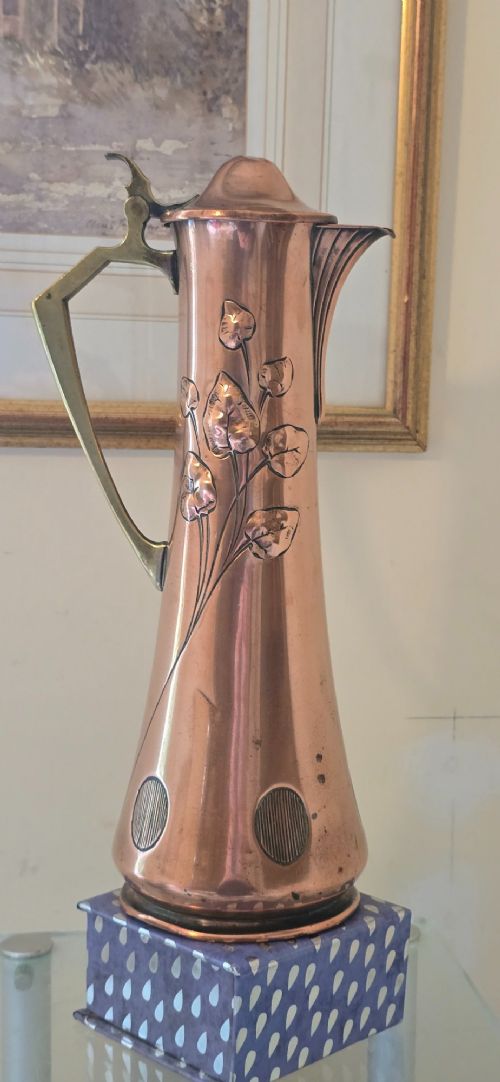


Copper and Brass Jug
These copper and brass jug examples combine warm metal tones and utility, offering practical display pieces for traditional and modern interiors alike.
Copper and Brass Jug
A copper and brass jug brings together two contrasting metals to create both utilitarian vessels and decorative items. These objects range from George III water jugs to Arts and Crafts designs.
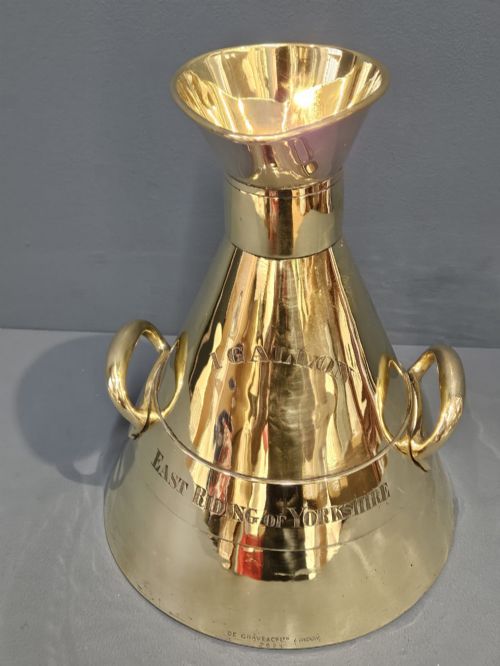
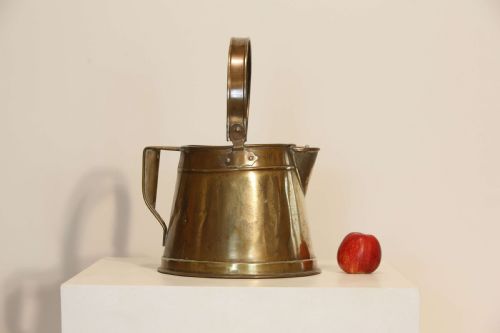
You will most frequently meet Victorian and Edwardian examples on this page, alongside earlier Georgian water vessels and mid nineteenth century Dutch folk art pieces. Forms vary from kitchen metalware and milk churns to watering cans and standard pitchers.
Makers such as WMF, J Bower, and Orme Evans and Co appear across the selection, showing how different eras approached the combination of copper bodies with brass mounts and handles.
Materials and construction methods
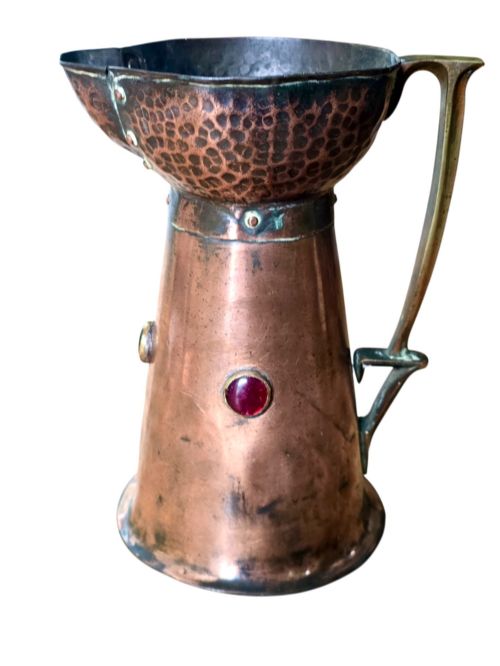
These pieces rely on sheet copper for the primary body, shaped by hand or machine to form water jugs, measures, and ewers. Tin often appears as an internal lining for hygienic liquid storage.
Cast or sheet brass provides structural contrast through handles, rims, bases, and decorative mounts. Rivets, seams, and soldered joints hold the two metals together securely.
Copper and Brass Jug Retail Price Guide 2026
Typical asking prices for copper and brass jug among the pieces listed under this phrase on Sellingantiques today, from the lower quarter to the upper quarter. They describe what is for sale here now, not the wider market.
Listings feature copper, brass, and tin across Georgian, Victorian, Edwardian, and Arts and Crafts styles.
Assessing quality in mixed metal vessels
Quality rests in the heaviness of the gauge metal and the clean integration of brass fittings onto copper bodies. Heavier George III water jugs and substantial Arts and Crafts milk jugs display superior material thickness.
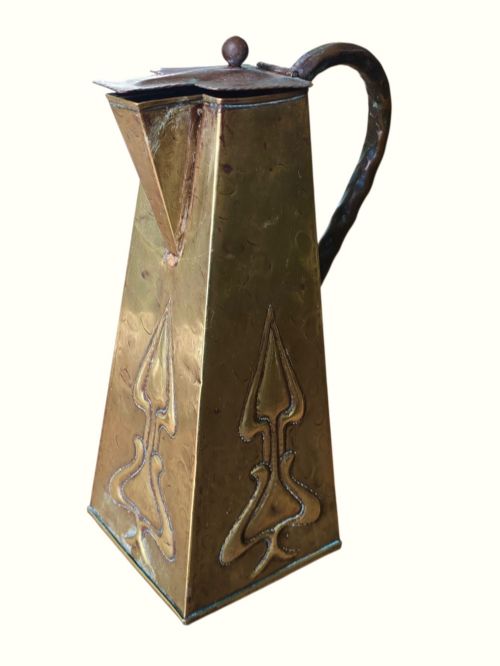
Artistic ambition distinguishes standard kitchen metalware from designer pieces by firms like WMF or Carl Deffner. Relief decoration, floral motifs, and balanced proportions elevate utilitarian forms into decorative works.
WMF·J Bower·Orme Evans and Co·Carl Deffner·Gebruder Bing
The Copper and Brass Jug Glossary
- Haystack measure
- A standard British liquid capacity measure shaped with a flared conical body, commonly rendered in brass during the nineteenth century.
- Jugendstil
- The continental German speaking equivalent of Art Nouveau, frequently seen on copper and brass work from firms like WMF.
- Ewer
- A large pitcher with a wide spout and elaborate handle, traditionally used for holding and pouring water.
- Milk churn
- A large cylindrical or tapered container utilised for transporting milk, often decorated in folk art traditions.
- Arts and Crafts
- A design movement valuing visible construction methods, honest materials, and hand craftsmanship over industrial mass production.
Copper and Brass Jug: Frequently Asked Questions
How do I clean old copper and brass?
Traditional metal cleaners remove active tarnishing while leaving the stable dark oxidation known as patina intact. Excessive polishing strips away the historic surface character that collectors value.
Apply cleaning pastes with a soft cloth, rinse thoroughly with warm water, and dry immediately to prevent water spotting on the mixed metal surface.
Can I use these jugs for water or flowers?
Many antique copper and brass jugs feature tin linings that historically made them safe for liquid use. However, older solder joints can degrade over decades of changing temperatures.
Using them as decorative vases or dry display items avoids placing stress on fragile historic seams and prevents internal moisture damage.
How do I date a copper and brass jug?
Stylistic clues such as floral relief work point towards the Arts and Crafts and Art Nouveau periods around nineteen hundred. Simpler forms, maker stamps, and construction seams help separate Georgian and Victorian examples.
Maker marks stamped into the base or rim provide the most reliable evidence for identifying specific firms and production decades.