

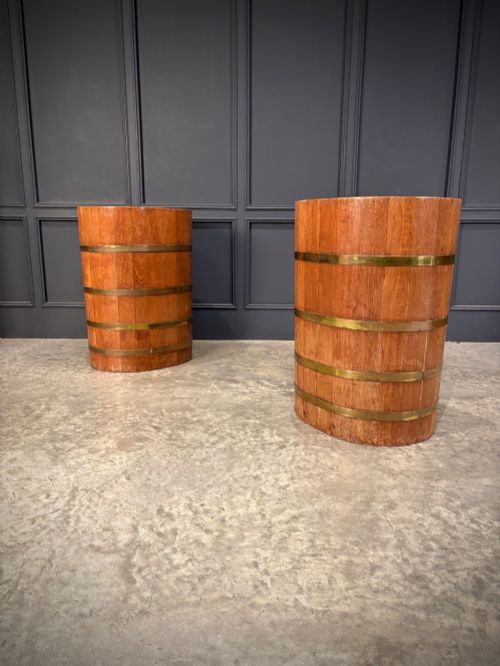
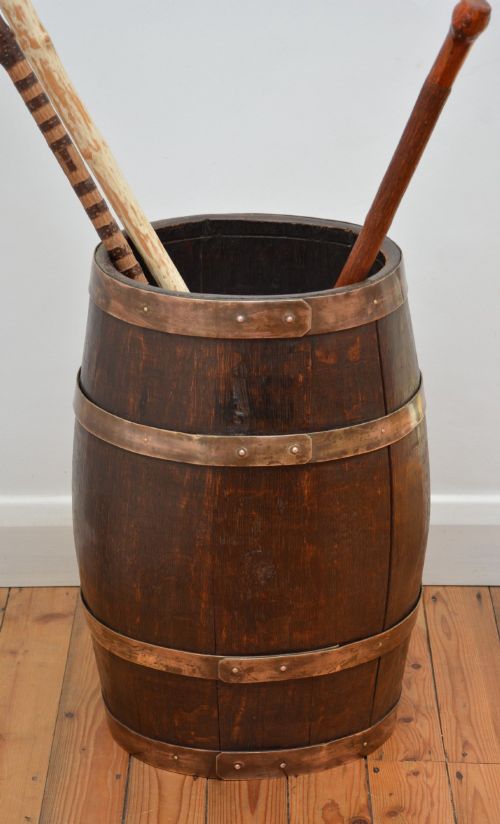
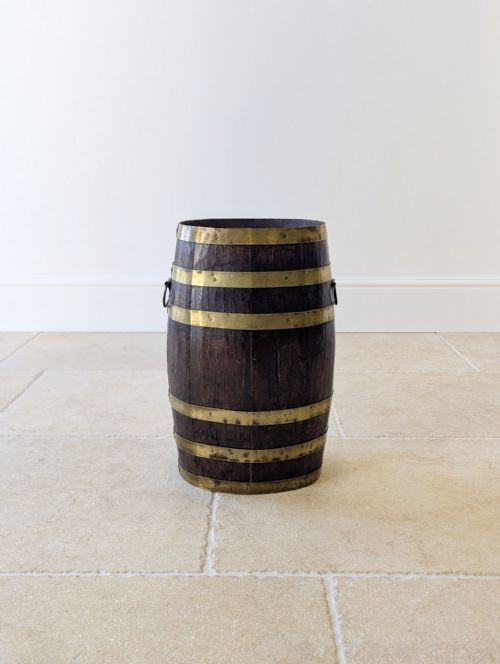
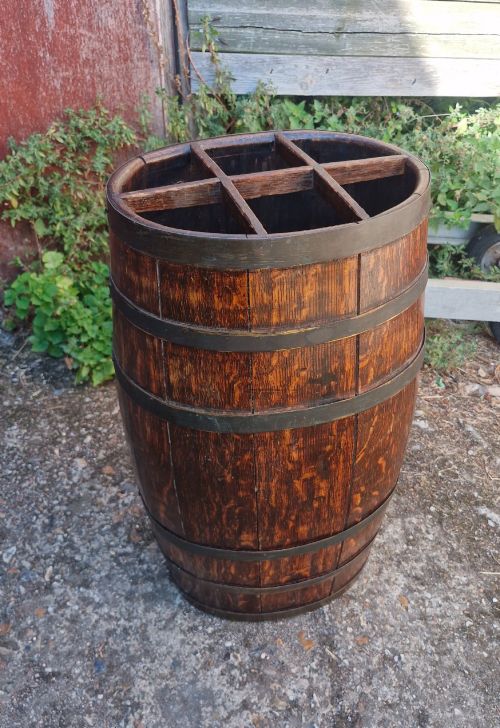




Coopered Barrel Umbrella Stand
These oak coopered barrel umbrella stand examples bring sturdy English country character to a hallway.
Coopered Barrel Umbrella Stand
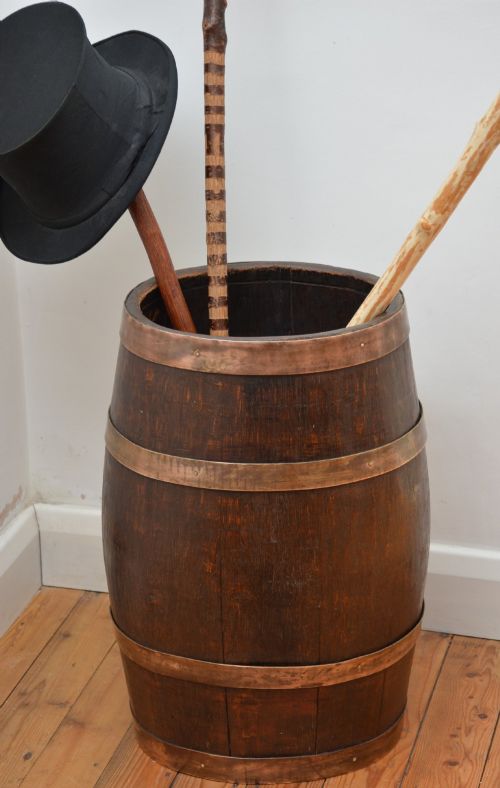
A coopered barrel umbrella stand is a domestic vessel designed to hold walking sticks, canes and wet umbrellas in hallways and boot rooms. When a buyer searches for this phrase, they encounter practical cylindrical and oval vessels built for daily household use.
The pieces seen here date predominantly from the Victorian and Edwardian periods, stretching from the mid-nineteenth century into the early decades of the twentieth century. English country house and rustic country styles dominate the selection.
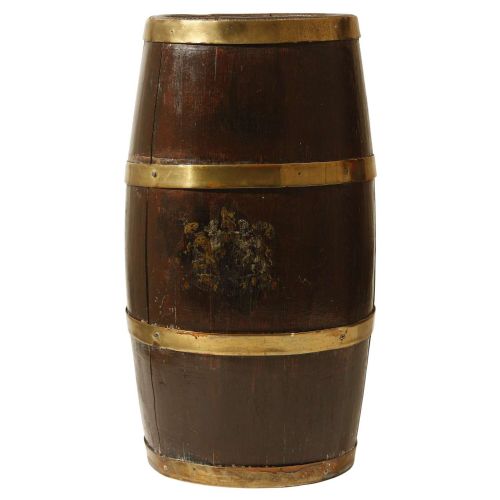
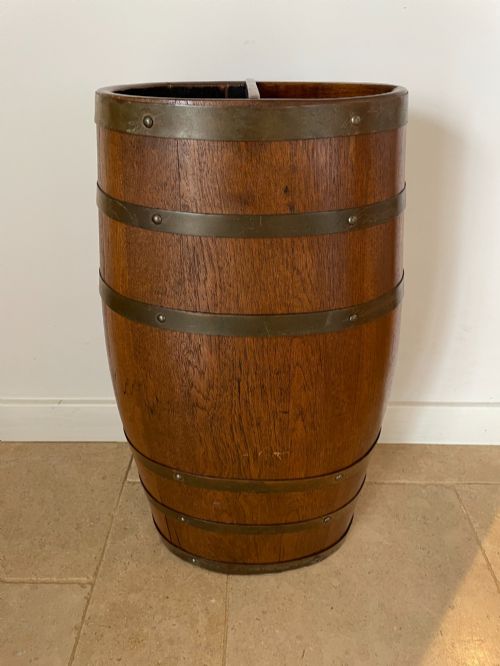
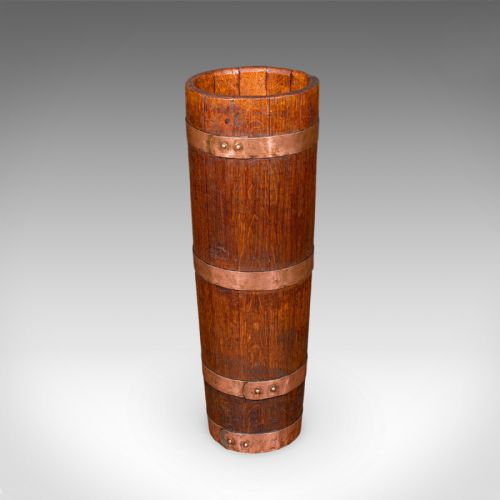
Most examples take the form of traditional wooden barrels or casks fitted with interior loops or exterior mounts for keeping sticks upright. Oval shapes and cone-shaped wooden barrels also appear among the standard cylindrical vessels.
How they were made
Construction relies on traditional coopering techniques, joining individual vertical wooden staves together to form a self-supporting waterproof vessel. Oak serves as the primary timber, valued for its durability and resistance to moisture.
Metal bands of brass, copper or iron bind the wooden staves tightly around the circumference, holding the vessel together under constant tension. Some variants incorporate cast metal loops or decorative coats of arms fixed to the exterior timber.
Coopered Barrel Umbrella Stand Retail Price Guide 2026
Typical asking prices for coopered barrel umbrella stand among the pieces listed under this phrase on Sellingantiques today, from the lower quarter to the upper quarter. They describe what is for sale here now, not the wider market.
The listings show oak as the primary timber paired with brass, copper and iron metalwork across Victorian and Edwardian periods.
What varies in quality
Quality rests upon the precision of the stave joints and the snugness of the metal banding around the timber body. Heavier gauge brass or copper bands indicate a sturdier vessel intended for substantial country house use.
The choice of timber grain and the presence of original interior umbrella loops differentiate standard utility barrels from more refined examples. Surviving surface patination on both the oak and the metal fittings contributes significantly to the visual appeal.
The Coopered Barrel Umbrella Stand Glossary
- Coopered
- Constructed from curved wooden staves fitted together edge-to-edge to form a hollow cylindrical or oval shape. This method creates strong vessels traditionally used for holding liquids or dry goods.
- Staves
- The narrow vertical strips of oak that form the sides of a barrel or stick stand. Each piece is tapered and bevelled to fit tightly against its neighbours.
- Hoops
- The metal bands, typically brass, copper or iron, that encircle the barrel to keep the staves securely in place. They provide structural strength and prevent the wood from warping.
- Stick loop
- An internal or external metal ring designed to keep individual walking sticks and umbrellas separated and upright. These loops prevent items from leaning or sliding against the hallway floor.
Coopered Barrel Umbrella Stand: Frequently Asked Questions
Where should I place a barrel stand?
These vessels suit hallways, porches and boot rooms where wet umbrellas and walking sticks accumulate near the entrance.
Positioning them on hard flooring prevents dampness from affecting fitted carpets during wet weather.
How do I care for the oak?
Wipe the timber surface occasionally with a dry or slightly damp cloth to remove dust without stripping the natural patina.
Avoid placing the vessel directly beside active heat sources to prevent the oak staves from shrinking and loosening the metal bands.
Are brass bands original?
Most surviving Victorian and Edwardian examples retain their original brass or iron bindings fitted securely around the oak staves.
Over decades of use, metal bands acquire a dark oxidation and softening that corresponds with the age of the timber.
How do I date an oak stand?
Dating relies upon observing the construction methods, the thickness of the oak staves and the style of any attached brass fittings.
Victorian and Edwardian country house examples display hand-finished timber characteristics distinct from later mass-produced items.