

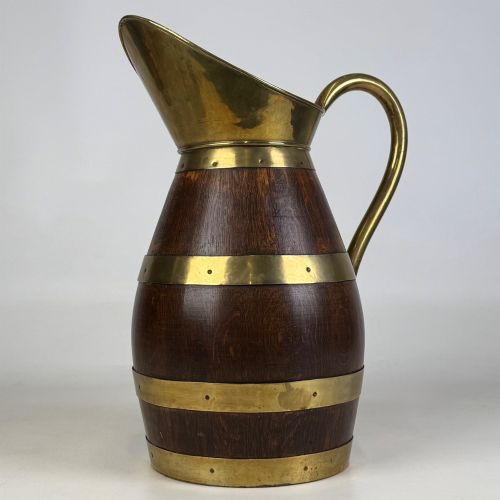


Rustic Oak Stick Stand
These rustic oak stick stands bring practical country house character to a hallway, keeping wet weather gear neatly organised.
Rustic Oak Stick Stand
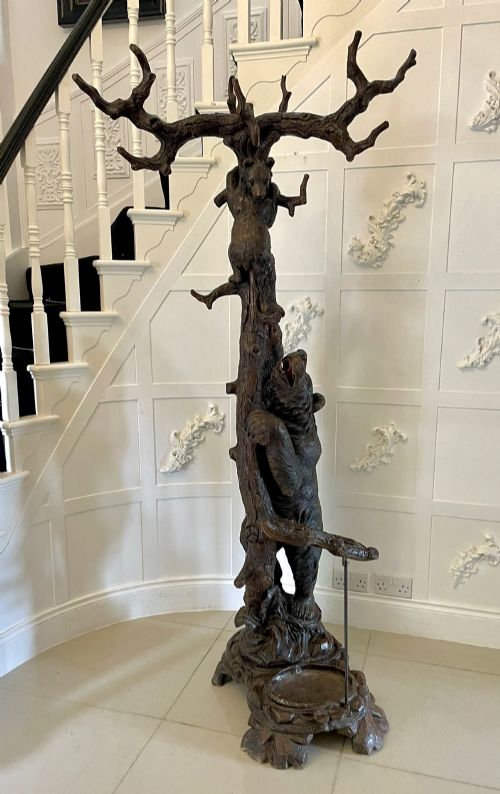
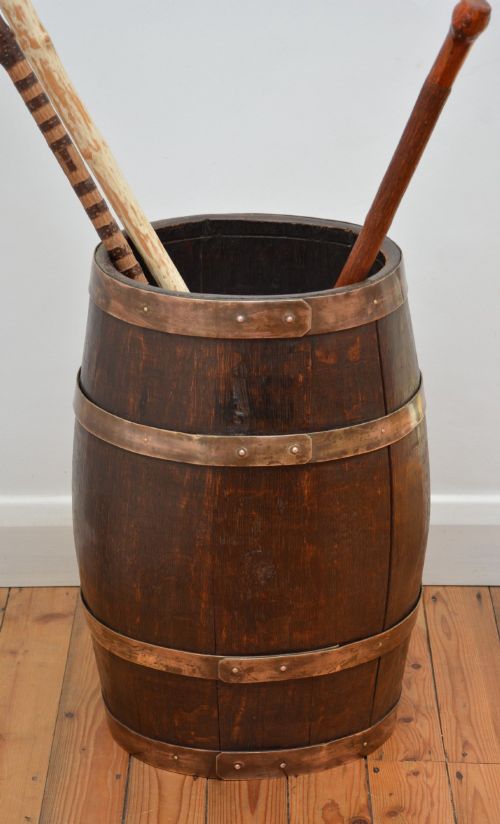
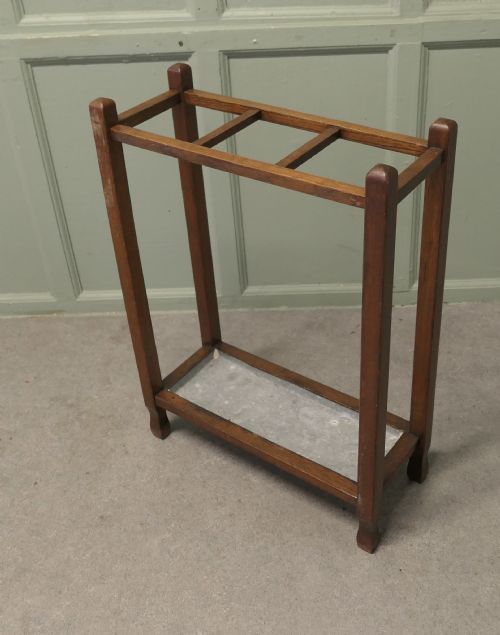
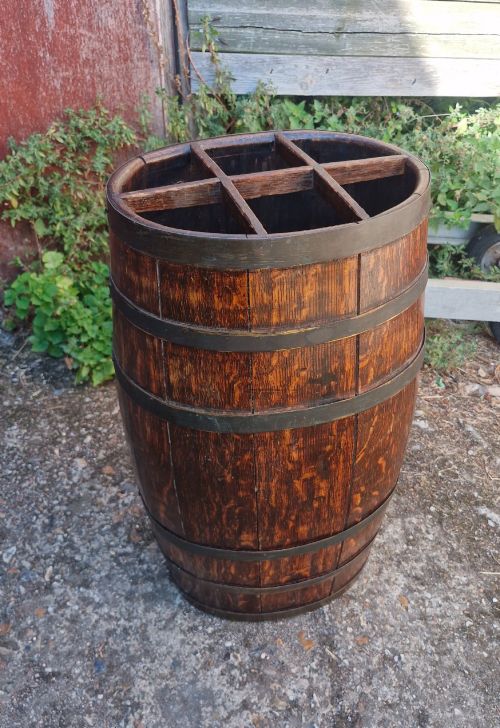
A rustic oak stick stand provides a sturdy holding place for walking sticks, umbrellas, and canes within a traditional entrance hall. The pieces seen here encompass solid timber rectangular frames with division sections, as well as coopered barrel forms.
The selections range across Victorian, Edwardian, and early twentieth century periods, reflecting diverse aesthetic movements such as Gothic Revival, Arts and Crafts, and Folk Art. Many examples integrate practical metal components alongside the primary timber construction.
While umbrella stands and storage racks appear frequently, buyers also encounter related hallway furniture including combined hat and glove stands. The materials span traditional oak, carved wood, and metal elements.
Materials and construction methods
The primary construction relies upon solid oak, fashioned through traditional coopering techniques or solid timber carpentry with canted corners and four-section dividers. Coopered barrel examples utilise vertical staves held firmly together by exterior bands.
Rustic Oak Stick Stand Retail Price Guide 2026
Typical asking prices for rustic oak stick stand among the pieces listed under this phrase on Sellingantiques today, from the lower quarter to the upper quarter. They describe what is for sale here now, not the wider market.
Listings feature oak combined with metal, brass, zinc, iron, and copper across Victorian, Edwardian, and early twentieth-century periods.
Distinctions in quality and execution
Quality reveals itself through the integrity of the timber selection, such as richly figured golden oak, and the precision of the coopered or joined construction. Robust assembly ensures the stand withstands daily use in a busy entrance.
The presence of original functional elements, including internal drop trays for catching water and well-fitted metal bounds, elevates the piece. Stylistic execution also plays a part, distinguishing simple utilitarian items from decorative Black Forest or Gothic Revival interpretations.
The Rustic Oak Stick Stand Glossary
- Coopered
- Constructed from wooden staves fitted together side by side to form a cylinder, traditionally bound with metal hoops like a barrel.
- Canted
- Beveled or cut at an edge or corner to form an angled surface rather than a sharp ninety-degree turn.
- Gothic Revival
- An architectural and decorative style drawing inspiration from medieval forms, featuring pointed arches and heavy detailing.
- Arts and Crafts
- A design movement valuing traditional craftsmanship, simple forms, and the natural qualities of the materials used.
Rustic Oak Stick Stand: Frequently Asked Questions
What is a rustic oak stick stand?
A rustic oak stick stand is a hallway furnishing designed to hold walking sticks and umbrellas upright. They utilise solid oak or coopered staves to handle daily household use.
These pieces often feature metal trays or bands to manage moisture from wet weather gear. Their designs range from simple slatted frames to decorative carved styles.
How were these stands used?
Historically placed in entrance halls or boot rooms, they provided a designated drop-off point for outdoor walking equipment. Guests and residents stored their canes and umbrellas here upon entering the house.
The inclusion of drip trays protected hallway floors from rainwater running off wet umbrellas. Combined hall stands also offered hooks for hats and gloves alongside the stick storage.
How do I care for an oak stick stand?
Keep the timber clean with a dry cloth and occasionally nourish the oak with a traditional wax polish. Avoid placing soaking wet items directly onto unprotected wood.
Checking that metal liners or drop trays remain empty and dry will prevent moisture damage to the interior base. Positioning the stand away from direct heat sources protects the timber joints from splitting.
How can I tell the period of a stand?
Dating relies upon observing the construction methods, stylistic markers, and overall material wear. Pieces reflecting Gothic Revival or Victorian tastes differ noticeably from later Arts and Crafts examples.
Examining the fixings, metal types, and woodworking techniques helps connect the piece to periods such as the nineteenth or early twentieth century.