





Coopered Barrel Stand
A coopered barrel stand brings robust utility to a hallway, channelling domestic history through solid oak staves and gleaming metal bands.
Coopered Barrel Stand
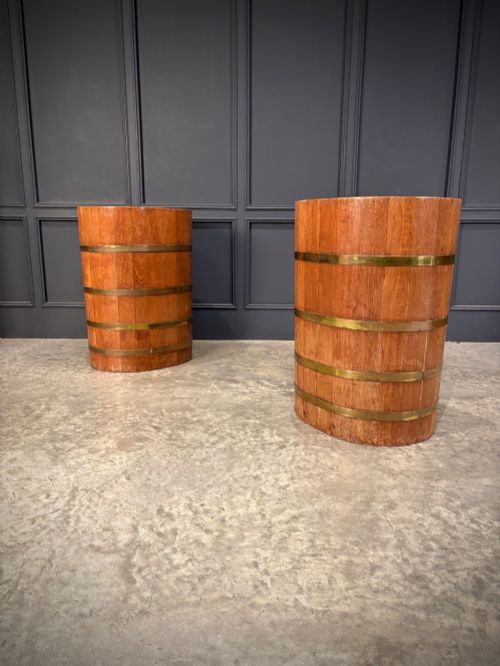
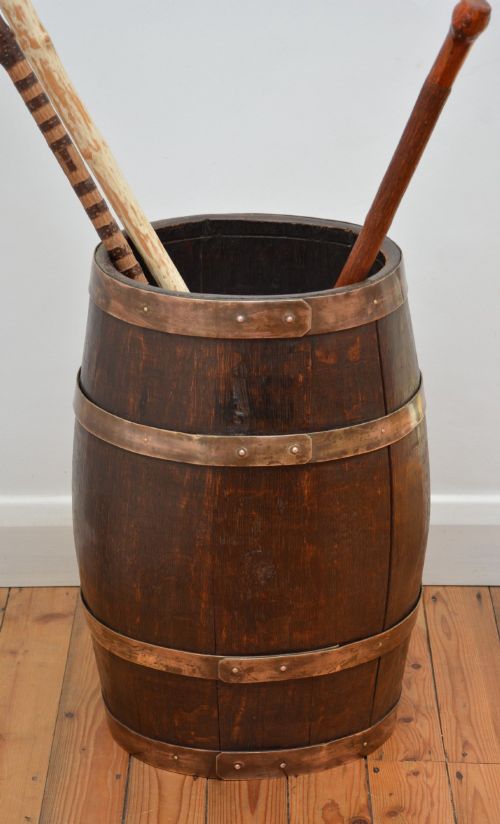
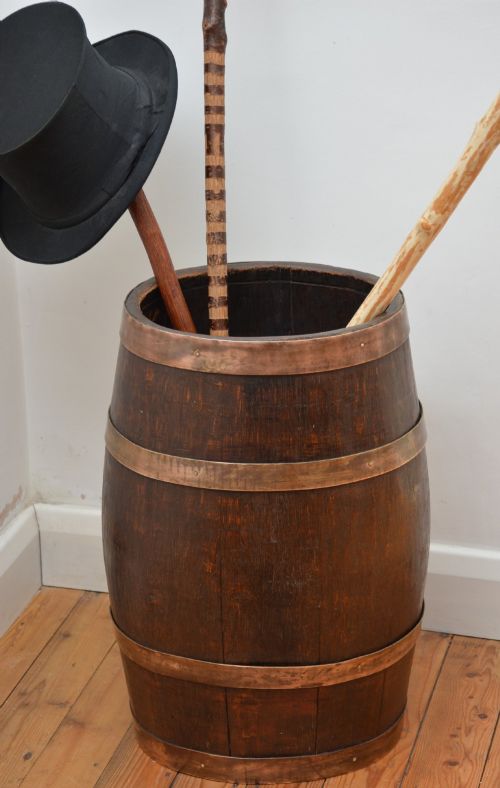
A coopered barrel stand takes the form of a stout wooden vessel constructed from curved staves, serving primarily as a practical holder for walking sticks, umbrellas or indoor plants. These pieces appear most frequently in oak, frequently reinforced with sturdy metal bands, reflecting robust utility in nineteenth and early twentieth century domestic settings.
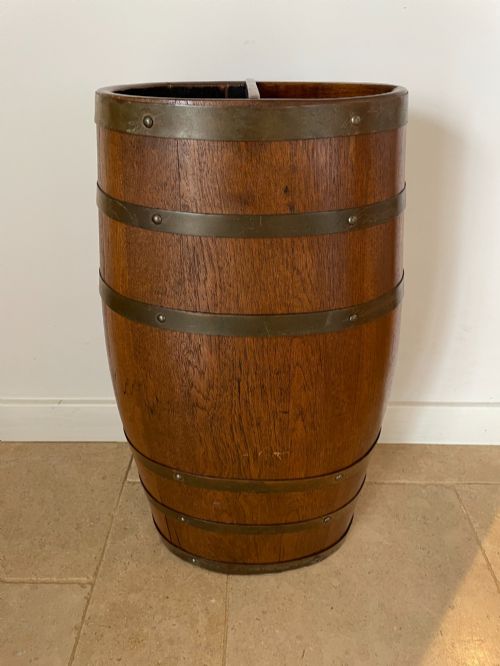
The inventory on this page demonstrates that Victorian and Edwardian examples dominate the selection. Buyers encounter both round and oval forms, ranging from country house umbrella holders to dedicated garden planters fitted upon elevated stands.
Materials and construction
Makers built these pieces using seasoned oak staves fitted tightly together by hand, mirroring traditional cask-making techniques. The resulting cylindrical or oval vessels rely on tension and precision jointing rather than modern adhesives to hold their shape.
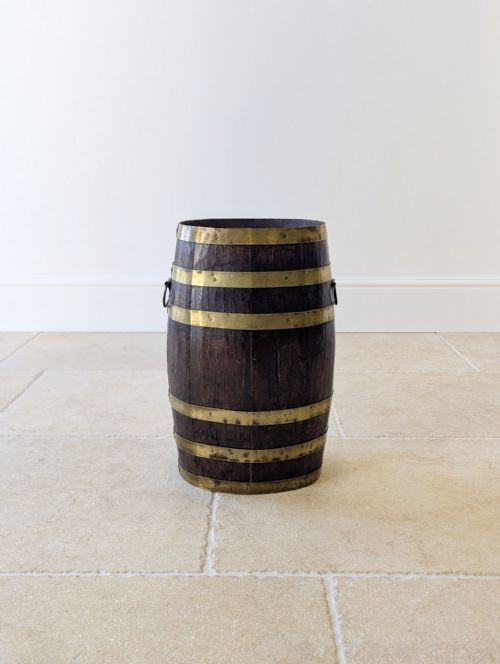
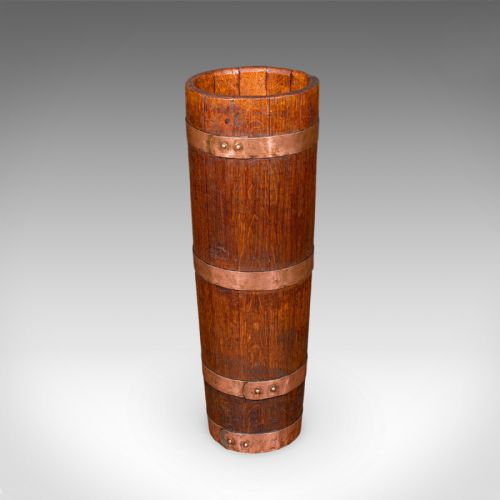
Metal components provide structural reinforcement and visual contrast. Brass, copper and iron bands encircle the timber bodies, secured with rivets or screws, whilst interior loops and handles often incorporate similar metals to manage damp umbrellas.
Coopered Barrel Stand Retail Price Guide 2026
Typical asking prices for coopered barrel stand among the pieces listed under this phrase on Sellingantiques today, from the lower quarter to the upper quarter. They describe what is for sale here now, not the wider market.
The listings show oak as the primary timber, complemented by brass, copper and iron hardware across Victorian and Edwardian periods.
Distinctions in craftsmanship
Quality rests upon the precision of the stave work and the robustness of the timber selection. Superior examples display tight, uniform joints between the oak boards and retain their original metal strapping without excessive corrosion or loose fittings.
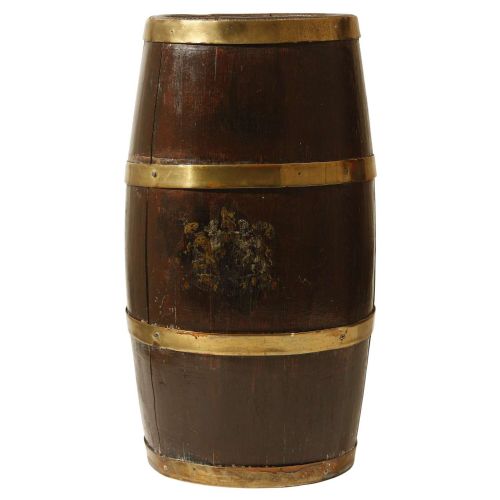
Proportion and detail elevate individual pieces above standard utilitarian items. Oval shapes, fitted umbrella loops, maker stamps and decorative brass coats of arms distinguish finer country house specimens from plain workshop output.
Lister and Co·R.A. Lister
The Coopered Barrel Stand Glossary
- Coopered
- Constructed from curved wooden staves bound together with metal hoops, following traditional vessel-making methods. This technique creates strong, hollow forms designed to withstand weight and moisture.
- Stave
- A narrow strip of wood with bevelled edges that forms the sides of a barrel or stand. The precise shaping of each stave allows the assembly to curve tightly without gaps.
- Jardiniere
- An ornamental pot or stand designed to hold plants and flowers. In these listings, jardiniere stands elevate greenery upon coopered oak bodies.
- Umbrella loop
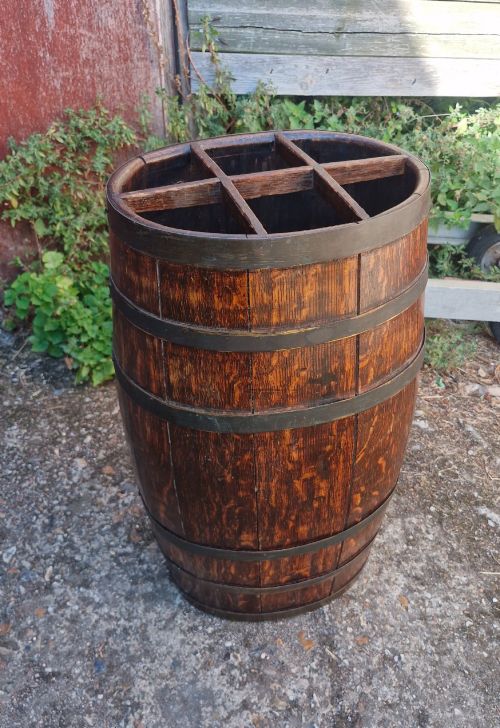
- A metal divider attached to the top of a stand to keep walking sticks and umbrellas separated. These loops prevent damp items from clustering together inside the vessel.
Coopered Barrel Stand: Frequently Asked Questions
What is a coopered barrel stand?
A coopered barrel stand is a cylindrical or oval wooden vessel built from curved staves and metal bands. It serves as a traditional holder for walking sticks, umbrellas or plants in a hallway or porch.
Most surviving examples date from the Victorian and Edwardian eras. They reflect traditional woodworking techniques adapted for domestic storage and display.
How were these stands used originally?
Households placed these stands in hallways and boot rooms to contain wet umbrellas and walking sticks after outdoor excursions. The sturdy timber and metal construction easily resisted daily wear from damp items.
Certain variations served as plant holders or jardinieres, bringing greenery into interior living spaces. Their waterproof timber construction suited indoor gardening.
Which woods and metals appear most often?
Oak is the predominant timber found across these listings, valued for its durability and strong grain. The wood frequently displays warm patination developed over decades of domestic use.
Metal components typically consist of brass, copper or iron bands that secure the staves. These metallic braces provide structural strength while adding a decorative contrast to the dark oak.
How do I date a Victorian piece?
Dating relies on observing construction methods, timber patination and associated hardware styles. Mid-nineteenth century pieces often show hand-finished oak staves paired with heavy brass bindings and country house provenance.
Later Edwardian versions introduce maker stamps such as Lister, alongside refined oval profiles. Comparing structural details against documented periods helps establish an approximate age.