
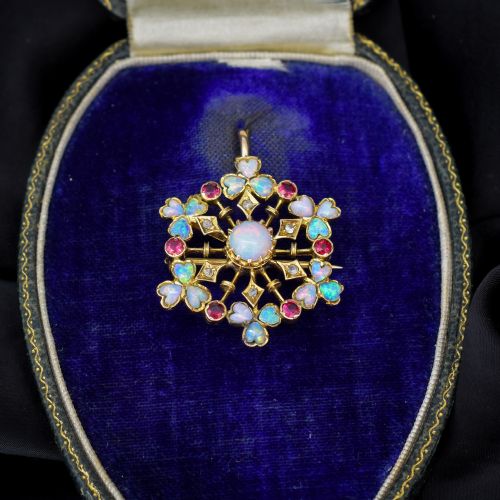
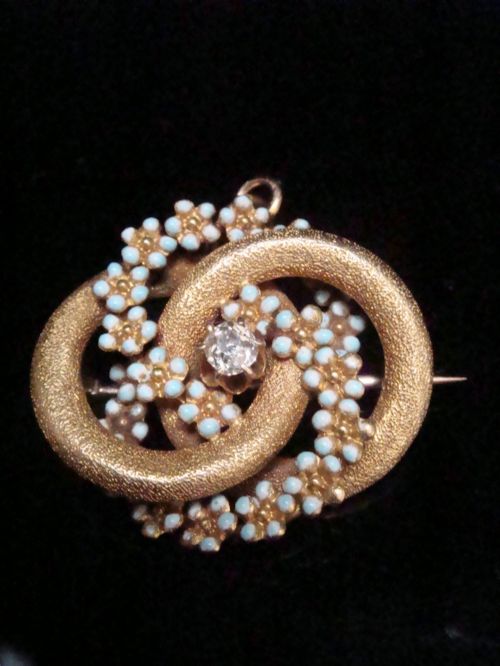
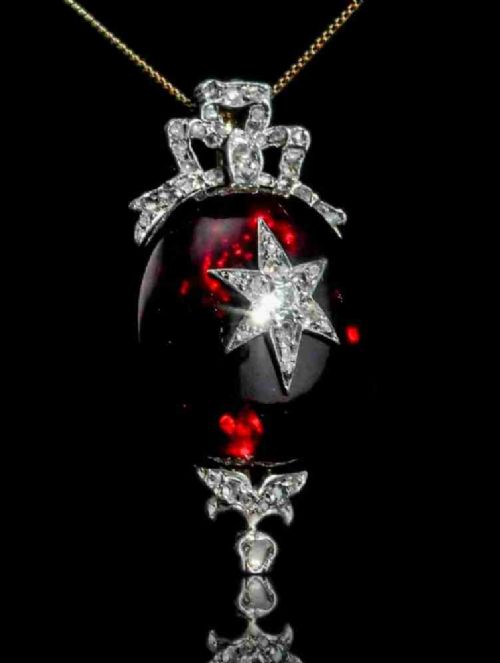


Convertible Diamond Pendant Brooch
A convertible diamond pendant brooch offers dual wear as both a breast ornament and a necklace centrepiece.
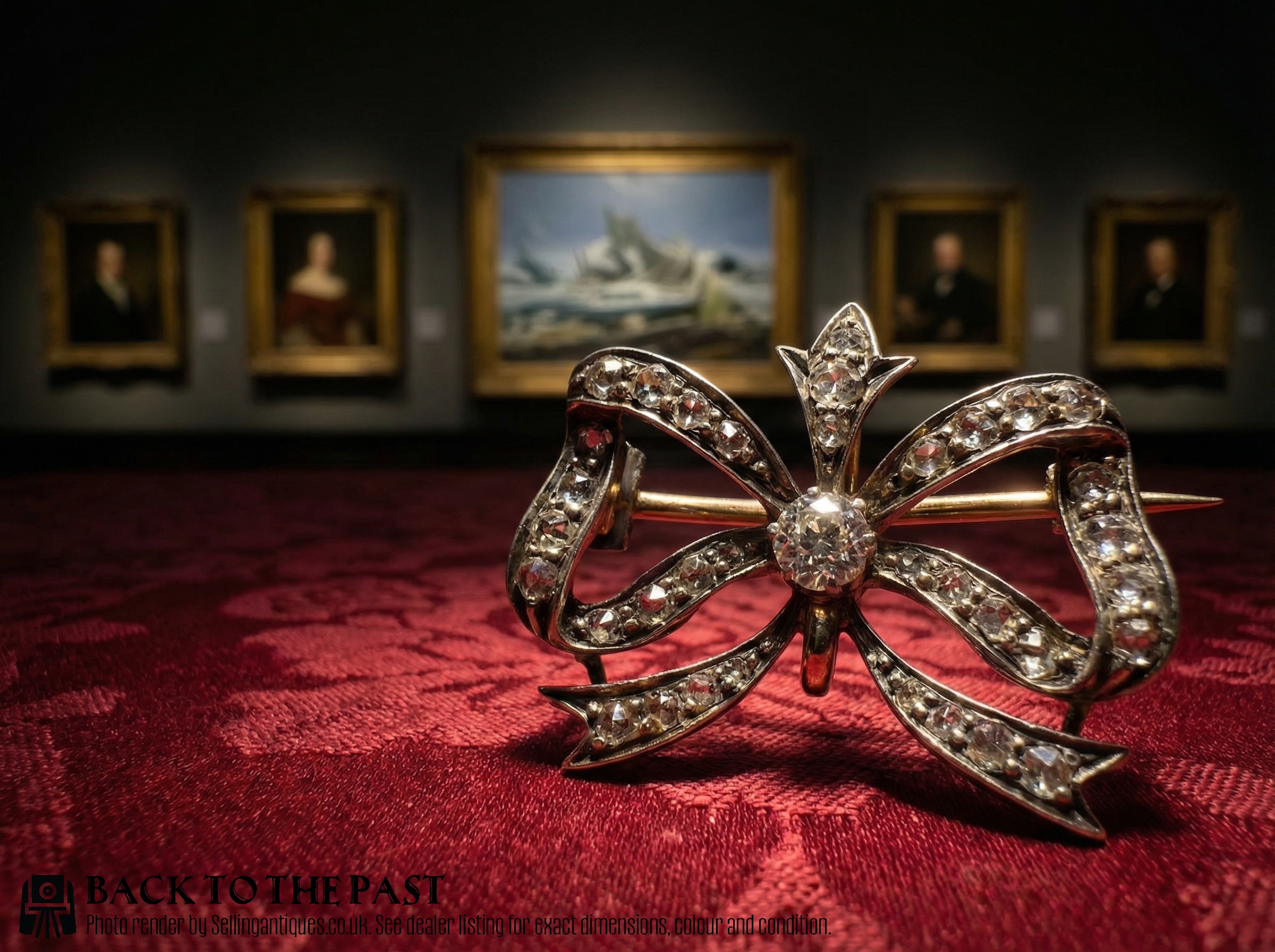
Convertible Diamond Pendant Brooch
A convertible diamond pendant brooch is a dual-purpose jewel designed to transition between a breast ornament and a necklace suspension piece. These items bridge multiple forms including starbursts, flowers, bows, insects, and geometric shapes.
The pieces appearing here span from the Victorian and Edwardian eras into the Art Deco period. Buyers most frequently encounter Victorian and Edwardian examples featuring removable pin mechanisms and hidden suspension loops.
Makers utilised gold, silver, and platinum to mount diamonds alongside garnets, natural pearls, rubies, opals, and labradorite. The resulting configurations allow a single piece to function pinned to a lapel or suspended from a chain.
How they were made
Goldsmiths and silversmiths combined precious metals to mount stones securely, frequently setting diamonds in silver over gold during the nineteenth century to enhance the brilliance of the stones. Platinum emerges in later twentieth-century pieces.
Construction relies on threaded screws, sliding hinges, and detachable bails or pin stems. These concealed engineering solutions permit the brooch hardware to detach cleanly when the piece is worn as a pendant.
Listings feature Victorian, Edwardian, and Art Deco periods, utilising diamond, silver, gold, platinum, opal, ruby, and natural pearl.
What varies in quality
The sophistication of the conversion mechanism dictates much of the merit in these jewels. Top-tier examples feature secure, flush-fitting fittings that leave no visual trace of the alternate function when worn.
Stone selection and lapidary work define the overall calibre. Pieces set with certified diamonds, natural pearls, or distinct gems like opals and labradorite demonstrate superior craftsmanship.
The Convertible Diamond Pendant Brooch Glossary
- Convertible pendant brooch
- A dual-purpose piece of jewellery engineered to transition between a lapel brooch and a pendant suspended from a chain. The mechanisms are typically concealed behind the primary face.
- Collet
- A metal collar or band that holds a gemstone in place within the mounting. Early examples are often hand-formed around the stone.
- Lavaliere
- A pendant featuring a primary drop stone or motif hanging from a chain, popular during the Edwardian period. Many incorporate detachable pin backs to function as brooches.
- Cabochon
- A gemstone shaped and polished with a smooth, rounded convex surface rather than faceted. This cut is common in garnets, opals, and tigers eye.
- Bail
- The ring or loop attached to a pendant that holds the neck chain. In convertible pieces, this component often folds down or detaches entirely.
Convertible Diamond Pendant Brooch: Frequently Asked Questions
How do you convert a brooch into a pendant?
Conversion typically involves a threaded pin stem that unscrews entirely or a hinged pin that folds flat against the reverse. A hidden loop or bail then swings up to receive a chain.
Some pieces utilise a detachable screw-fitting frame that holds the pin mechanism separately from the main body of the jewel.
Are original boxes important for these pieces?
Original fitted boxes are uncommon and provide secure provenance when they accompany a piece. They indicate the high status of the original purchase and often mirror the contours of the convertible hardware.
Items retained in their fitted cases generally experience less wear to the delicate mechanisms and stone settings.
What periods do these jewels come from?
The available selection predominantly spans the Victorian, Edwardian, and Art Deco eras. Each period brings distinct motifs, ranging from naturalistic starbursts and insects to symmetrical geometric platinum work.
Metal choices shift across these decades, moving from silver-topped gold through to platinum as technology advanced.
Can I wear a convertible brooch every day?
Daily wear is possible with careful handling, particularly regarding the security of the pin and conversion joints. Antique settings require periodic inspection by a specialist to ensure stones remain firmly secured in their collets.
Removing the pendant from the chain and operating the pin mechanism with gentle care preserves the historical components.