


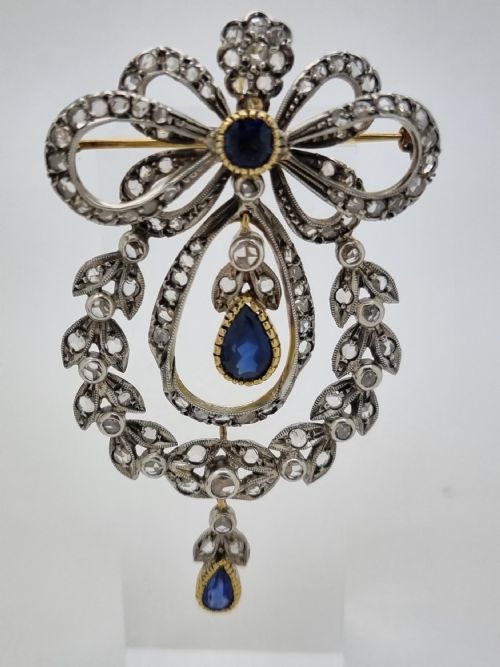


Antique Diamond Bow Pendant
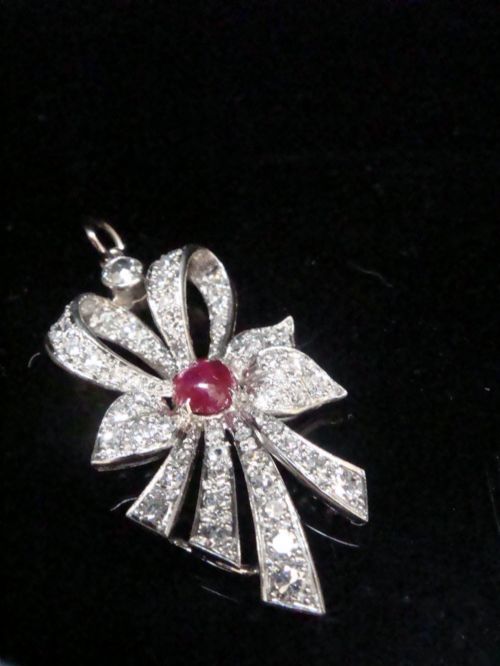
An antique diamond bow pendant marries the delicate romance of ribbonwork with the brilliance of old-cut stones.
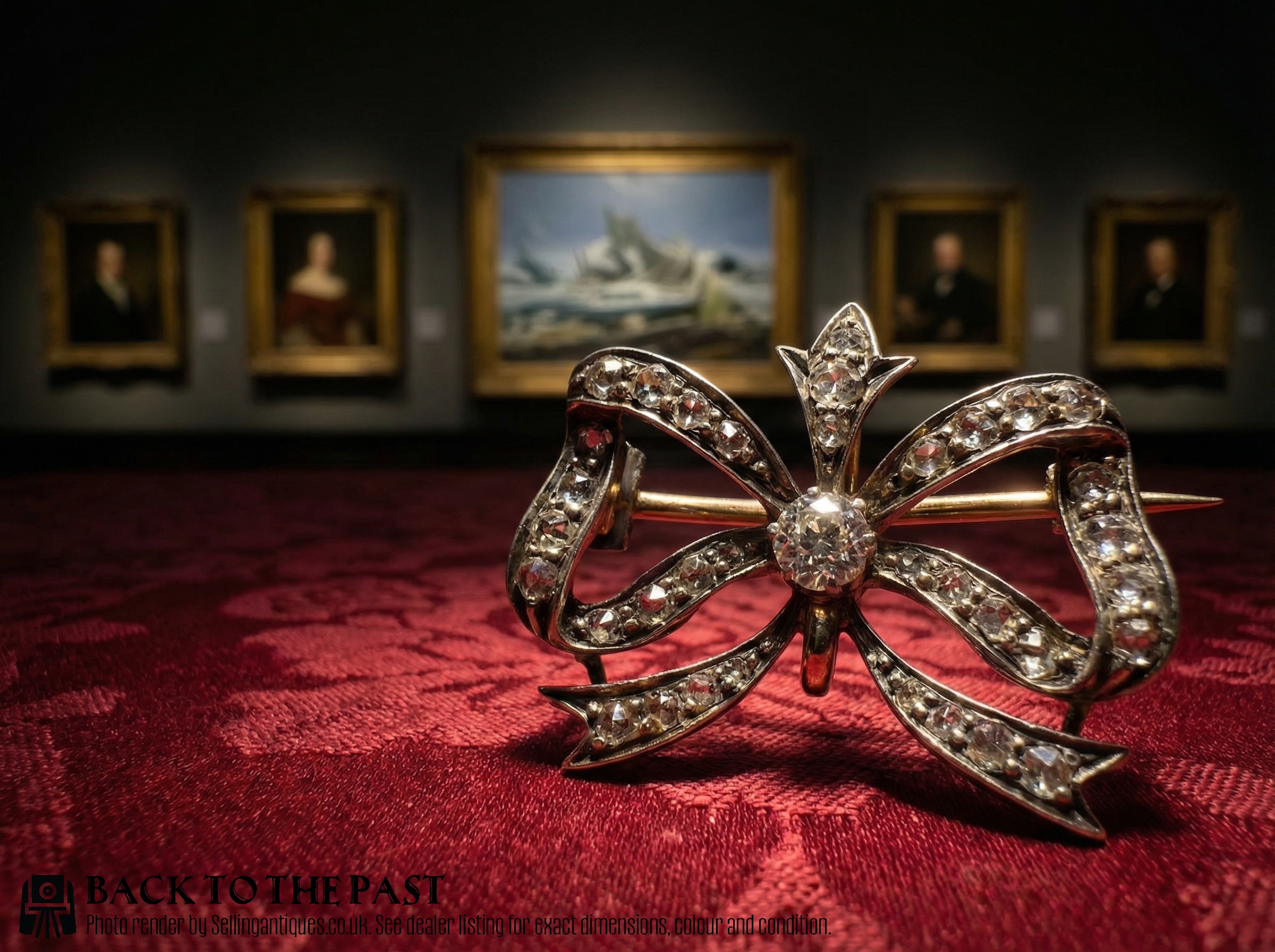
Antique Diamond Bow Pendant
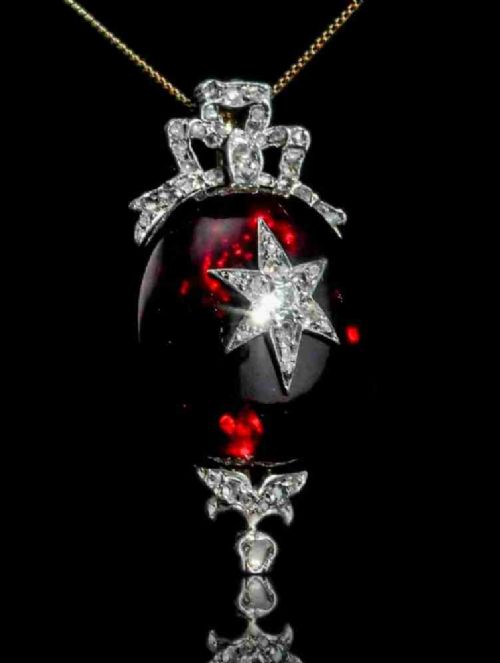
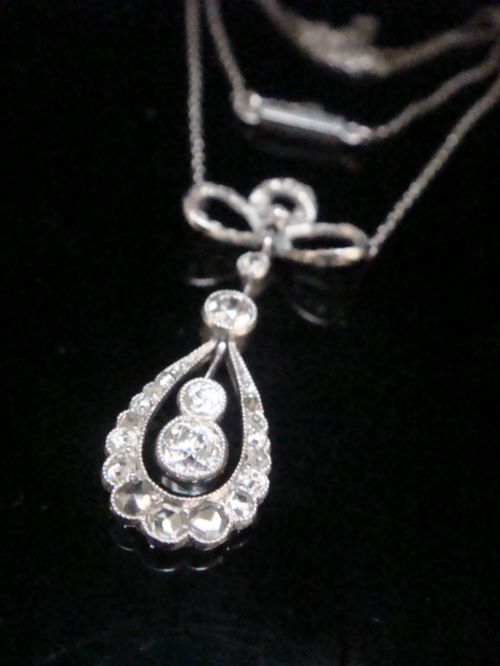
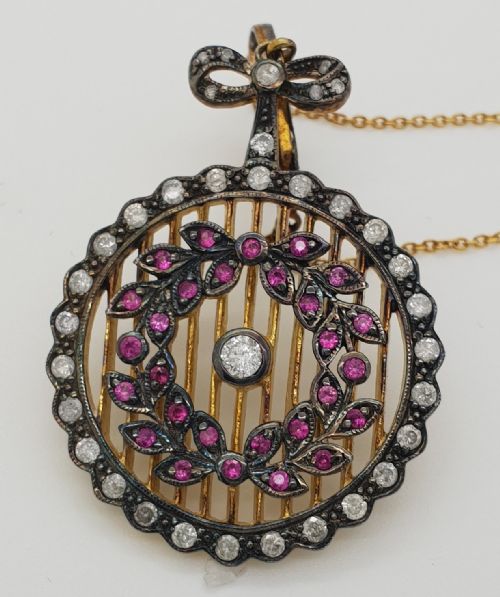
An antique diamond bow pendant is a wearable piece of jewellery shaped like a knotted ribbon and set with diamonds, appearing frequently in Edwardian and Victorian designs on this page. These items often double as brooches, featuring convertible fittings that allow them to be worn suspended from a chain or pinned directly to a garment.
The materials span platinum, gold, and silver-gilt, frequently paired with rubies, sapphires, natural pearls, or garnets alongside the central diamonds. Pieces originate from the Edwardian era, the Victorian period, around 1880, and the mid-century retro period.
Beyond standard pendants, the selection includes related forms such as necklaces, drop earrings, and convertible pendant-brooches. The dominant aesthetic relies on graceful loops and trailing tails that emulate tied fabric.
How they were made
Metals such as platinum, 18ct gold, white gold, and silver-gilt provide the foundational structures for these gems, often combining contrasting metals like platinum on top of gold to enhance the brilliance of the stones. Jewellers utilised old-cut and rose-cut diamonds, bezel-setting or claw-setting them by hand into intricate ribbon motifs.
Gems like rubies, sapphires, pearls, and garnets are integrated as accent stones within the bows, secured with traditional hand-finishing techniques. Certain pieces survive with their original fitted boxes, indicating high-grade bespoke craftsmanship from workshops such as that of Eduard Foehr.
Listings feature items from the Edwardian, Victorian, and mid-century retro periods, alongside specific pieces dated around 1880.
What varies in quality
The refinement of the ribbon shape dictates much of the distinction, separating stiff metalwork from fluid, naturalistic loops that genuinely mimic tied silk. Articulation between the loops and trailing tails adds complexity, allowing the jewellery to move naturally when worn.
The selection and matching of gemstones also drive variation, particularly where certified diamonds, natural pearls, or vivid rubies and sapphires accompany the primary stones. Original fitted boxes and convertible fittings that seamlessly transform a brooch into a pendant further elevate an item's standing.
Eduard Foehr
The Antique Diamond Bow Pendant Glossary
- Old-cut diamond
- A vintage diamond faceting style characterised by a smaller table, higher crown, and open culet, designed to catch candlelight.
- Rose-cut diamond
- A gemstone cut featuring a domed top with triangular facets and a flat base, popular in earlier periods for a soft lustre.
- Silver-gilt
- Silver that has been coated with a thin layer of gold, combining the cool tone of silver settings with a warm finish.
- Convertible pendant-brooch
- An item engineered with a hidden bail and a secure pin, allowing the wearer to use it either as a necklace or a lapel pin.
- Natural pearl
- A pearl formed organically in an oyster without human intervention, prized for its unique orient and irregular organic shape.
Antique Diamond Bow Pendant: Frequently Asked Questions
How do I wear a convertible bow pendant?
Many of these pieces feature a fold-down loop and a pin on the reverse, allowing you to thread them onto a chain or fasten them to fabric.
This dual functionality was common in earlier periods, giving flexibility for different necklines and garments.
What periods do these bow pendants come from?
The listings span the Edwardian and Victorian eras, alongside pieces dated around 1880 and mid-century retro.
Edwardian examples often feature platinum and delicate openwork, while Victorian and 1880s pieces frequently utilise yellow gold and heavier mountings.
Are the pearls natural?
Some pieces incorporate natural pearls alongside the diamonds and coloured stones, as recorded in specific descriptions.
These organic gems contrast with the sparkle of the surrounding diamonds and require gentle care to preserve their lustre.
What metals were used in these mountings?
Jewellers utilised platinum, 18ct yellow and white gold, and silver-gilt to fabricate the intricate ribbon structures.
It was common to combine metals, such as platinum top-layers over gold, to enhance the appearance of the diamonds.