
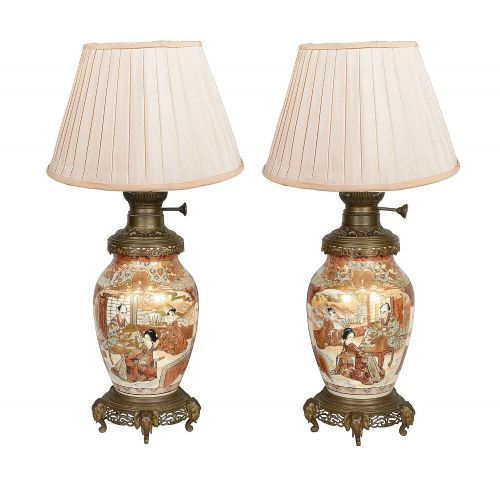


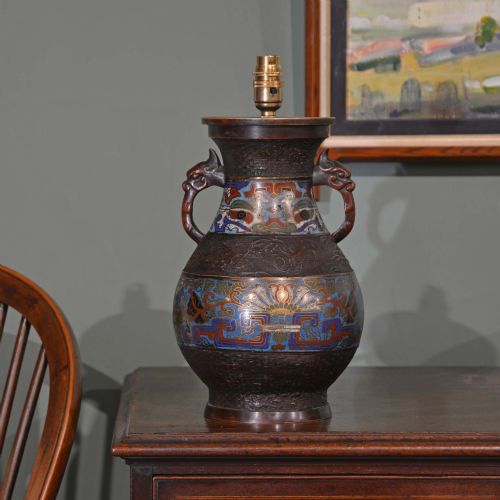


Converted Oriental Vase Lamps
These converted oriental vase lamps bring rich historic ceramic and bronze vessels into modern interiors as striking table lamps.
Converted Oriental Vase Lamps
When you search for converted oriental vase lamps, you encounter historic vessels adapted into functional table lamps. These pieces bridge centuries of Asian artistry with practical interior lighting, transforming decorative objects into room centrepieces.
The selections available span multiple distinct periods, with nineteenth-century examples forming the core of what you will find. These range from Japanese Meiji period works to Chinese export ceramics and earlier seventeenth-century vessels.
Common ceramic forms include baluster vases, spill vases, and brush pots, alongside robust bronze bodies. Many appear as matched pairs, giving you symmetrical options for mantelpieces or sideboards.
How they were made
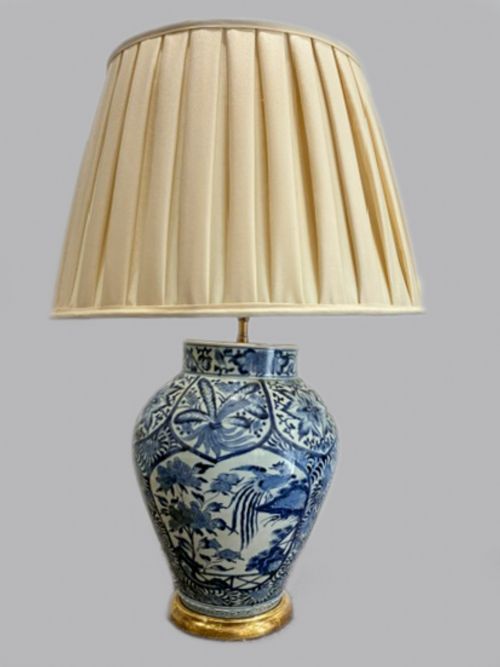
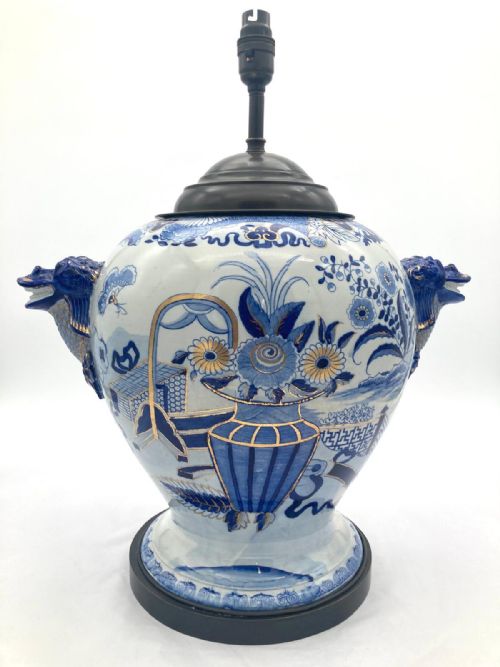
Makers utilised high-fired porcelain, ironstone, and heavy bronze as the primary structural bodies for these pieces. Ceramic surfaces frequently display underglaze blue, powder blue glazes, celadon tones, or intricate crackleware finishes.
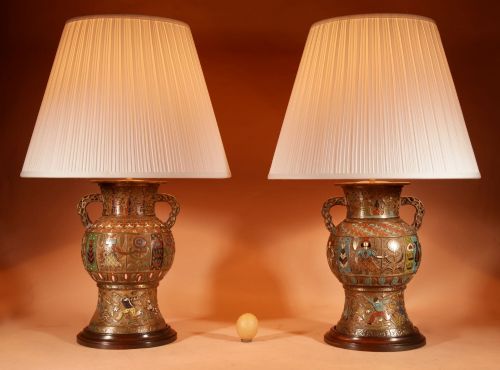
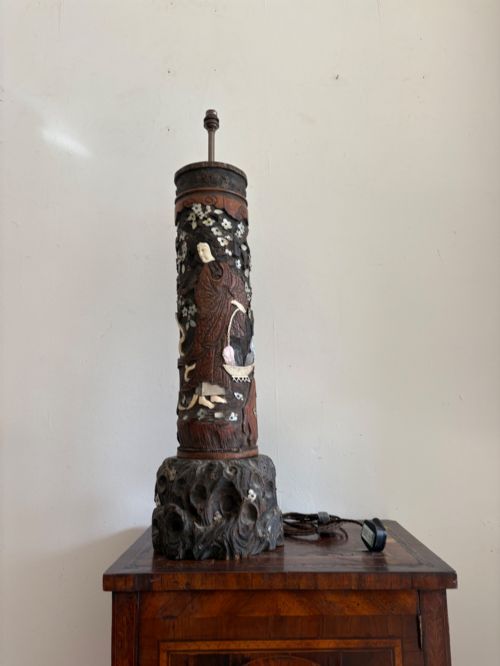
Metalwork versions incorporate bronze and brass, often embellished with champlevé or cloisonné enamel detailing. Artisans also applied carved mother-of-pearl and intricate surface designs during periods such as the Qing Dynasty and Japanese Meiji period.
The conversion process involved mounting these antique vessels with electrical fittings and pairing them with fabric shades, usually constructed from silk.
Some vessels began life as scholar's brush pots before finding a second career holding lightbulbs.
What varies in quality
Quality rests primarily upon the artistic merit and preservation of the original vase itself. Finer examples display crisp painting, deep glazes, or precise enamelwork that reflect the high standards of their originating period.
The harmony of the conversion heavily influences the overall success of the piece. Superior lamps integrate electrical fittings sensitively without compromising the structural integrity or aesthetic balance of the antique vessel.
Matched pairs command greater attention than single lamps, particularly when the ceramic bodies and surface patination display consistent ageing and identical decorative schemes.
Hicks and Meigh
The Converted Oriental Vase Lamps Glossary
- Meiji Period
- A Japanese historical era spanning from 1868 to 1912 noted for exceptional decorative arts. Items from this time often exhibit highly detailed bronze casting or fine porcelain painting.
- Cloisonné
- An ancient metalwork technique where thin wire is soldered to a metal body to create compartments filled with enamel paste. These areas are then fired and polished to a smooth finish.
- Celadon
- A term for ceramics featuring a pale green or grey-green translucent glaze. This finish mimics the appearance of jade and originated in ancient China.
- Imari
- A traditional style of Japanese porcelain exported from the port of Arita, typically characterised by a palette of underglaze blue, iron red, and gold. These colourful patterns remain highly distinctive.
- Baluster
- A vertical architectural form shaped with a rounded lower body and a slender neck. Many tall ceramic vases utilise this pleasing silhouette.
Converted Oriental Vase Lamps: Frequently Asked Questions
Are these lamps safe for modern homes?
Most converted lamps utilise modern electrical components fitted during their adaptation process. It remains sensible to have any antique lighting checked by a qualified electrician before daily use.
Ensuring the wiring meets current standards guarantees safe operation while preserving the historic body of the lamp.
How do I clean an antique porcelain lamp?
Dust ceramic and bronze surfaces gently with a soft, dry cloth. Avoid harsh chemical cleaners that might damage fragile glazes or historic patination.
Keep fabric shades separate during cleaning to prevent dust transfer and maintain the overall condition of the fixture.
Can I find matching pairs easily?
Matched pairs appear frequently among nineteenth-century Japanese and Chinese listings. These symmetrical sets suit placement on matching side tables or flanking a fireplace.
Single lamps also feature prominently for smaller spaces requiring a singular focal point.
What periods do these vases date from?
The inventory spans several centuries, reaching back to seventeenth-century Japanese vessels and eighteenth-century Arita pieces. Nineteenth-century examples represent the largest portion of available stock.
Meiji period and Qing Dynasty aesthetics dominate the stylistic influences across these selections.