



Converted Floor Lamp
A converted antique floor lamp brings period character and practical illumination together, offering substantial brass, copper, and timber standards adapted from earlier lighting forms for modern rooms.
Converted Floor Lamp
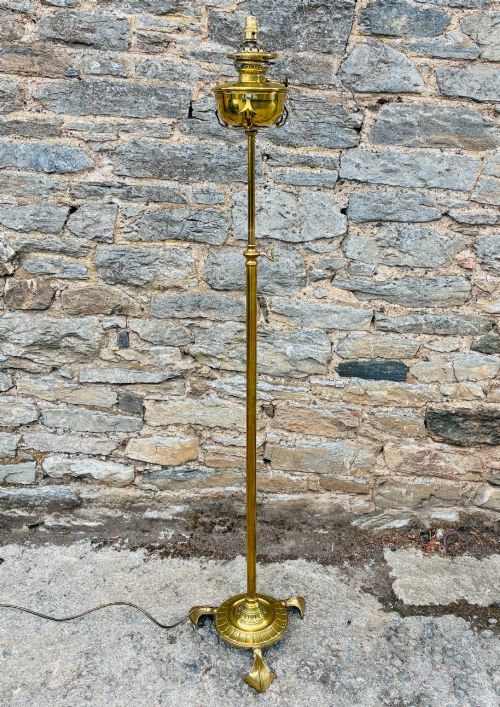
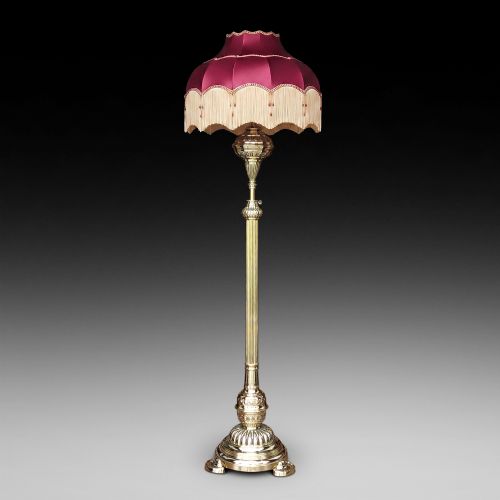
A converted antique floor lamp represents a practical adaptation of earlier household lighting, shifting from oil or paraffin to electricity for contemporary use. These pieces most frequently take the form of standard lamps and floor-standing oil lamps originating from the nineteenth century, including Victorian examples.
The selection on this page demonstrates significant variety in design and origin, spanning standard Victorian brass columns, William IV rosewood and brass adaptations, and Arts and Crafts adjustable models. Alongside standard European metalwork, collectors encounter more unusual forms such as Tibetan ceremonial copper horn standards and table-lamp combinations.
Makers and workshops of the period utilised telescopic mechanisms and extending columns to allow adjustable height, a practical feature retained in many survivals. Buyers encounter simpler turned timber columns alongside elaborate copper and brass constructions fitted with fabric shades.
How they were made
Makers relied heavily on cast and turned brass, often combined with heavy copper and wrought iron to ensure stability for tall floor-standing frames. Telescopic and extending joints allowed the upright shafts to alter in height, requiring precise metalworking tolerances.
Timber varieties such as mahogany and rosewood appear in combination with gilt brass fittings, particularly in pole screen conversions and adapted tables. Coloured glass elements, including cranberry glass reservoirs, added decorative contrast to the metal standards.
Converted Floor Lamp Retail Price Guide 2026
Typical asking prices for converted floor lamp among the pieces listed under this phrase on Sellingantiques today, from the lower quarter to the upper quarter. They describe what is for sale here now, not the wider market.
Listings on this page span the nineteenth century, featuring Victorian, William IV, and Arts and Crafts styles executed in brass, copper, rosewood, and mahogany.
What varies in quality
The standard of metalwork and the integrity of the original construction dictate the standing of an individual piece. Heavy-gauge brass and substantial copper tubes provide a permanence that thinner, pressed sheet metal cannot match.
The execution of the conversion itself marks a clear division in quality. Conversions that respect the original mechanism without damaging the primary structure sit apart from alterations that compromise the balance or proportion of the standard lamp.
Hinks of B'ham
The Converted Floor Lamp Glossary
- Standard lamp
- A tall floor-standing lighting fixture designed to illuminate a room from a standing position. These pieces evolved from nineteenth-century oil lamps.
- Telescopic
- A shaft design featuring nested tubes that slide within one another to adjust the overall height of the standard. This mechanism allowed users to alter the light level in a Victorian room.
- Cranberry glass
- A rich pinkish-red glass produced by adding gold chloride to the molten batch. It appears frequently in nineteenth-century oil lamp reservoirs.
- Pole screen
- A decorative vertical screen mounted on a pole, originally used to shield a person's face from a fireplace's heat. Some examples are later adapted to hold an electric light fitting.
Converted Floor Lamp: Frequently Asked Questions
What is a converted antique floor lamp?
A converted antique floor lamp is an original nineteenth-century oil or paraffin standard lamp that has been professionally wired for electricity. These pieces retain their period metalwork, telescopic columns, and decorative bases while serving modern lighting needs.
Buyers choose these lamps to introduce genuine period craftsmanship and materials such as brass, copper, and mahogany into contemporary interiors.
How do I date a standard lamp?
Dating relies on examining the materials, manufacturing techniques, and stylistic markers recorded across the nineteenth century, including Victorian, William IV, and Arts and Crafts characteristics. Heavy cast brass, wrought iron, and specific burner mounts provide clear chronological clues.
Makers often incorporated telescopic mechanisms or specific patination that helps distinguish nineteenth-century examples from later reproductions.
Were these lamps originally electric?
No, electricity was not used in residential lighting when these standards were first manufactured during the nineteenth century. They were designed to burn oil or paraffin using specialised brass burners and glass reservoirs.
Later adapters removed the old fuel mechanisms to run electrical flex through the hollow columns, creating the converted pieces seen today.