


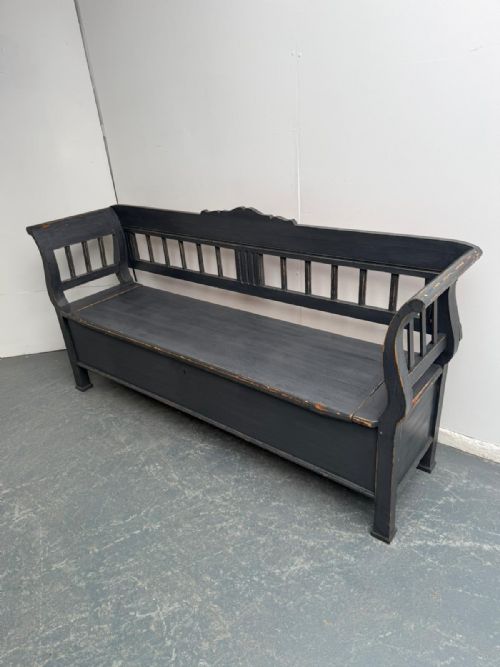


Continental Folk Art Box
A continental folk art box brings bright rural character and hand-applied pigment straight into a modern interior.
Continental Folk Art Box
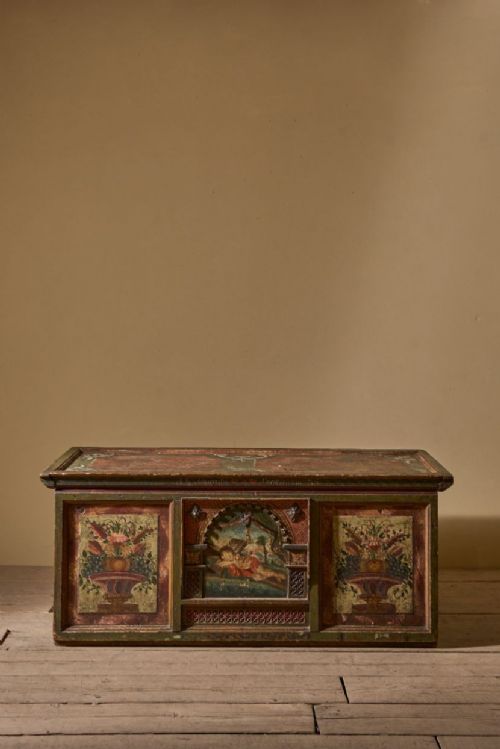
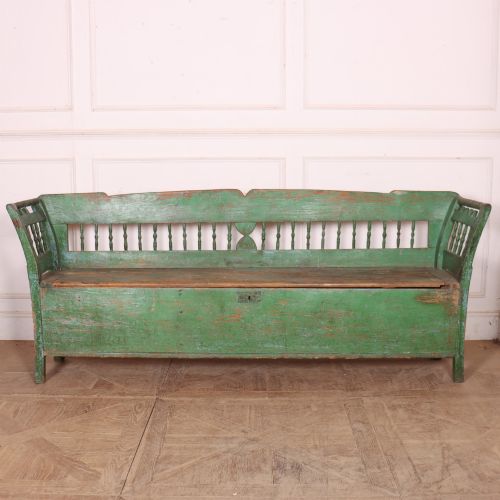
A continental folk art box encompasses small containers, storage chests, and marriage coffers produced across European rural regions during the eighteenth and nineteenth centuries. These pieces serve as practical household containers that double as decorative folk art through the application of regional paintwork and motifs.
Makers in rural communities built these objects for daily domestic use, such as storing linen or personal valuables, often as marriage gifts. Surviving examples display the distinct aesthetic preferences of European country workshops from the Georgian period through the Victorian era.
Materials and construction methods
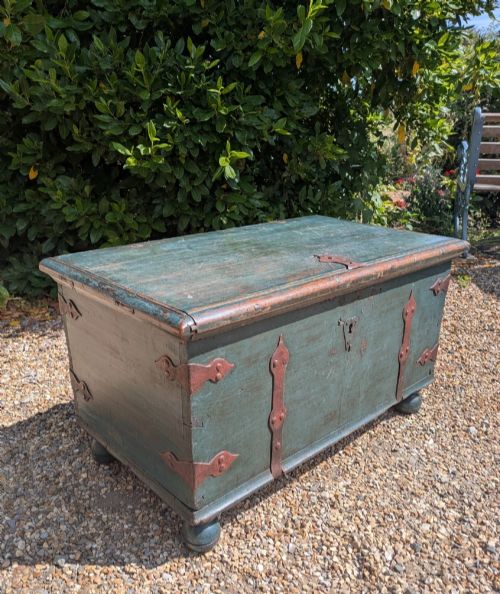
Carpenters constructed these boxes primarily from local softwoods and hardwoods like pine and oak, utilising sturdy board construction suited for rural utility. Workshops reinforced corners and lids with hand-forged iron strapwork, wrought iron hinges, and brass fittings to ensure long-term durability.
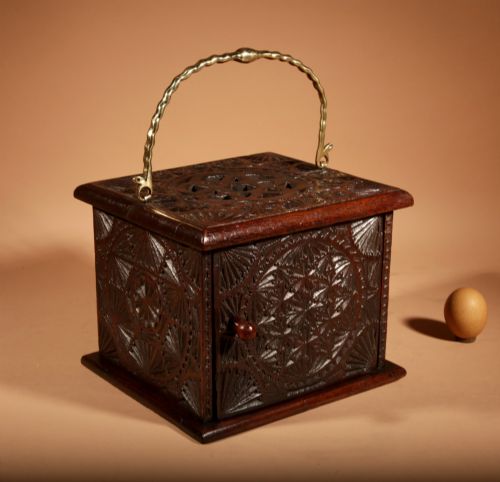
Makers applied layers of pigment and paint directly onto the wood, sometimes employing chip carving techniques to create textured surface patterns on lids and panels. This combination of timber, forged metal, and hand-applied colour defines the physical character of European country storage.
Foot stoves required a pocket of hot embers placed inside the oak box to keep peasant toes warm during long winter church services.
Assessing quality in folk pieces
Quality in a continental folk art box rests largely on the survival and integrity of the original paint surface rather than pristine factory finishes. Pieces that retain their early or original pigment without extensive later overpainting offer a more authentic representation of rural craftsmanship.
The sophistication of the hand-forged iron strapwork and the depth of chip carving distinguish standard utilitarian containers from finer workshop productions. Proportion, handling of floral motifs, and the structural stability of the pine or oak body further divide the pieces across the range.
The Continental Folk Art Box Glossary
- Folk art
- Art produced from an indigenous culture or peasant society, typically reflecting traditional motifs rather than academic training. These objects prioritize utilitarian function combined with regional decorative expression.
- Strapwork
- Ornamental work composed of narrow flat bands or plates, often made of wrought iron. On these boxes, iron strapwork reinforces structural corners while adding visual contrast.
- Coffer
- A robust chest or box used for holding valuables, documents, or personal belongings. Many examples feature hinged lids and heavy iron mountings for security.
- Chip carving
- A primitive woodworking technique where the maker removes small chips from the surface of the timber to create geometric patterns. This method appears on panels and lids to add texture.
- Pigment
- Natural colouring matter used to create the paint layers found on European country furniture. The survival of original pigment remains central to the visual appeal of these items.
Continental Folk Art Box: Frequently Asked Questions
What is a continental folk art box?
A continental folk art box is a utilitarian wooden container adorned with regional European painted decoration or hand carving.
Craftsmen in country workshops built these items from pine or oak during the eighteenth and nineteenth centuries for domestic storage.
How were these folk boxes used originally?
Rural households utilised these chests and caskets to store household textiles, clothing, documents, and personal valuables.
Large marriage trunks served a ceremonial function, often commissioned to hold a bride's dowry and linens before becoming permanent furniture in the family home.
How do I style a painted box at home?
These pieces function well as accent furniture in living spaces, serving as coffee tables, blanket storage at the foot of a bed, or tabletop display units.
The bright floral pigments and aged pine surfaces complement both rustic interiors and contemporary minimalist rooms by adding warmth and history.
How do I identify the age of a painted box?
Dating relies on examining the construction marks, timber types, and the composition of the paint layers under natural light.
Eighteenth-century examples often display hand-wrought ironwork and deeper patination, whereas Victorian and late nineteenth-century pieces feature different stylistic proportions and standardised hardware.