





Continental Carved Dresser
These continental carved dresser items are substantial storage pieces shaped by centuries of European craftsmanship, offering both historic character and practical utility for modern rooms.
Continental Carved Dresser
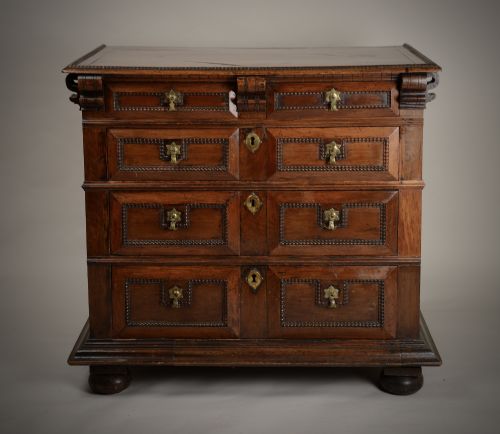
A continental carved dresser encompasses robust wooden storage forms including commodes, side cabinets, and chests of drawers originating from various European regions. The pieces available span several centuries, with walnut, oak, and pine emerging as the primary timbers shaping these forms.
Buyers will frequently encounter examples dated to the eighteenth and nineteenth centuries, alongside earlier seventeenth-century works and later nineteenth-century revival pieces. These items often display regional vernacular characteristics, ranging from French provincial styling to Italian serpentine outlines and Flemish baroque details.
How they were made
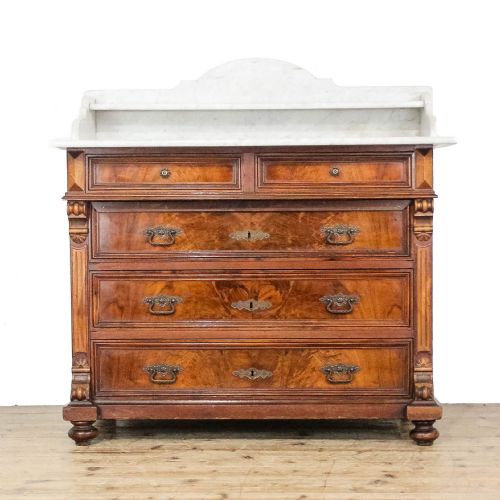
Cabinetmakers utilised hardwoods such as walnut, oak, cherrywood, and olive-wood, frequently pairing them with softer pine or fruit-wood for internal construction. Surfaces were often enhanced with burr walnut veneers, while decorative elements relied on intricate hand carving directly into the timber.
Additional material details include marble tops fitted to commodes, alongside applied brass or iron hardware and structural metal components. Wax finishes preserved the grain of the wood, and specialist techniques such as bombé shaping created sweeping, curved silhouettes.
One German piece hides behind a gilded grotto facade complete with carved facial masks.
What varies in quality
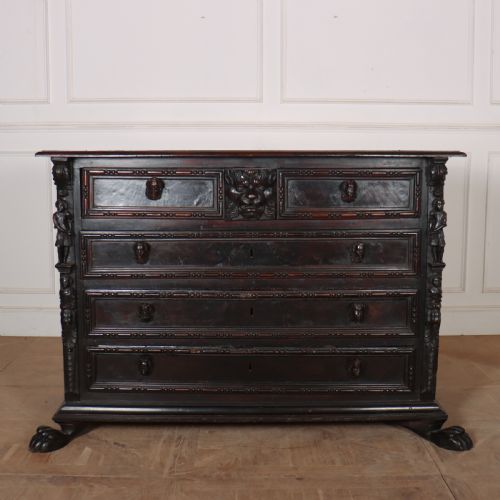
The degree of refinement in the carved ornamentation distinguishes the tier of execution, particularly where sculptural masks, scrollwork, or architectural columns define the facade. Master cabinetmakers achieved fluid serpentine and bombé outlines that required precise handling of thick timbers and complex veneer layouts.
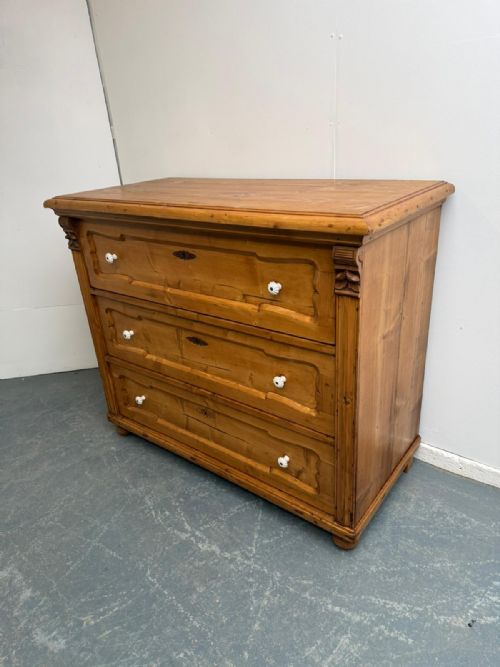
The choice of primary wood also influences the character of the piece, with richly figured burr walnut and olive-wood sitting alongside solid Spanish oak and simpler waxed pine. Original surface patination and integrated elements like fitted marble tops further separate standard regional pieces from exceptional examples.
The Continental Carved Dresser Glossary
- Commode
- A low chest of drawers or cabinet, typically standing on short legs and originating in France. These pieces often feature decorative veneers and curved drawer fronts.
- Bombé
- A swelling, outward-curving contour found on the sides and fronts of certain eighteenth-century case furniture. This dramatic shape requires advanced carpentry skills to construct successfully.
- Serpentine
- A furniture front or shelf edge curved in a wave pattern, concave in the centre and convex at the ends. It creates a sense of movement across the piece.
- Bambocci
- A style of Italian furniture carving featuring small, grotesque figures or carved human and animal motifs in relief. The term derives from seventeenth-century artistic traditions.
- Rococo
- An ornate design style characterised by asymmetry, scrollwork, and shell motifs, popular during the eighteenth century and later revived in the nineteenth century.
Continental Carved Dresser: Frequently Asked Questions
How do I date a carved cabinet?
Dating involves examining the construction methods, timber choices, and stylistic vocabulary present in the piece, such as seventeenth-century baroque elements or eighteenth-century rococo curves. Revival pieces from the nineteenth century often imitate these earlier historical epochs.
Hardware, joinery techniques, and secondary woods like pine or fruit-wood provide additional clues to the period of manufacture.
Where were these pieces made?
These items originate from various European regions, reflecting distinct local cabinetmaking traditions across France, Italy, Spain, Germany, Sweden, and Hungary. Each area utilised native timbers and developed characteristic forms.
Regional preferences influenced whether a piece took the form of a provincial pine chest or an elaborate walnut commode with carved details.
How do I care for antique wood furniture?
Maintaining these pieces requires keeping them away from direct heat sources and fluctuating humidity to prevent the timber and veneers from splitting. Regular gentle dusting preserves the natural wax and polished finish of the wood.
Harsh chemical cleaners should be avoided in favour of traditional soft wax treatments suitable for historic surfaces.