


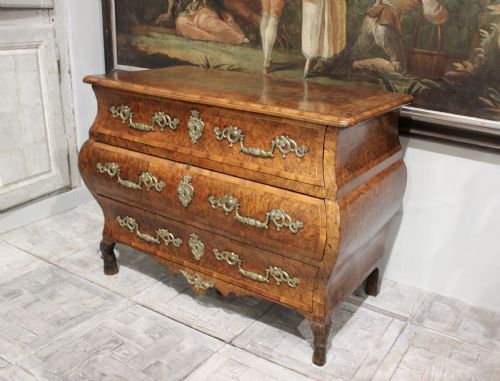


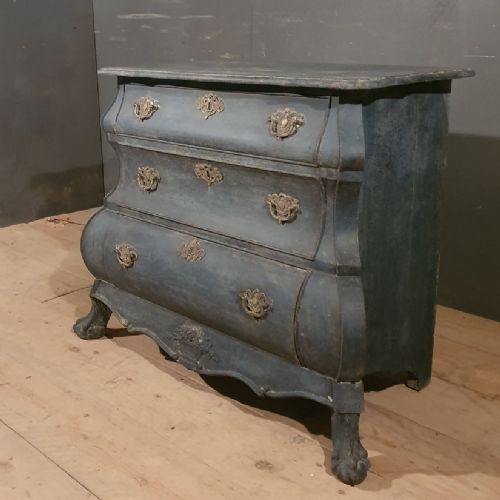


Continental Bombe Drawers
Continental bombe drawers bring sweeping, curvaceous form to a room through swelling timber profiles that demand exceptional cabinetmaking skill.
Continental Bombe Drawers
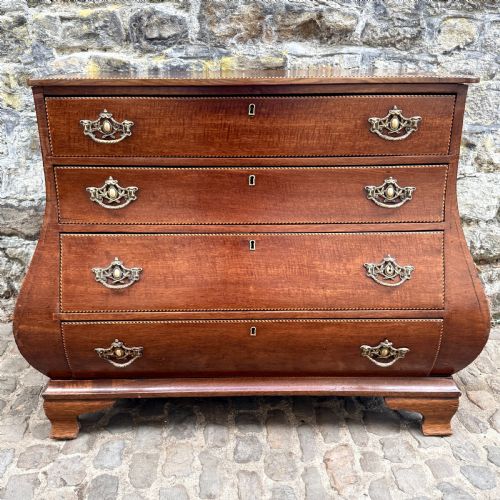
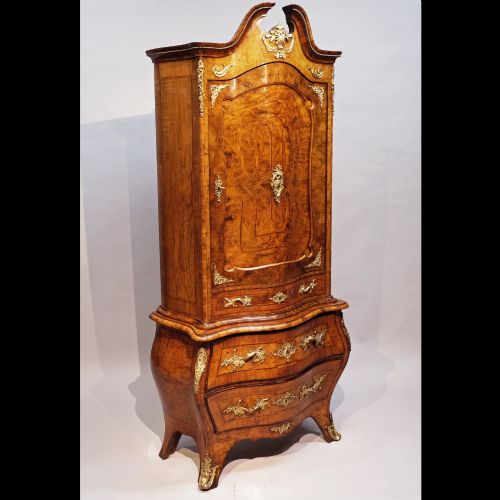
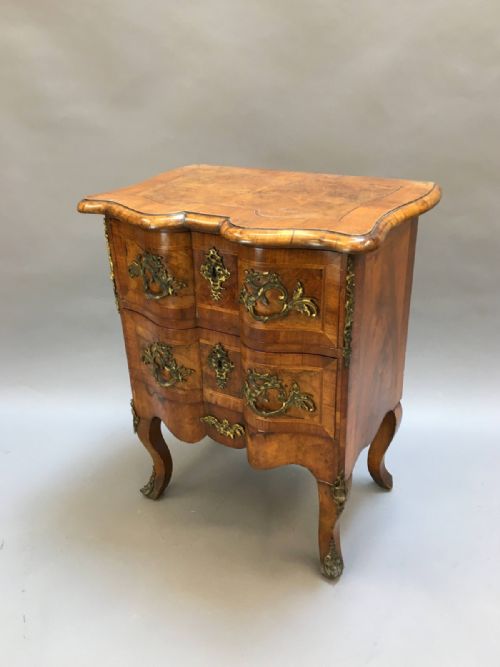
Continental bombe drawers comprise prominent swelling chests and commodes spanning the eighteenth to the twentieth centuries, characterised by distinctly rounded or bulging silhouettes. These substantial storage pieces appear across various regional aesthetics, including Dutch Rococo, Italian designs, and Louis XV revivals.
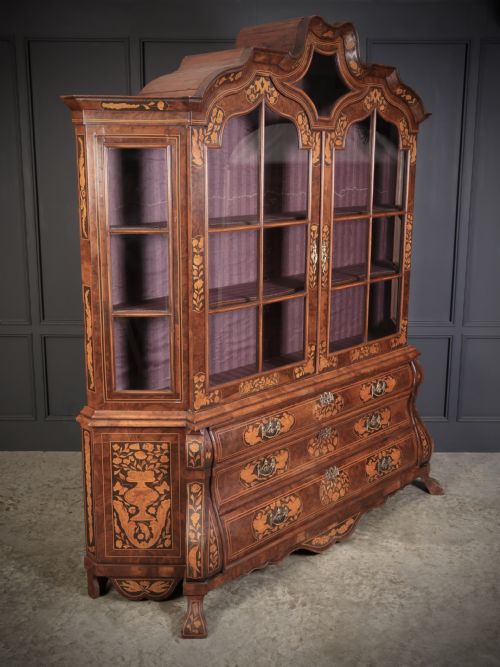
Buyers encounter numerous variations on this page, dominated heavily by walnut and burr walnut finishes alongside marquetry inlay, painted wood, and oak constructions. Forms range from compact commodes to larger display cabinets and chests of drawers originating from continental workshops.
The regional diversity manifests in pieces bearing Dutch, French, German, and Italian stylistic influences. Pieces from the eighteenth century sit alongside later nineteenth-century revivals and early twentieth-century interpretations.
Materials and construction
Makers constructed these swelling forms primarily using walnut, burr walnut, fruitwood, and oak as the foundational timbers. Surfaces frequently incorporate intricate marquetry inlay or painted decoration to accentuate the dramatic contours.
Metals such as brass and ormolu provide structural mounts and decorative handles that follow the sweeping lines of the woodwork. Cabinetmakers mastered complex curved joinery to achieve the characteristic outward-bulging profile without compromising stability.
Dutch Rococo and Louis XV revival styles account for the majority of design influences seen in these furnishings.
Evaluating quality
Quality rests upon the precision of the timber matching and the intricacy of the marquetry inlay across the curved surfaces. Superior examples display seamless integration of grain patterns that follow the swelling contours of the frame.
The refinement of the cast brass or ormolu mounts and the handling of the secondary woods like oak or fruitwood indicate the standard of production. Finer pieces maintain crisp carving and fluid lines that define the rococo and baroque influences.
The Continental Bombe Drawers Glossary
- Bombe
- A swelling or bulging profile characteristic of furniture fronts and sides. This distinctive shape requires advanced curved joinery techniques.
- Commode
- A low chest of drawers or cabinet developed in France during the seventeenth century. These pieces typically stand on short legs and serve domestic storage functions.
- Marquetry
- Decorative veneer work forming intricate patterns using various woods. Craftsmen apply these thin pieces of timber to create pictorial or geometric designs across the surface.
- Ormolu
- Gilt bronze ornamentation applied to furniture mounts and hardware. This technique adds metallic highlights that complement the rich wood tones.
- Rococo
- An ornate artistic style prominent in the eighteenth century featuring asymmetric curves and naturalistic motifs. This aesthetic heavily influences the shaping of continental cabinetry.
Continental Bombe Drawers: Frequently Asked Questions
Where were continental bombe drawers made?
These pieces originated across various European regions, with significant representation from Dutch, French, Italian, and German workshops.
Craftsmen in these areas developed distinct regional interpretations of the swelling form, utilising local timbers and characteristic decorative finishes.
What woods appear most often?
Walnut and burr walnut dominate the construction of these pieces, alongside oak, fruitwood, and occasional birch or maple.
Makers selected these timbers for their workability and attractive grain patterns, which enhance the dramatic curved profiles.
How do I date a bombe chest?
Dating relies on examining the construction methods, secondary timbers, hardware styles, and decorative motifs like marquetry or paint.
Eighteenth-century examples typically display different internal framing and joinery compared to nineteenth-century revival pieces or early twentieth-century interpretations.
How do I style a bombe commode?
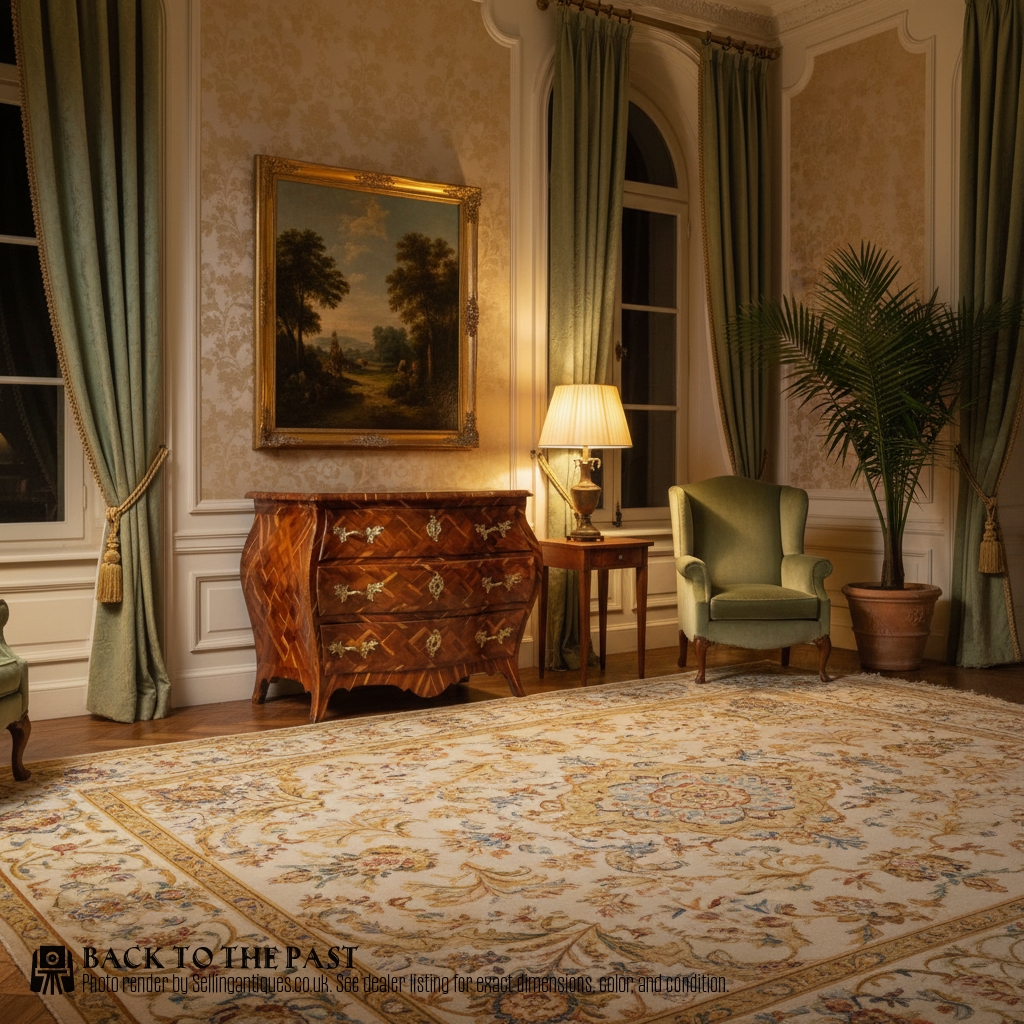
These substantial pieces function effectively as focal points in hallways, living rooms, or bedrooms due to their sculptural silhouettes and rich timber tones.
Their decorative presence allows them to stand alone against plain walls or beneath large mirrors and artwork.