
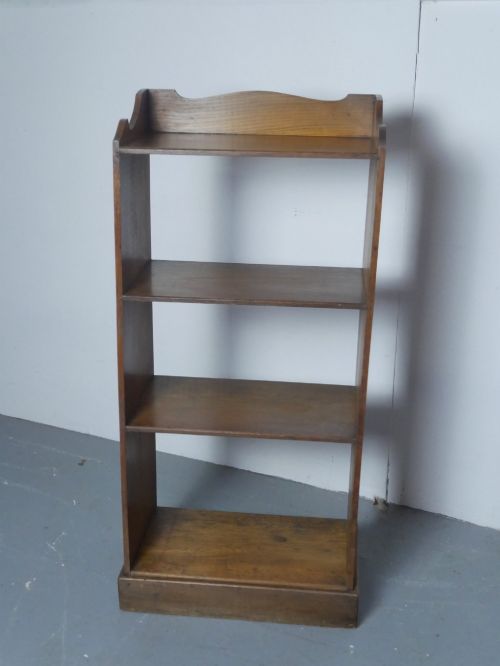
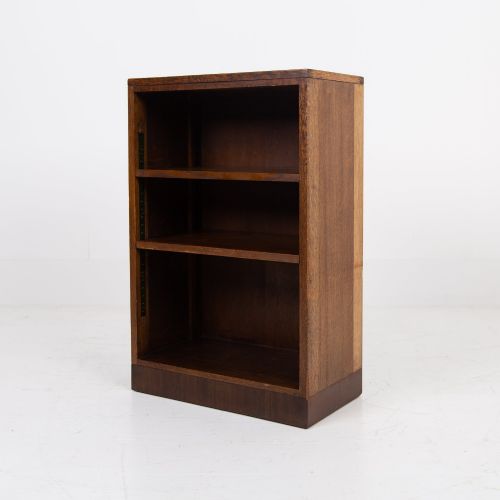
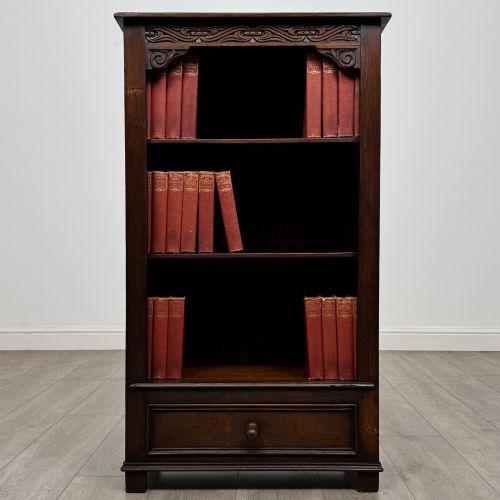


Compact Oak Shelving Unit
A compact oak shelving unit gives you sturdy storage in a tight footprint, pairing honest timber with sensible proportions.
Compact Oak Shelving Unit
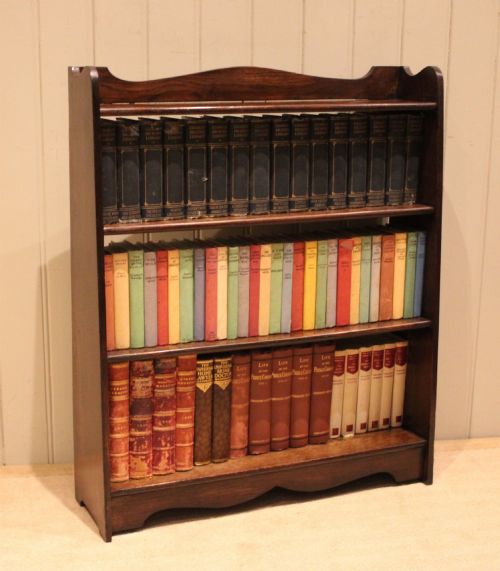
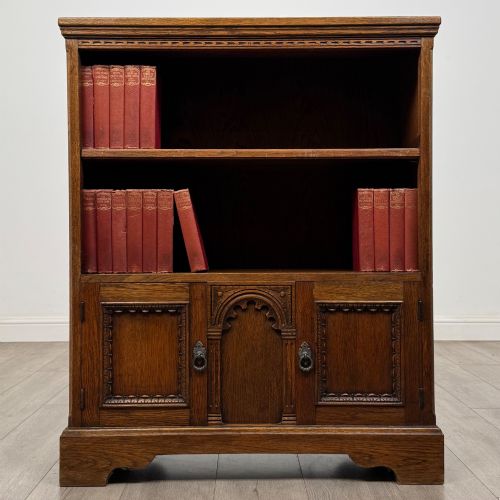
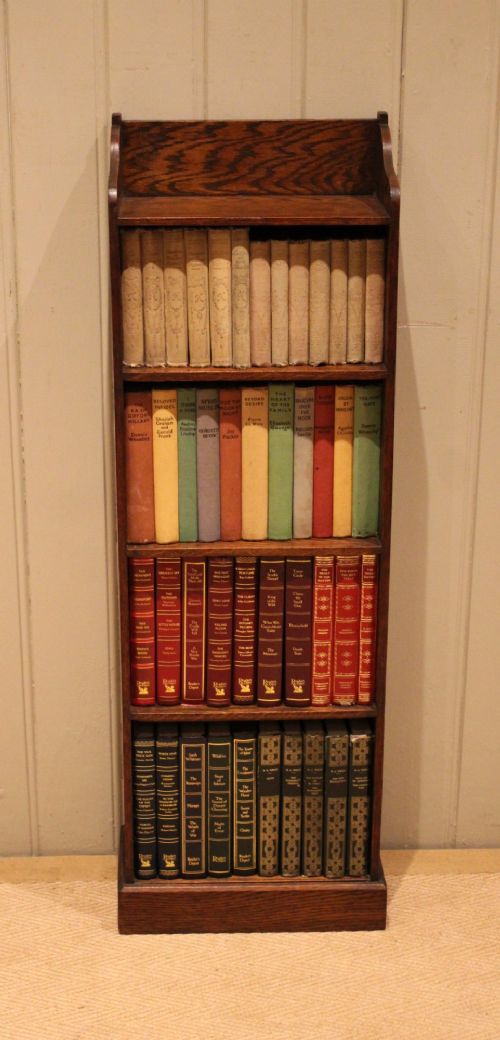
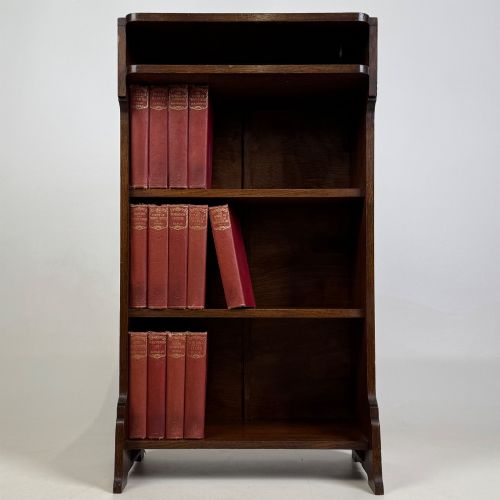
A compact oak shelving unit takes the form of small open bookcases built to fit narrow hallways, alcoves and modest rooms. These items span periods from the Edwardian era through the nineteen-thirties, alongside nineteenth-century examples and styles such as Arts and Crafts, Jacobean Revival and Art Deco.
Buyers seek out a compact oak shelving unit to organise books and display objects without dominating the floor space of a smaller interior. The combination of durable oak and diminutive proportions ensures these bookcases remain practical additions to period and traditional homes alike.
What varies in quality
Quality rests on the selection of the timber grain and the precision of the shelf supports, where better examples show careful matching of boards and neat joint work. Finer pieces maintain crisp mouldings and stable construction without relying on heavy modern adhesives.
The proportion and balance of the frame distinguish superior items, ensuring the shelving stands square and handles weight evenly across every tier.
One diminutive French dwarf bookcase proves that even the smallest library appreciates a touch of continental ambition.
The Compact Oak Shelving Unit Glossary
- Dwarf bookcase
- A low shelving unit designed to sit below window height or against a modest wall space. These pieces often feature open shelves for easy access to volumes.
- Open bookcase
- A shelving unit without doors, allowing books and objects to remain visible from the front and sides. This form suits frequent handling of working libraries.
- Jacobean Revival
- A furniture style that revives seventeenth-century details such as turned supports and heavy geometric moulding. Pieces in this style often use dark oak.
- Arts and Crafts
- A design movement focusing on visible construction, plain surfaces and honest materials. Items from this tradition emphasise utility and simple form over ornamentation.
Compact Oak Shelving Unit: Frequently Asked Questions
Where should I place a small oak bookcase?
These pieces fit comfortably in narrow hallways, beside fireplaces or underneath low windows where standard tall bookcases cannot go. Their modest proportions make them useful for dividing up empty wall spaces in smaller rooms.
Ensure the floor is reasonably level so the open frame remains stable, and avoid placing timber directly against damp walls.
How do I clean and care for oak shelving?
Dust the timber regularly with a dry, soft cloth to prevent grit from settling into the grain. Avoid silicone-based polishes which can build up a sticky film over time.
Keep the shelving away from direct heat sources and strong sunlight to prevent the oak from drying out or fading unevenly.
What periods do these bookcases represent?
The available pieces date from the nineteenth century through the Edwardian period and into the nineteen-twenties and thirties. Styles range from plain utilitarian designs to Jacobean Revival and Art Deco influences.
Examining the construction methods and timber thickness helps identify the likely era of manufacture.
Are these bookcases suitable for heavy books?
Solid oak construction provides a sturdy platform for standard hardbacks and paperbacks. The fixed or adjustable shelves handle everyday reading collections securely.
Distribute heavier volumes across the lower shelves to maintain good balance throughout the unit.