



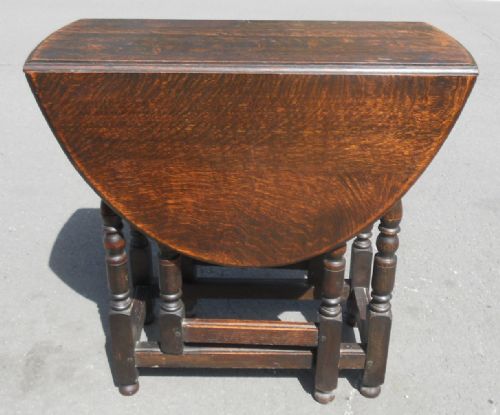


Compact Oak Drop Leaf Table
A compact oak drop leaf table offers clever surface space in small rooms, moving easily between everyday utility and folded storage.
Compact Oak Drop Leaf Table
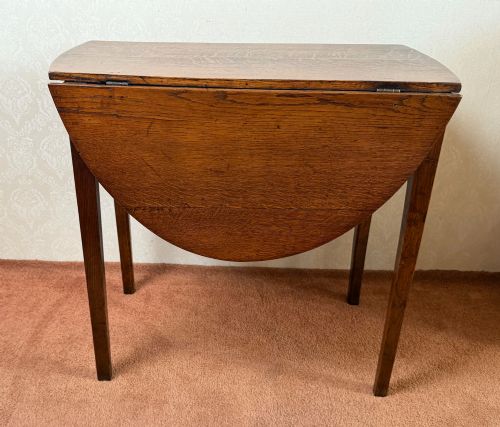
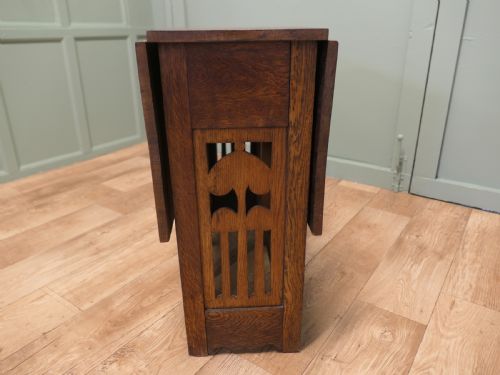
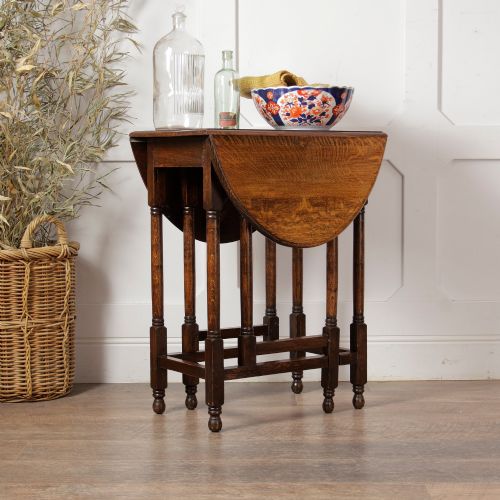
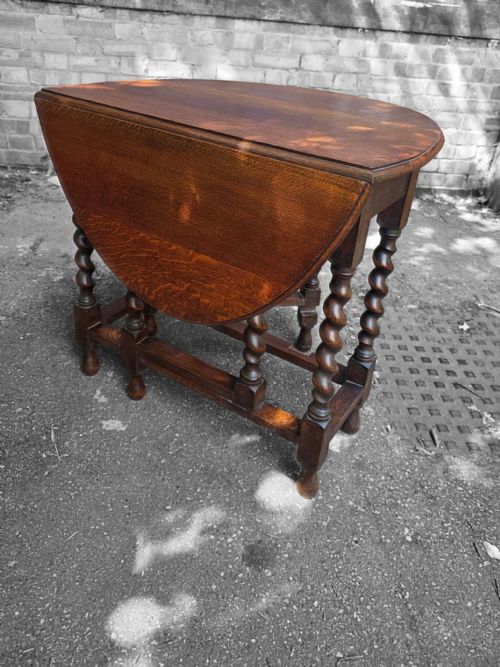
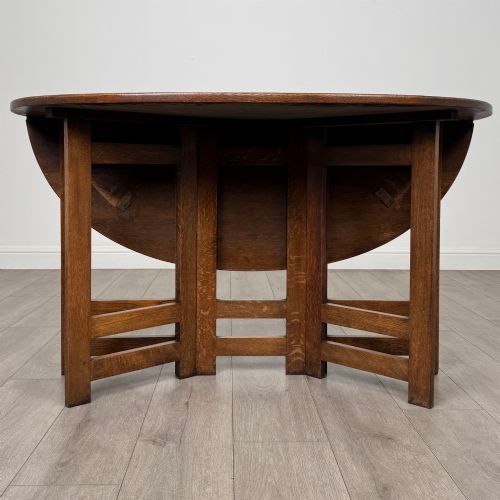
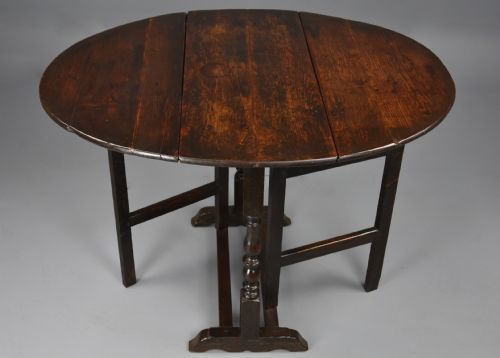
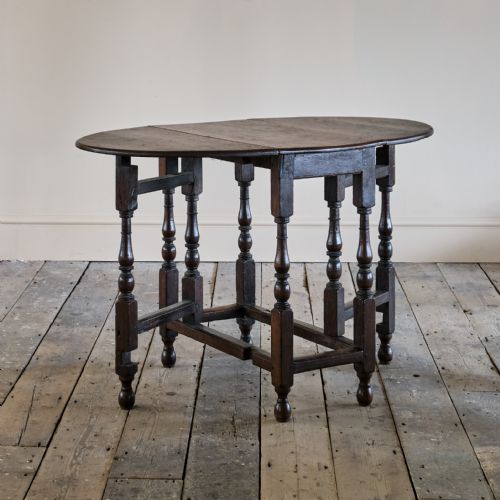
A compact oak drop leaf table provides a functional surface that folds down when space is needed, appearing frequently in gateleg formats. These pieces range from seventeenth century designs to twentieth century revivals, offering sturdy timber construction suited to modern homes. Buyers encounter diverse forms here, from small coffee tables to full dining tables.
The selection centres heavily on gateleg tables alongside occasional, side and coffee formats. Many pieces date from the early twentieth century, including Arts and Crafts interpretations and 1920s honey oak examples, while earlier seventeenth and eighteenth century origins also appear. This variety allows buyers to match specific period aesthetics with practical space saving requirements.
Materials and construction
These tables rely primarily on solid oak, chosen for its strength and distinct grain, complemented by structural iron and brass hinges or fittings. Carpenters shaped the timber into gateleg frames and drop leaves, supporting hinged flaps with pivoting legs. Secondary woods such as pine occasionally feature in internal or lesser components.
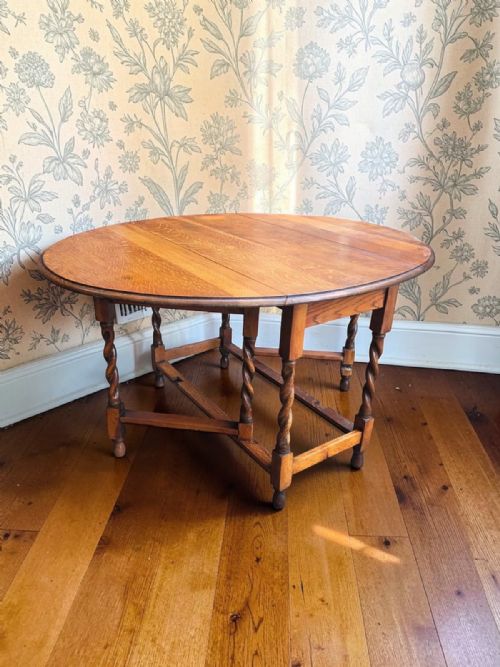
Construction techniques span centuries of cabinetmaking, from hand-turned barley twist legs on early twentieth century models to robust joints on seventeenth century frames. The timber is often finished to highlight natural golden or honey tones, preserving the historic character and tactile surface of the wood.
Compact Oak Drop Leaf Table Retail Price Guide 2026
Typical asking prices for compact oak drop leaf table among the pieces listed under this phrase on Sellingantiques today, from the lower quarter to the upper quarter. They describe what is for sale here now, not the wider market.
Several tables manage to fold down small enough to squeeze beside a chair while still opening up to feed dinner guests.
Assessing quality and character
Quality rests in the integrity of the timber and the smoothness of the drop leaf mechanism. Superior examples display rich original patina and tight joinery that keeps the folding leaves stable in use.
The distinction between standard production and finer work lies in the execution of turned elements like barley twists and the proportion of the frame when fully extended or closed.
The Compact Oak Drop Leaf Table Glossary
- Gateleg table
- A table with hinged leaves supported by legs that swing out like gates. This design provides robust support for the drop leaves when open.
- Drop leaf table
- A table featuring a fixed centre section and hinged flaps that fold down. It maximises floor space when the leaves are lowered.
- Barley twist
- A carved spiral column resembling twisted rope. This decorative turning appears frequently on table legs from the seventeenth century and later revivals.
- Patina
- The surface sheen and colour developed by wood through age and use. A desirable patina shows depth and historic character.
- Jacobean Revival
- A nineteenth and twentieth century style mimicking seventeenth century English furniture. It utilises dark oak and heavy turned motifs.
Compact Oak Drop Leaf Table: Frequently Asked Questions
How do I use a drop leaf table in a small room?
Keep one or both leaves folded down against a wall to use the piece as a side or console table. Pull it into the centre of the room and raise the leaves whenever extra surface area is needed for dining or working.
The folding mechanism allows the furniture to adapt instantly to changing space requirements without dominating a compact interior.
What is the difference between a gateleg and a drop leaf table?
Every gateleg table is a type of drop leaf table, but not all drop leaf tables use gatelegs. Gatelegs specifically use swing-out legs to prop up the folding flaps.
Simpler drop leaf designs might rely on pull-out wooden brackets instead of moving legs to support the extended leaves.
How do I date an antique oak table?
Examine the construction methods, tool marks, and hardware to estimate the period. Hand-turned details and traditional joinery point towards earlier centuries, while twentieth century pieces often show different manufacturing tolerances.
Styles like Jacobean Revival give clues by copying historical aesthetics during the Edwardian and interwar eras.
Is solid oak durable for daily dining?
Oak is a hard and resilient timber that withstands regular use remarkably well. Solid construction ensures the frame remains stable under pressure from plates, elbows, and daily movement.
Maintaining the wood with appropriate care preserves the surface finish against everyday wear.