

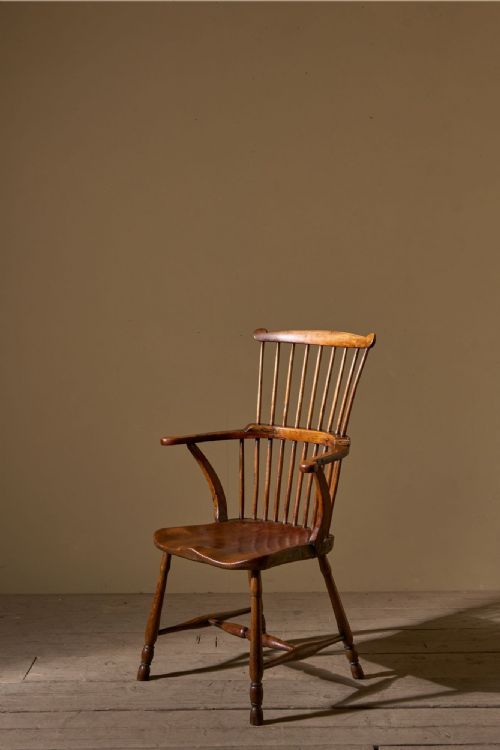
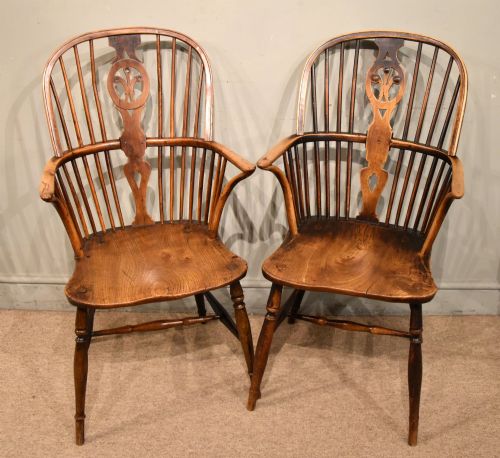
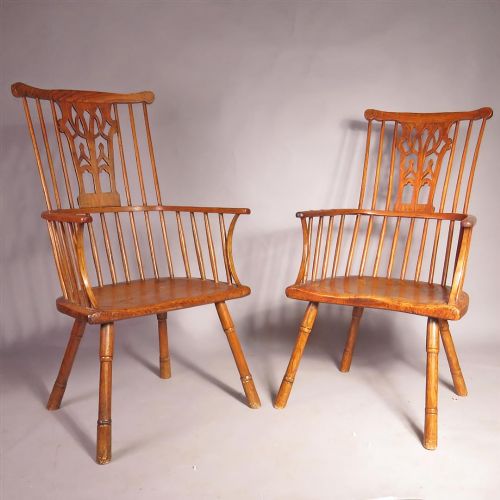
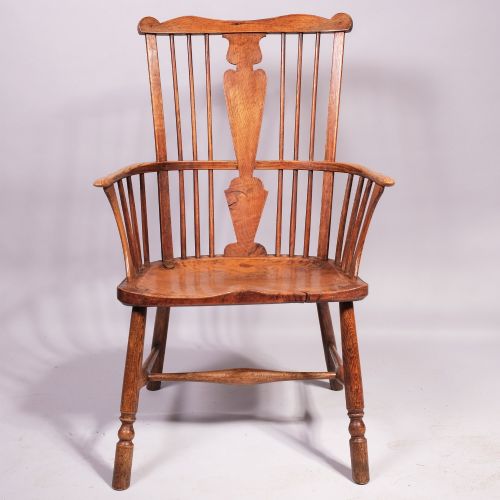
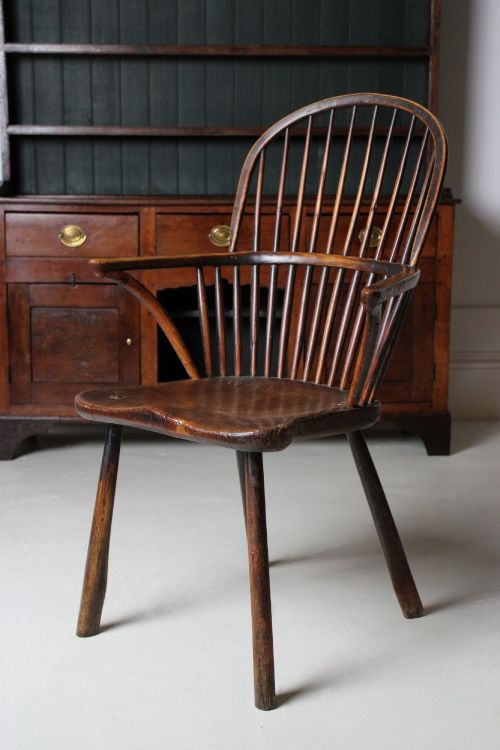


Comb Back Elbow Chair
A comb back elbow chair offers robust country seating, combining traditional craftsmanship with sturdy regional timbers for everyday utility.
Comb Back Elbow Chair
A comb back elbow chair is a traditional form of wooden seating characterised by a distinctive top rail resembling a comb, supporting upright spindles that pass through the arms or seat. Buyers seeking a comb back elbow chair encounter examples from the eighteenth century, the Georgian era, and the nineteenth century, reflecting long-standing rural traditions.
The pieces listed on this page span various regional British and Scottish vernacular styles, including Welsh, English country, and Scottish country vernacular forms. These heavy seating items were shaped by country makers using accessible local timbers rather than urban workshops.
Armchairs dominate the available selection, frequently presenting as primitive stick arm chairs or robust Windsor forms designed for domestic farmhouse use. Buyers will commonly find combinations of ash and elm, alongside occasional fruitwood, oak, and yew wood variants.
Materials and construction
Makers constructed these chairs by combining contrasting timbers suited to different structural demands, typically pairing ash for flexible spindles and bentwood parts with elm for stable, deeply dished solid seats. Additional woods such as beech, oak, yew, and fruitwood appear across the evidence, chosen for their local availability and resilience.
The construction relies on traditional bodging and joinery techniques, where turned legs and upright sticks are wedged directly into bored holes within the solid wooden seat slab. This pegged and wedged assembly created rigid joints capable of withstanding heavy daily use in farmhouses and country cottages.
Comb Back Elbow Chair Retail Price Guide 2026
Typical asking prices for comb back elbow chair among the pieces listed under this phrase on Sellingantiques today, from the lower quarter to the upper quarter. They describe what is for sale here now, not the wider market.
Some provincial makers incorporated awkward knots into the seat slab simply because the tree provided it.
Evaluating quality and character
The distinction between standard examples and superior pieces rests on the grace of the spindle turning, the complexity of the bentwood comb rail, and the depth of the sculpted seat. Chairs featuring multiple contrasting timbers, such as yew combined with elm and ash, often demonstrate higher ambition in rural workshop production.
Proportion and stance dictate the visual success of the piece, with finer examples retaining well-balanced arm supports and slender stick backs rather than heavy, utilitarian replacements. The integrity of the original timber surface and the honesty of past structural repairs define the character of surviving regional furniture.
The Comb Back Elbow Chair Glossary
- Comb back
- A chair back where the vertical spindles pierce the arm rail and rise to a horizontal, shaped crest rail resembling the teeth of a comb. This design provides additional upper back support.
- Windsor chair
- A chair built with a solid wooden seat into which the legs and back spindles are directly inserted. These chairs rely on frame construction rather than upholstery.
- Vernacular furniture
- Items made by local tradesmen and country joiners using regional traditions and materials rather than following formal metropolitan design patterns. These pieces prioritise utility and local resourcefulness.
- Dished seat
- A wooden seat carved into a shallow, concave depression to improve comfort during extended sitting. This shaping is typically executed on thick elm slabs.
- Spindle
- A slender, turned wooden rod used vertically in the back or arm sections to support the structural frame. Spindles are commonly fashioned from resilient timbers like ash.
Comb Back Elbow Chair: Frequently Asked Questions
What is a comb back elbow chair?
A comb back elbow chair is a traditional wooden seating form featuring a distinct upper crest rail and vertical spindles that rise through the arms. These chairs belong to the broader family of country Windsor seating.
Originating in rural workshops, they were designed for domestic utility and constructed using heavy local timbers like ash and elm.
How do I date an antique comb back chair?
Dating relies on observing construction methods, tool marks, timber wear, and stylistic indicators associated with the eighteenth and nineteenth centuries. Regional country furniture often retained primitive designs long after urban styles shifted.
Examining the turning of the legs and the method used to fix the arm supports helps place the chair within the Georgian or Victorian periods.
Where were these chairs made?
These chairs were produced across various British and Scottish regions by local country makers and bodgers. Specific regional traditions, such as Welsh or Scottish vernacular styles, influenced the choice of woods and local turning patterns.
Maker identities are rarely recorded on country furniture, leaving the timber and construction details to indicate the regional origin.
How should I care for an antique wooden chair?
Maintain antique wooden chairs in stable indoor environments away from direct heat sources and sudden humidity fluctuations to prevent timber splitting. Regular gentle dusting preserves the natural surface finish.
Avoid using modern silicone polishes, opting instead for traditional microcrystalline wax when the wood requires nourishment.