
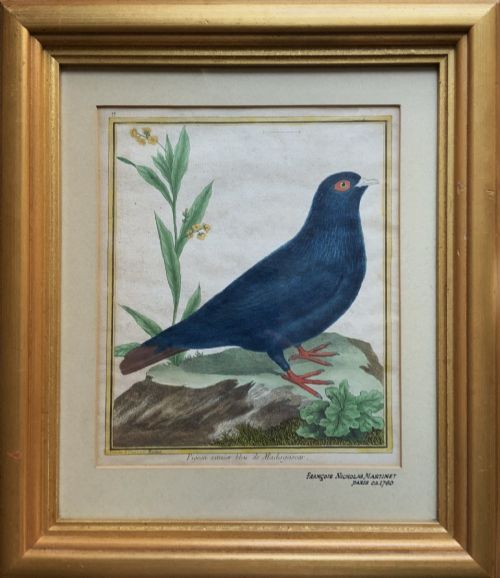
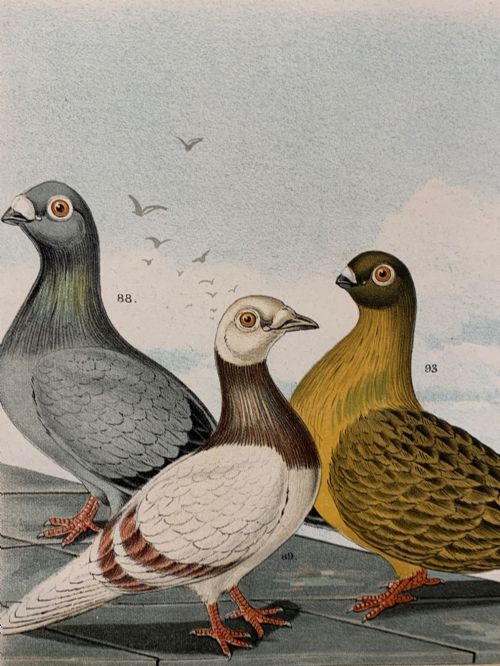


Coloured Bird Illustration Prints
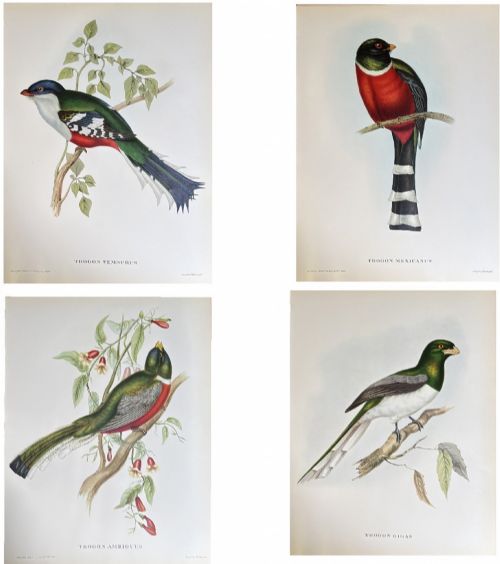
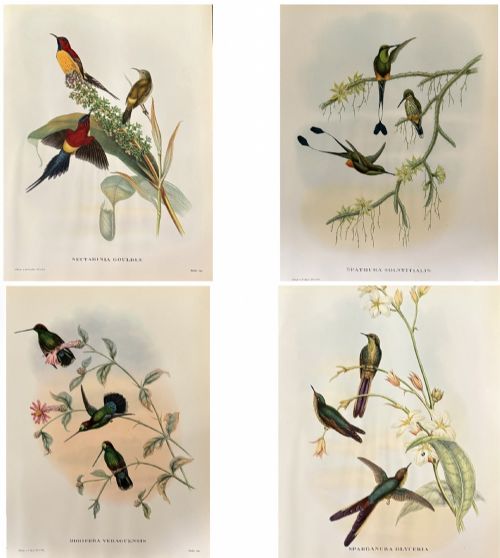
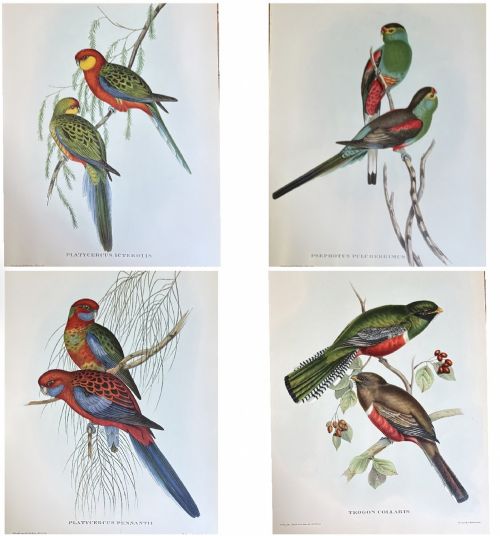
These coloured bird illustration prints bring natural history into a room with crisp ink lines and wash.
Coloured Bird Illustration Prints
Coloured bird illustration prints capture ornithological study across several centuries, spanning Georgian and Victorian periods. Buyers seeking these pieces will find framed and unframed works depicting tropical species, pigeons, parrots, and waterfowl.
The selections available here range from mid-twentieth-century print sets to eighteenth-century engravings. Works often appear in matched groups, such as pairs or sets of four, six, eight, ten, or twelve.
Originating as scientific plates from natural history publications, these prints combine detailed draftsmanship with hand-applied pigment. They suit studies, hallways, and living spaces where traditional wall art is desired.
How they were made
Makers produced these works using paper supports printed with ink through engraving or lithographic techniques. Artisans then applied watercolour by hand to bring vibrancy to the plumage and backgrounds.
Many examples are preserved behind glass within wood frames, occasionally enhanced with gilt or gold leaf. The combination of fine plate lines and delicate wash defines the production of these historic ornithological plates.
Periods represented on this page span the Georgian era, the eighteenth century, the nineteenth century, and the year 1950.
What varies in quality
The fidelity of the original engraving or lithography establishes the baseline quality of each plate. Finer lines and sharper botanical or anatomical details separate superior printings from simpler impressions.
The precision and preservation of the hand-applied watercolour wash also determine the visual merit of the piece. Vibrant, well-maintained pigments without heavy fading or discolouration elevate the overall standard of the artwork.
William Bird MD FLS·François Nicolas Martinet·George Edwards·William Swainson·Eleazor Albin
The Coloured Bird Illustration Prints Glossary
- Engraving
- A printmaking process where an artist cuts lines into a metal plate to hold ink. This technique creates sharp, fine details characteristic of early scientific plates.
- Lithograph
- A planographic printmaking method using a stone or metal plate. It allows for softer tonal gradations than engraving and became common in the nineteenth century.
- Hand-coloured
- A finished monochrome print enhanced with watercolour applied by hand. This process adds realistic hues to feathers and foliage.
- Ornithological
- Pertaining to the scientific study of birds. Prints of this nature served both academic records and decorative purposes.
Coloured Bird Illustration Prints: Frequently Asked Questions
How should I frame historic prints?
Protect the paper by using conservation-grade mount board and UV-filtering glass. Keep them away from direct sunlight to prevent the watercolour pigments from fading.
Ensure there is a small space between the glass and the print surface to avoid moisture trapping.
Are these prints originals from the stated period?
The listings include original engravings and lithographs produced in the eighteenth and nineteenth centuries, alongside mid-twentieth-century print sets. Check individual descriptions for the specific production era.
Paper characteristics, plate marks, and printing techniques help verify the age of each piece.
Can I buy these works as sets?
Several listings offer matching sets ranging from pairs up to twelve plates. These groupings often originate from the same historical publication or series.
Buying a set provides a cohesive look for hanging together on a wall.
What subjects do these illustrations cover?
The works depict a wide variety of birds, including tropical species, pigeons, parrots, ducks, and western tragopans. They reflect historical natural history illustration.
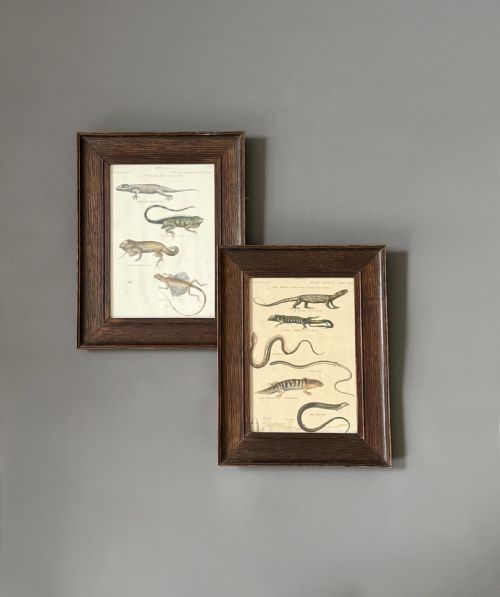
Other related scientific plates, such as reptiles, also appear in the selection.