





Colonial Tripod Table
A colonial tripod table brings intricate regional carving and exotic timber into domestic spaces.
Colonial Tripod Table
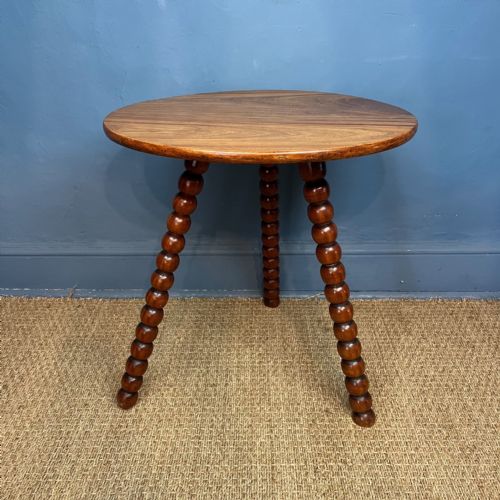
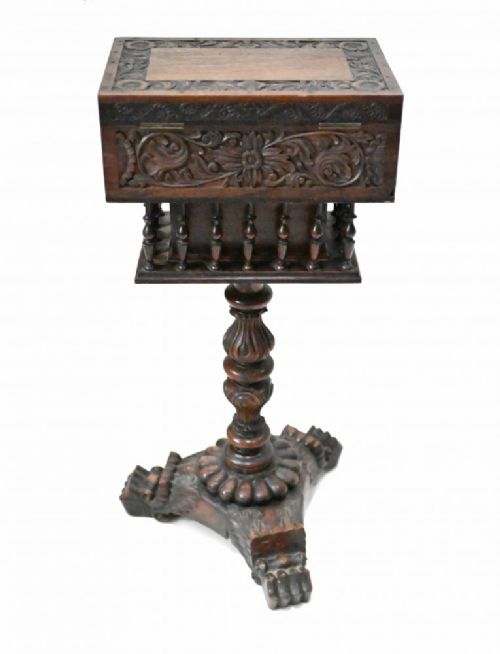
A colonial tripod table typically takes the form of a tilt-top occasional table, side table, or lamp table produced during the nineteenth century. These pieces emerge from regions under British administration, notably British India, Burma, and Ceylon, combining local cabinet-making traditions with European furniture forms.
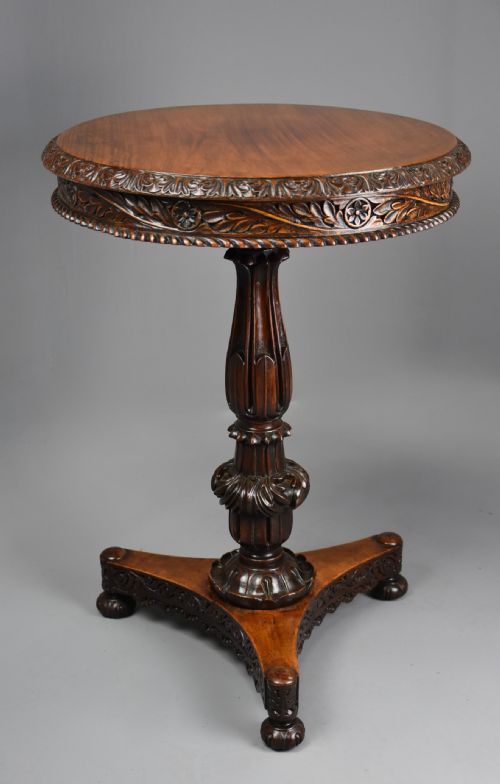
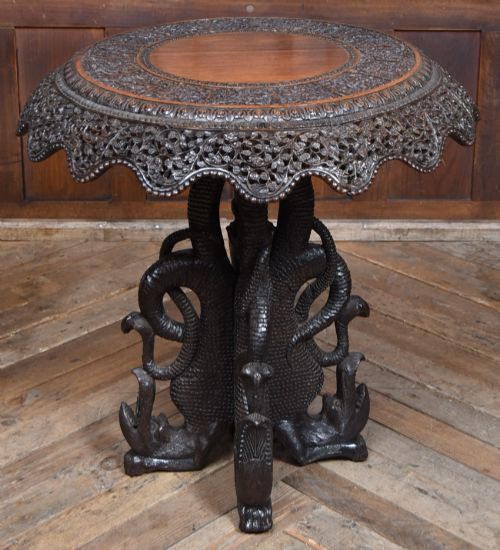
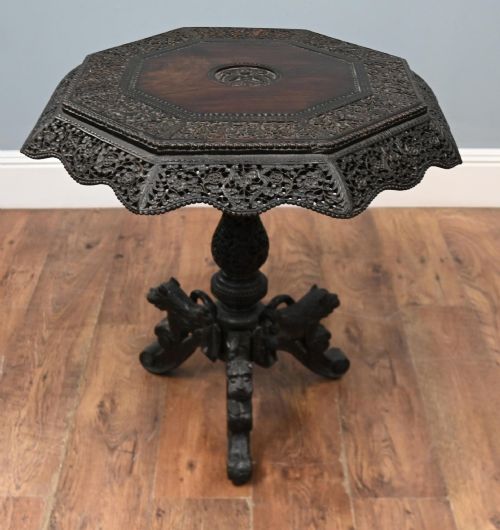
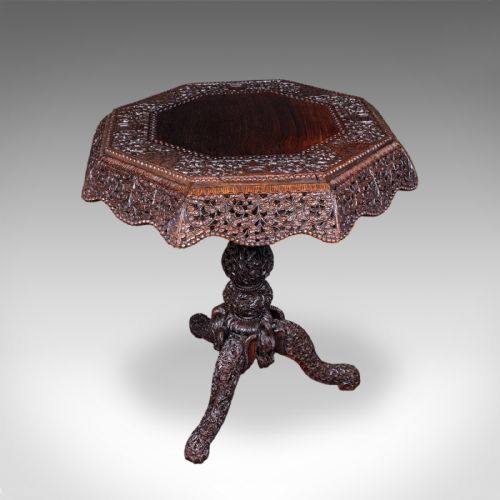
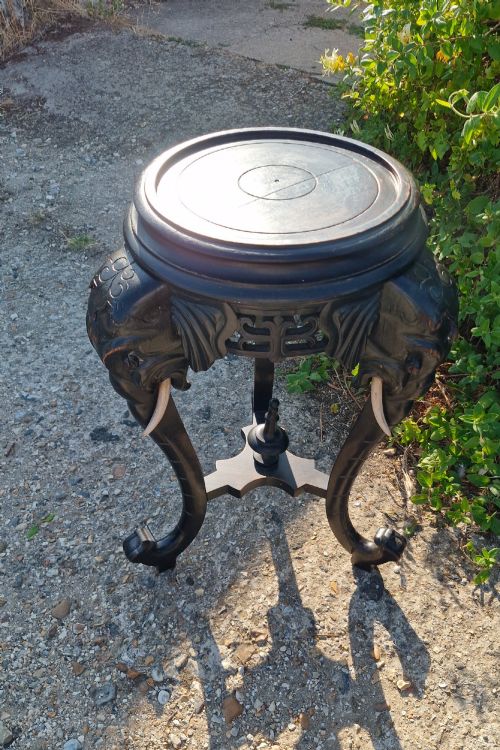
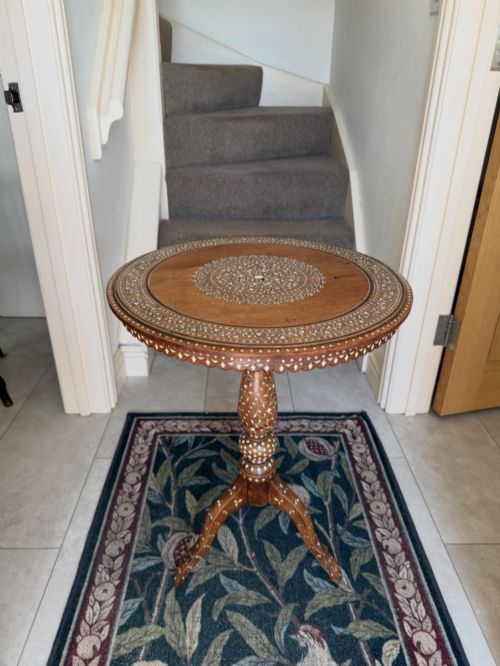
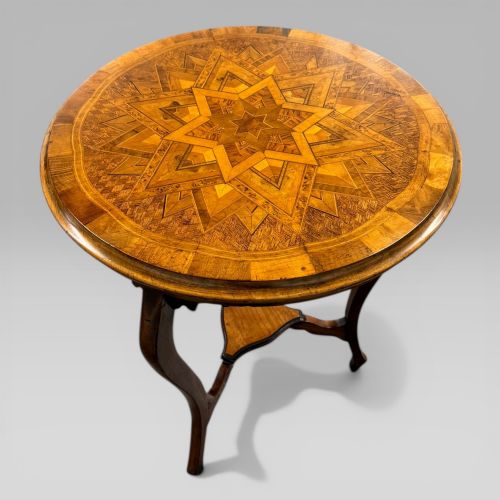
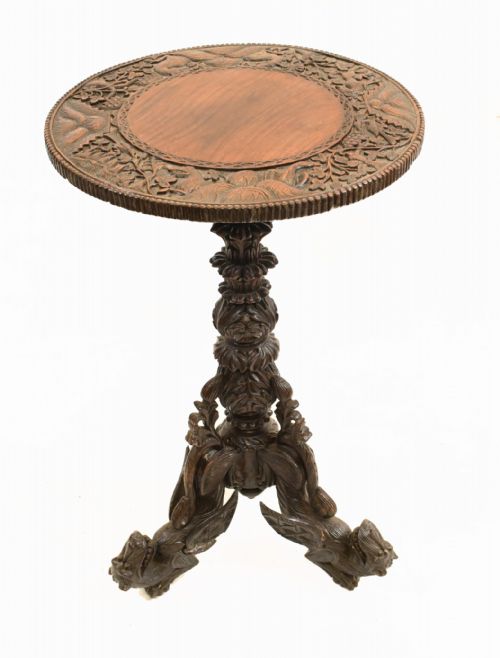
The most common examples encountered on this page are carved teak, padauk, or rosewood tables featuring circular tops supported by three legs. Many incorporate distinctive regional motifs such as elephant supports, intricate foliate carving, or contrasting inlay work.
Makers produced these tables for both expatriate colonial households and export markets in Britain. Their compact proportions made them versatile for use as occasional, tea, or display tables within Victorian interiors.
Materials and construction
Craftsmen utilised dense tropical hardwoods such as teak, padauk, ebony, and rosewood, which allowed for deep, crisp carving without splintering. These timbers were often sourced locally and selected for their rich grain and heavy weight.
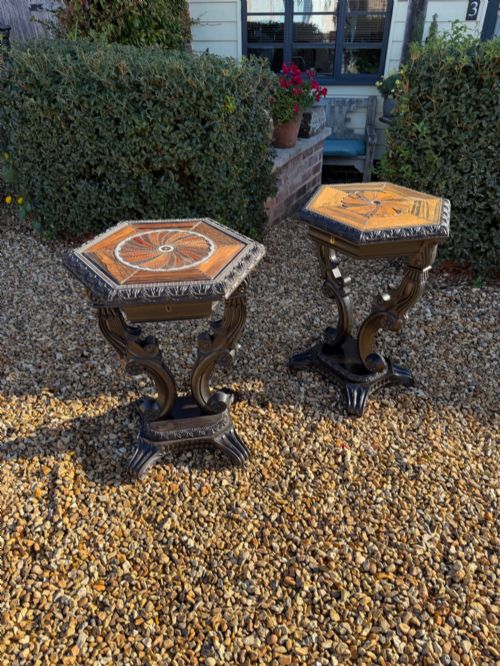
Decoration relied heavily on intricate hand-carving depicting foliage, figures, and animals, alongside specialised techniques like bone inlay, mother-of-pearl embellishment, and specimen wood marquetry. Construction frequently employed sturdy central pedestals branching into three carved feet, occasionally incorporating tilt-top mechanisms for convenience.
Colonial Tripod Table Retail Price Guide 2026
Typical asking prices for colonial tripod table among the pieces listed under this phrase on Sellingantiques today, from the lower quarter to the upper quarter. They describe what is for sale here now, not the wider market.
One Victorian elephant table includes painted wooden tusks alongside standard carved decoration.
Quality and craftsmanship
Quality rests primarily on the depth and precision of the hand-carving and the choice of timber. Superior examples display sharply defined relief work with naturalistic detail in animal or floral motifs, whereas simpler pieces show shallower, repetitive tooling.
The integrity of the timber and the complexity of decorative elements, such as inlaid bone or contrasting exotic woods, elevate a piece. Solid construction in heavy dense woods like ebony or padauk distinguishes finer workshop production from standard utility items.
Anton Seuffert
The Colonial Tripod Table Glossary
- Padauk
- A heavy, durable tropical hardwood with a reddish-brown colour used extensively in Anglo-Indian furniture. It accepts fine carving and polishes to a rich lustre.
- Teak
- A dense, weather-resistant timber native to South and Southeast Asia utilised for its stability and strength. It forms the structural base for many Burmese and Indian carved tables.
- Teapoy
- A small occasional table or tea caddy stand originating in India and popular during the Victorian period. The term derives from Hindi and Persian words denoting three feet.
- Tilt-top table
- A table featuring a hinge mechanism allowing the top to rotate and rest vertically when not in use. This design saved space in smaller rooms.
- Hoshiarpur
- A town in Punjab known for intricate woodwork involving delicate inlay. Tables from this region typically feature dense geometric or floral patterns in bone and sheesham wood.
Colonial Tripod Table: Frequently Asked Questions
What is a colonial tripod table?
A colonial tripod table is a nineteenth-century occasional table made in regions like India or Burma for British colonial markets. They combine European furniture forms with intricate local hand-carving and exotic timbers.
These pieces typically feature a central pedestal supported by three legs, often decorated with regional motifs such as elephants or dense foliage.
Where were these tables made?
Cabinet makers produced these tables across the British Empire in Asia, particularly in the Bombay presidency, Ceylon, and Burma. Workshops adapted traditional carving skills to suit Victorian domestic furniture requirements.
Regional specialisms developed, such as ebony work in Ceylon or elaborate bone inlay from northern India.
How do I care for a hardwood table?
Maintain these hardwood tables by keeping them away from direct sunlight and sudden temperature changes that can dry out dense timbers like teak and padauk. Dust regularly with a soft, dry cloth to preserve the polished finish.
Avoid using silicone-based polishes on antique carved surfaces, as buildup can obscure fine detail in the recessed carving.
Are these tables sturdy enough for daily use?
Most examples utilise heavy tropical hardwoods and solid tripod bases designed for practical utility as lamp, side, or occasional tables. Their robust construction handles everyday placement of lamps or decorative objects securely.
Care should be taken with tilt-top mechanisms and delicate protruding elements like carved animal tusks or thin pedestal legs.