




Colonial Teak Campaign Chest
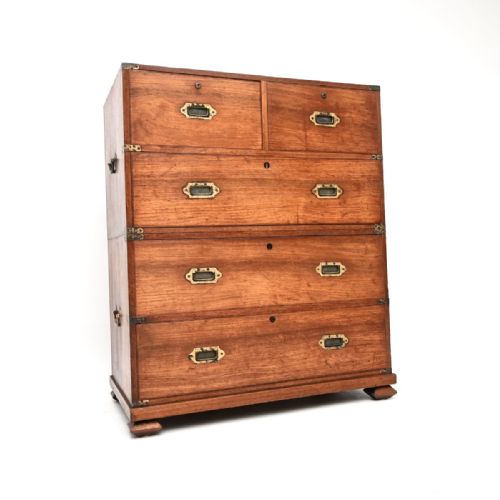
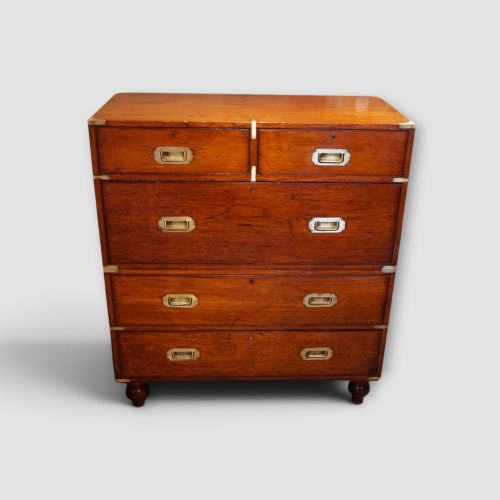
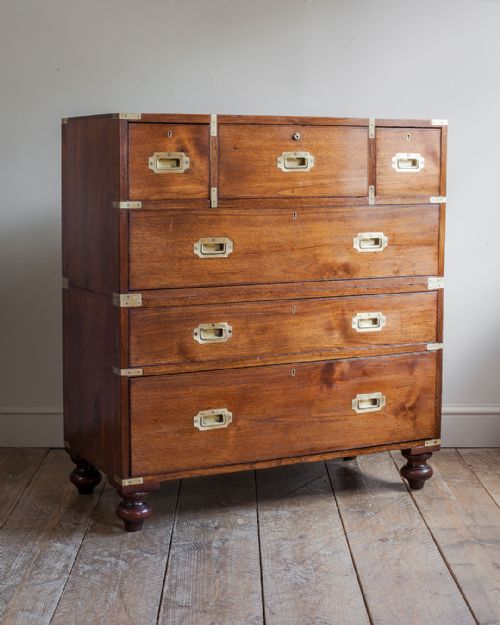
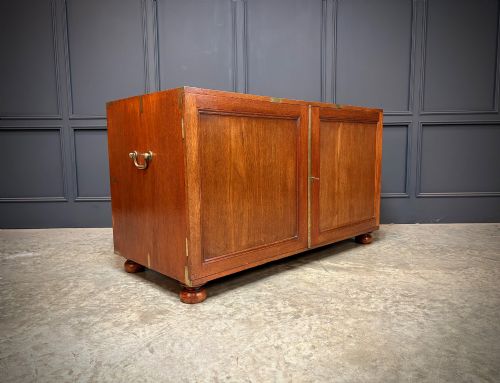
A colonial teak campaign chest is a portable piece of military furniture designed for officers on the move, prized for its robust construction and clever modular configuration.
Colonial Teak Campaign Chest
When searching for a colonial teak campaign chest, collectors examine sturdy two-part modular forms built for travel across distant territories during the Victorian era and the eighteenth century.
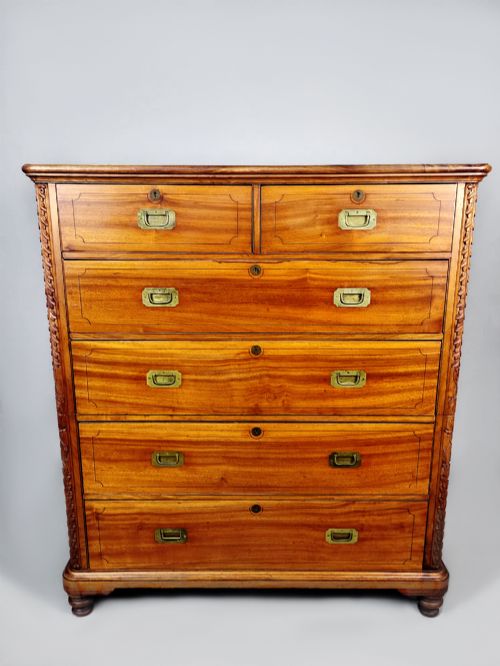
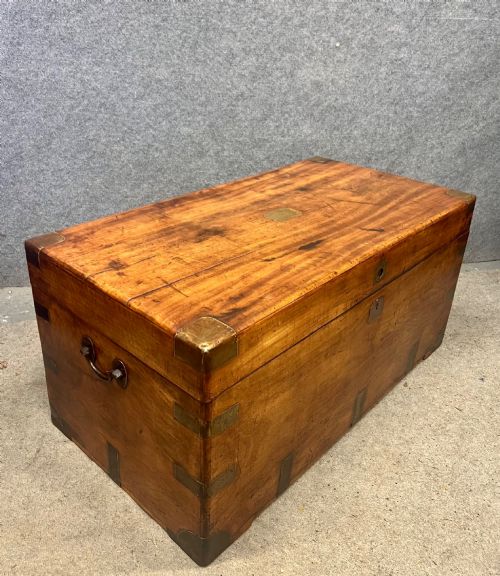
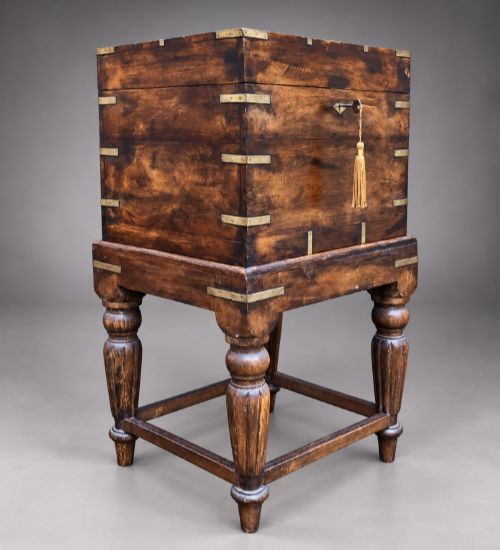
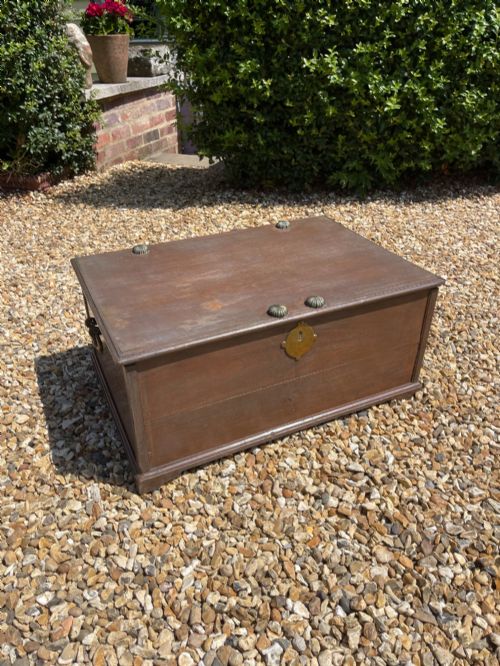
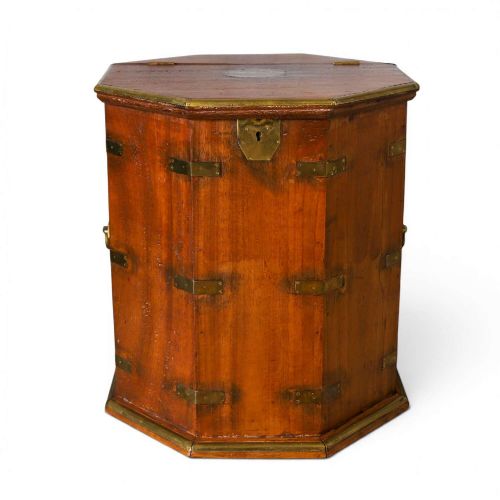
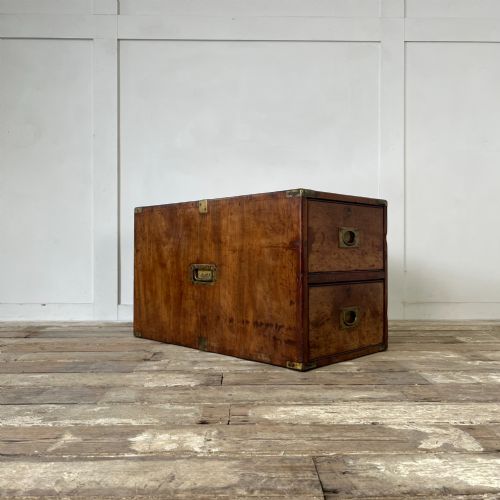
The version most commonly encountered on this page is the standard chest of drawers, alongside trunks, secretaire chests, and cellarettes.
These items originate from military campaigns and colonial outposts, reflecting the practical requirements of British officers requiring durable storage.
How they were made
Craftsmen built these pieces primarily using dense tropical hardwoods such as teak and padouk, selected for their resistance to humidity and warping during overseas transit.
Metal reinforcement played a central role in construction, utilising brass corners, straps, and flush-mounted carrying handles made of brass or cast iron to protect edges from heavy impact.
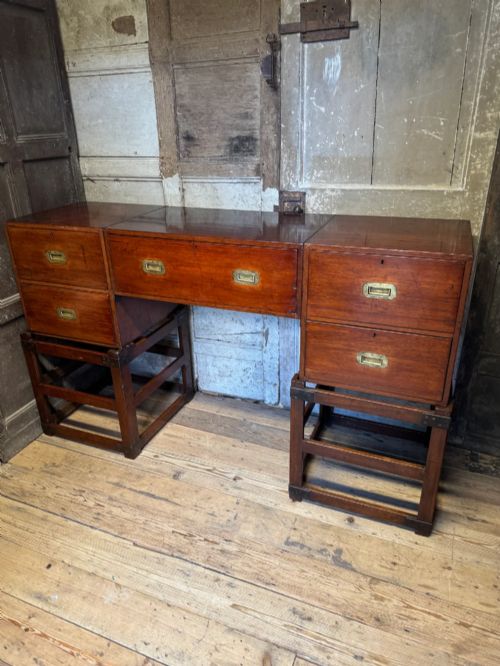
Joinery techniques accounted for climate shifts by employing panelled backs and multi-section carcasses that separated into easily transportable halves.
Colonial Teak Campaign Chest Retail Price Guide 2026
Typical asking prices for colonial teak campaign chest among the pieces listed under this phrase on Sellingantiques today, from the lower quarter to the upper quarter. They describe what is for sale here now, not the wider market.
Certain military chests carry the engraved names of their original officer owners, transforming practical luggage into personal historical archives.
What varies in quality
Quality separates examples by the precision of their brass mounts and the integration of hardware that sits flush against the timber surface to prevent catching during transit.
Internal configuration dictates distinction, particularly in pieces featuring fitted writing drawers, secret compartments, and secretaire drop fronts with precise pigeonholes.
The integrity of the timber and the original separation mechanism between sections define the construction standard of surviving pieces.
Army & Navy
The Colonial Teak Campaign Chest Glossary
- Campaign chest
- A modular chest of drawers built in two or more sections designed to dismantle easily for transport by military officers.
- Secretaire
- A cabinet or chest incorporating a pull-out writing drawer with a drop-front and internal compartments for stationery.
- Brass bound
- Furniture reinforced with brass corners, straps, and braces to protect edges and joints from rough handling during travel.
- Cellarette
- A specialised storage container or chest designed specifically for holding wine bottles and decanters securely during transit.
Colonial Teak Campaign Chest: Frequently Asked Questions
How do these chests separate?
These chests typically divide into two distinct sections stacked one upon the other, secured by internal brass hooks or side brackets. This modular design allowed officers to pack and move heavy storage units more easily.
Lifting handles mounted flush to the sides assist with carrying each individual segment during transit.
What wood was used?
Teak serves as the primary timber for these pieces due to its exceptional durability and natural resistance to tropical moisture. Padouk also appears among surviving examples.
These dense hardwoods prevented warping in fluctuating colonial climates and withstood the rigours of military movement.
How do you date a chest?
Dating relies on construction methods, brass hardware styles, and documented periods ranging from the late eighteenth century through the Victorian era. Earlier examples often feature simpler brass mounts.
Makers' marks or stamps, when present, provide definitive clues regarding the workshop or retailer responsible for the piece.
Were they only for the military?
While commissioned primarily for British military officers on active service, these furnishings were also utilised by colonial administrators and merchants travelling abroad.
The practical requirements of mobile living made modular storage popular across various colonial professions.