


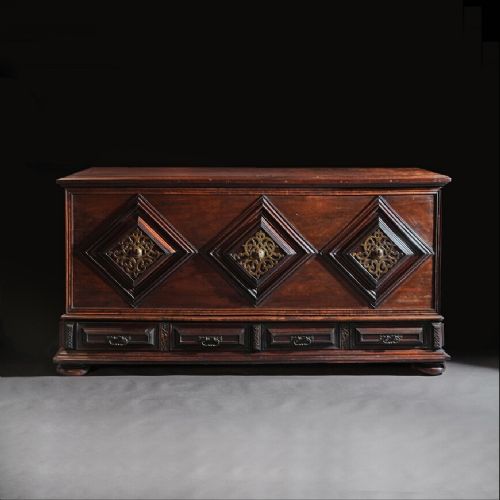
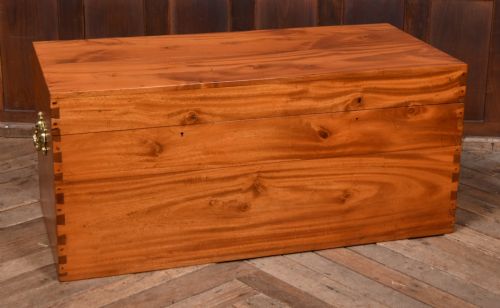
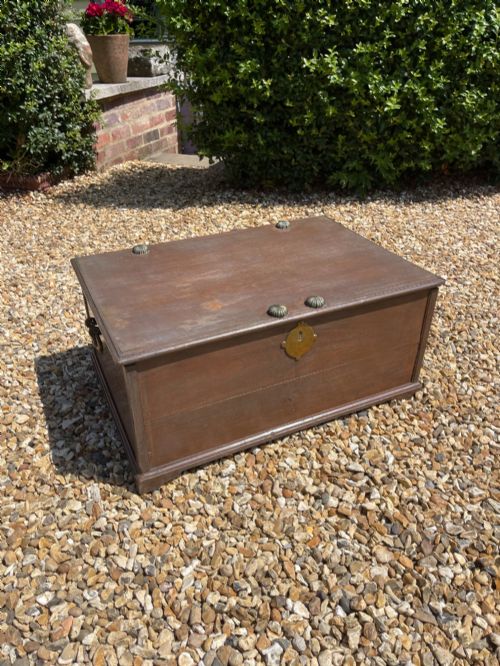
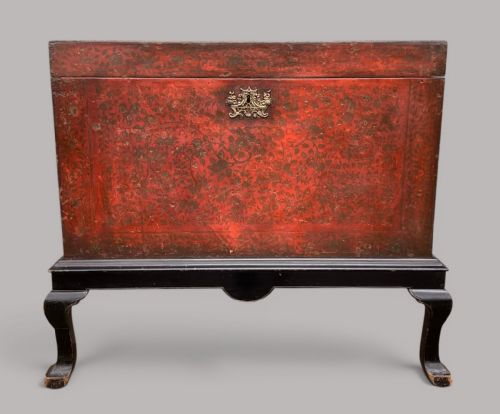
Colonial Storage Coffer
A colonial storage coffer is a sturdy travel chest built for distant postings, prized today for its rich timber and robust brass mounts.
Colonial Storage Coffer
A colonial storage coffer serves as a durable receptacle for clothing and valuables, originating from trade and military campaigns across distant territories. These pieces span from the seventeenth century through the Victorian era, reflecting diverse geographical influences such as Anglo-Indian, Dutch, and Spanish traditions.
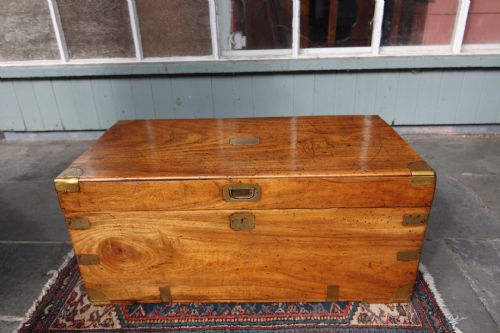
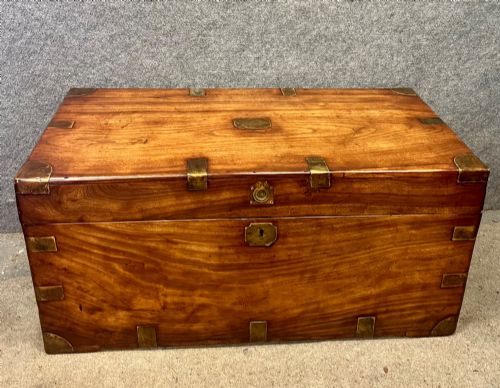
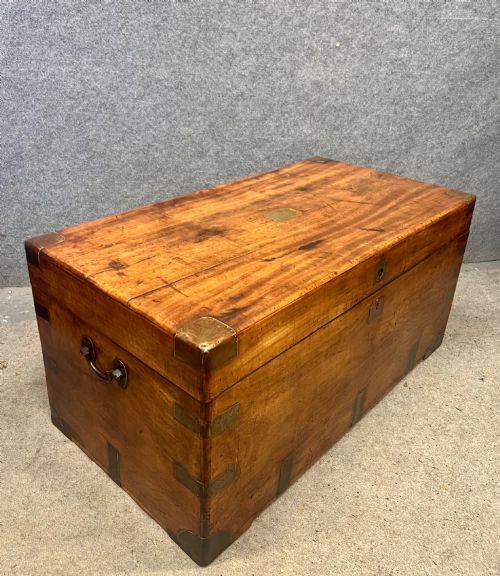
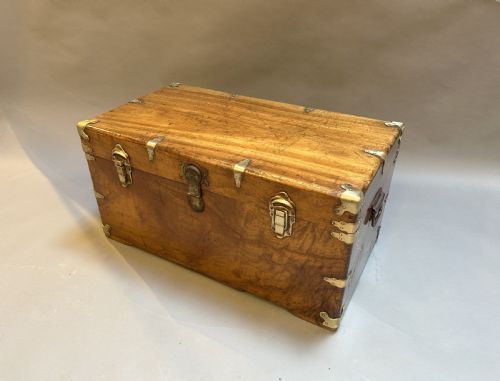
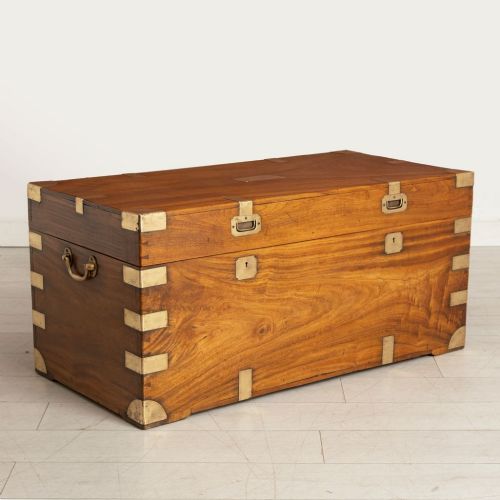
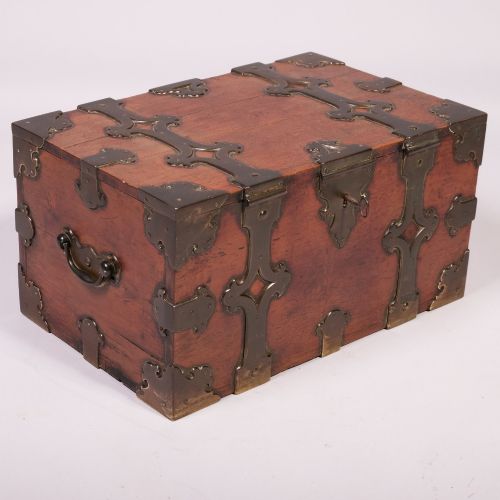
The version most commonly encountered on this page is the nineteenth-century camphor wood or teak trunk. These utilitarian boxes often feature heavy brass bound corners and carrying handles designed for transport.
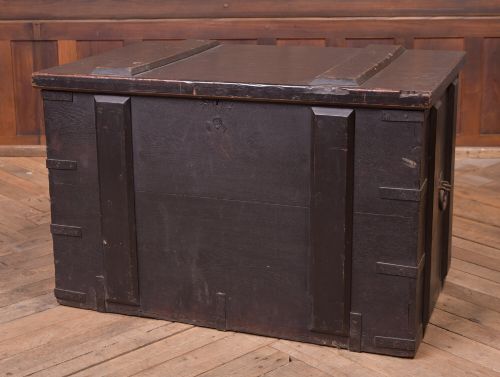
Forms range from compact caskets and blanket boxes to large merchant trunks and fitted campaign chests. Each variation illustrates the practical requirements of merchants and officers requiring secure containment on long journeys.
Materials and Technique
Makers utilised dense timbers resistant to tropical climates, predominantly selecting camphor wood, teak, padouk, walnut, and mahogany. Camphor wood was frequently chosen for its insect-repellent properties, protecting textiles stored within.
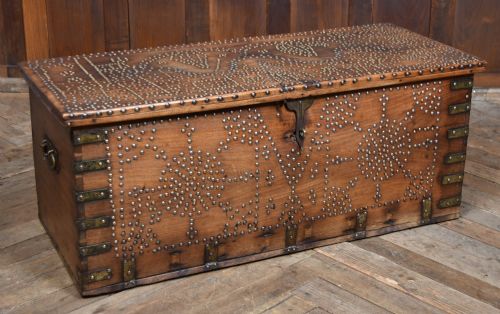
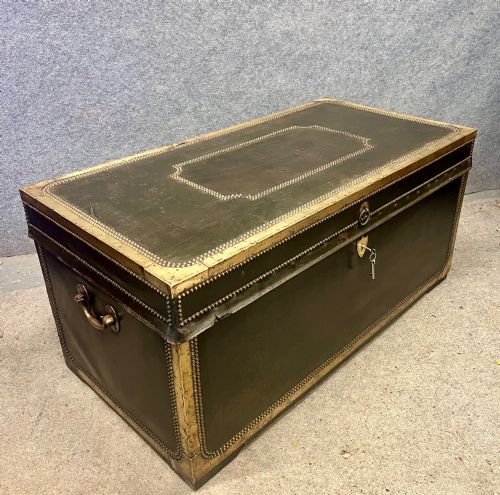
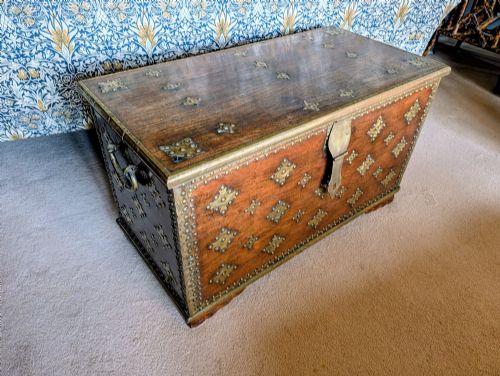
Construction relied on robust joinery reinforced with heavy brass straps, corner plates, and strapwork. Iron and leather also appear on specific examples, particularly in Spanish and Portuguese colonial workshops where studded hides and iron locks provide additional security.
Listings feature pieces spanning from the seventeenth century to the Victorian era, constructed in teak, camphor wood, padouk, walnut, and mahogany.
Craftsmanship and Hardware
Quality rests in the selection of timber and the execution of the metalwork. Superior examples display figured padouk or rich camphor wood paired with substantial, hand-beaten brass mounts and original locking mechanisms.
Construction details differentiate standard utility items from finer commissions. Finely dovetailed joints, secondary hardwoods like ebony inlay, and intact interior compartments distinguish the upper tier of these storage pieces.
The Colonial Storage Coffer Glossary
- Camphor wood
- An aromatic timber native to Asia, utilised for storage chests to deter moths and dampness. Its distinct scent remains identifiable decades later.
- Campaign chest
- A modular chest designed to dismantle or travel easily, equipped with recessed brass handles to prevent damage during transit.
- Brass bound
- A method of reinforcing box edges and corners with brass strips and brackets fastened by numerous small pins.
- Padouk
- A heavy, reddish-brown tropical hardwood prized for durability and rich grain, frequently seen in Zanzibar and Anglo-Indian furniture.
- Coffer
- A large, heavy chest traditionally used for holding precious items, often fitted with a hinged lid and secure lock.
Colonial Storage Coffer: Frequently Asked Questions
What is a colonial storage coffer?
A colonial storage coffer is a robust chest manufactured in overseas territories or for export during the seventeenth through nineteenth centuries. They were built to protect garments and valuables during lengthy sea voyages.
These pieces utilise dense regional timbers such as camphor wood and teak, frequently reinforced with brass strapping. Their durable construction makes them practical for modern domestic interiors as coffee tables or blanket storage.
How do I identify camphor wood?
Camphor wood is recognised by its pale to medium brown colour and distinctive, aromatic scent when the chest is opened. This natural fragrance helped protect stored textiles from insects.
The timber has a medium texture and often displays an attractive grain pattern beneath a polished surface.
Were these chests made for travel?
Many examples were constructed specifically for travel, featuring side carrying handles and reinforced corners. Officers and merchants required secure containers that could withstand repeated handling on ships and carriages.
Other variants, such as blanket boxes and stationary strong boxes, served static domestic or commercial storage roles in colonial households.
How do I date a campaign trunk?
Dating relies on examining the construction methods, the style of the brass hardware, and the timber used. Nineteenth-century pieces often display machine-sawn elements and standard brass corner brackets, whereas earlier examples show hand-worked joinery.
Makers frequently utilised regional hardwoods characteristic of specific periods, helping to narrow down the decade of production.