

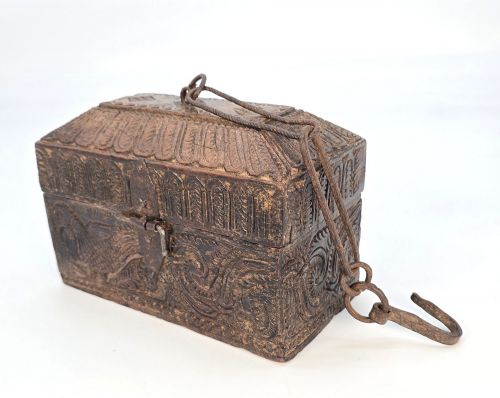


Colonial Indian Teak Box
A colonial indian teak box brings dense tropical timber and robust brass work into domestic rooms, built to travel across oceans.
Colonial Indian Teak Box
A colonial indian teak box spans robust campaign chests, merchants' trunks, and intimate writing desks designed for travel. These pieces emerge primarily from the nineteenth century, including Victorian interpretations and earlier eighteenth-century examples.
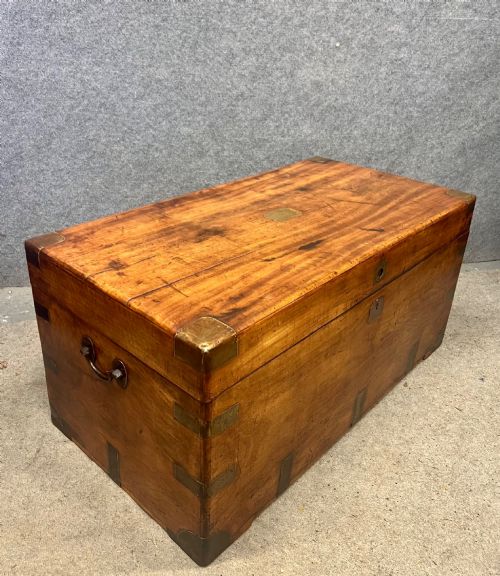
The version most likely to meet you on this page is the brass-bound trunk or smaller storage box, constructed during the Victorian period. Such objects served colonial officers and merchants who required secure transport for correspondence, valuables, and personal effects.
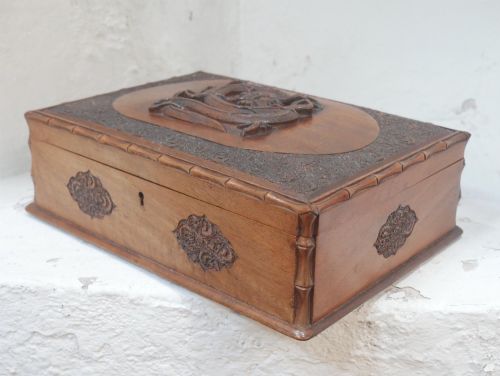
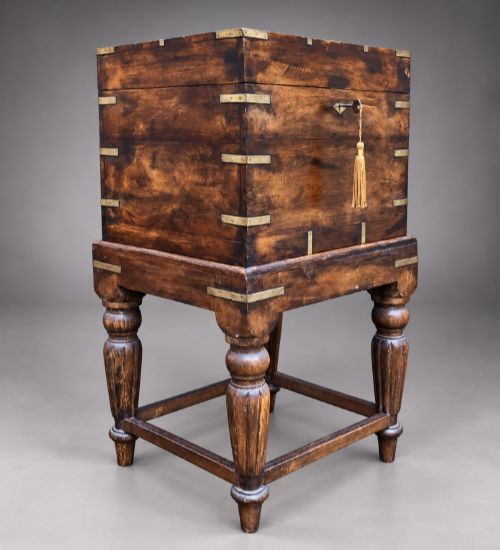
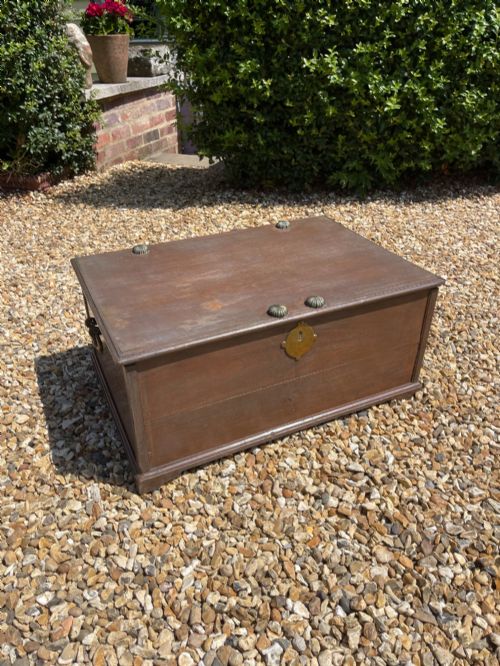
Forms range from diminutive spice boxes and correspondence caskets to large blanket chests and cellarettes on stands. Their origins bridge British colonial oversight and Indian craftsmanship, creating distinct hybrid domestic furnishings.
How they were made
Teak forms the primary structural timber, chosen for its density and resistance to tropical climates, frequently paired with secondary hardwoods. Makers reinforced these heavy timber bodies with iron straps or heavy brass mounts to withstand long sea voyages and overland transit.
Corner brackets, strapwork, and flush-fitting drop handles are secured with numerous screws or pins, protecting the vulnerable edges of each chest. Secondary decorative details include bone inlay, hand-carved panels, and lacquer finishes applied to specialised surfaces.
Colonial Indian Teak Box Retail Price Guide 2026
Typical asking prices for colonial indian teak box among the pieces listed under this phrase on Sellingantiques today, from the lower quarter to the upper quarter. They describe what is for sale here now, not the wider market.
Several trunks preserve traces of long-forgotten journeys, bearing faint shipping labels and brass owner plaques from nineteenth-century voyages.
What varies in quality
The sophistication of the brass work and the precision of the joinery set finer pieces apart from utilitarian baggage. Heavy cast mounts, intricate engraving, and meticulous corner dovetailing indicate workshop production intended for high-ranking officers or wealthy merchants.
Carving depth and clarity on spice boxes and decorative chests demonstrate artisan skill, distinguishing richly detailed relief work from simpler surfaces. The integration of functional elements, such as secret compartments within writing boxes, further separates standard storage trunks from luxury commissions.
The Colonial Indian Teak Box Glossary
- Campaign trunk
- A robust chest built in sections or fitted with carrying handles for military officers on the move. These items dismantle or feature recessed hardware to endure frequent travel.
- Cellarette
- A dedicated container designed to hold wine bottles securely during transport or dining. They often sit on low stands and include internal partitions.
- Brass bound
- A construction method where corners and edges are protected with brass strips and corner pieces. This technique adds structural rigidity while preventing the timber from splitting.
- Sadeli work
- A decorative mosaic technique utilising intricate geometric patterns formed from cross-sections of horn, bone, and sometimes ivory or metal. It appears on the surfaces of boxes and small caskets.
- Scribe's casket
- A specialised strong-box or writing casket made to hold documents, ink, and writing implements. These containers often feature internal compartments for secure storage.
Colonial Indian Teak Box: Frequently Asked Questions
How were these boxes used originally?
Owners utilised them to protect valuable documents, correspondence, uniforms, and personal effects from moisture, insects, and rough handling during transit. Larger chests doubled as furniture or tables inside tents and temporary quarters.
Writing boxes included fitted compartments for inkwells and paper, serving as portable desks for administrators away from permanent offices.
How do I date a teak chest?
Dating relies on construction methods, brass mount styles, and secondary materials like bone inlay or lacquer. Nineteenth-century examples often display standard Victorian campaign hardware and machine-cut screws, while eighteenth-century pieces typically show hand-forged ironwork and deeper, traditional carving.
Historical records, brass stamps, and specific regional decorative motifs help narrow the manufacturing period further.
Where should I place one at home?
Smaller boxes sit well on side tables, desks, or mantelpieces where their brass mounts and carved details can be inspected closely. Larger trunks function effectively as coffee tables or blanket storage at the foot of a bed.
Their robust construction allows them to serve as practical furniture while anchoring a room with dark wood tones.