

Colonial Indian Carved Furniture
Colonial Indian carved furniture brings heavy tropical hardwoods and intricate foliage into British rooms through pieces made for the Raj.
Colonial Indian Carved Furniture
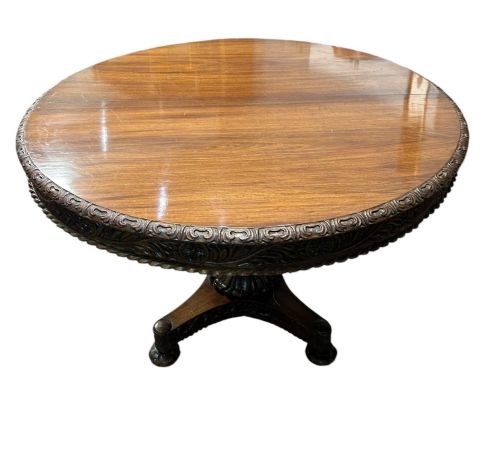
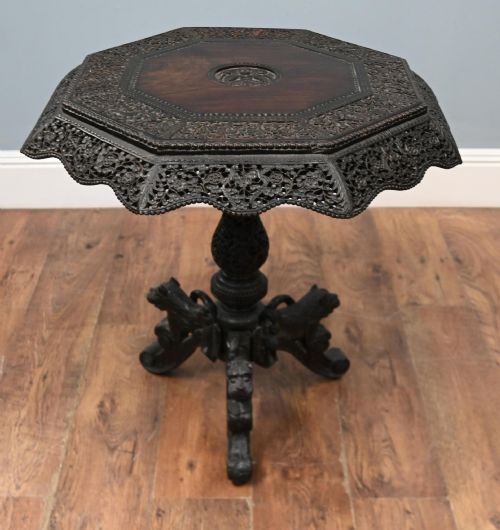
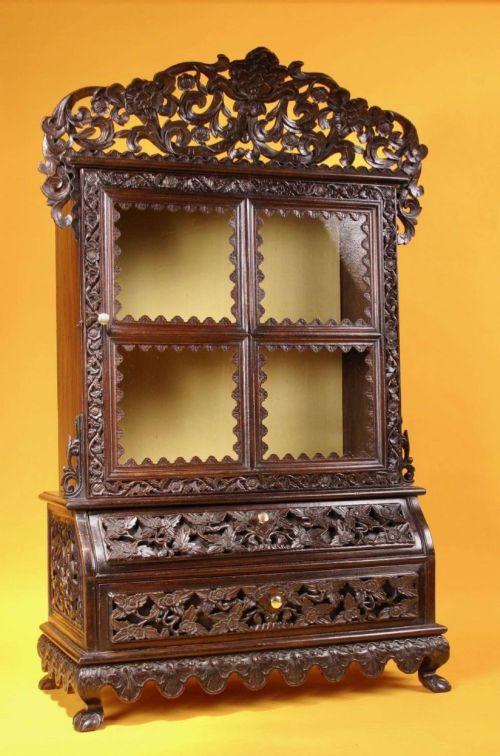
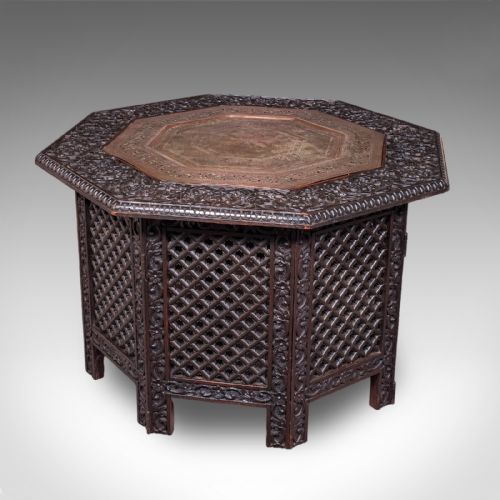
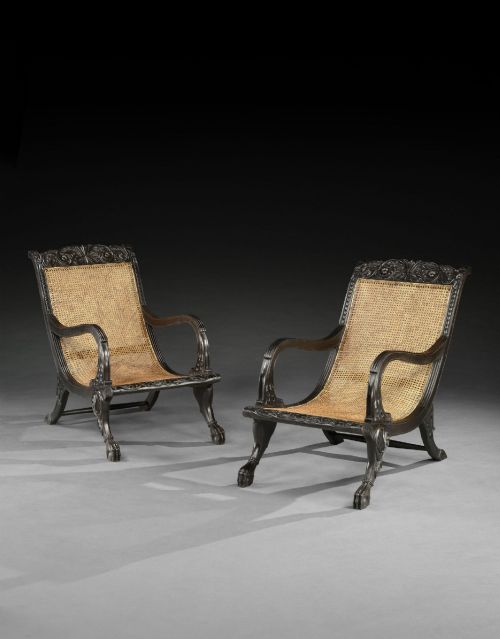
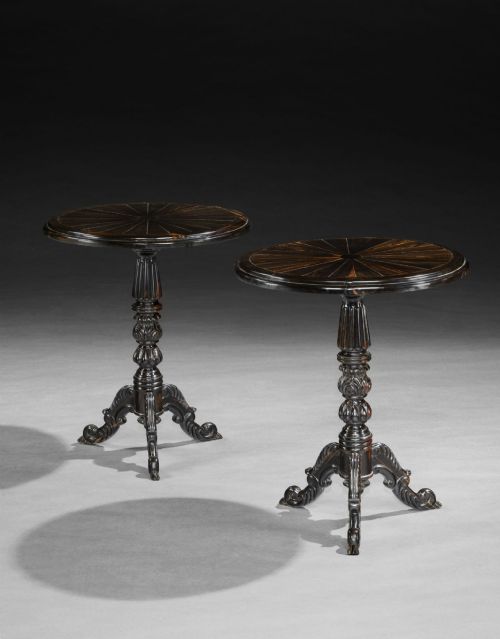
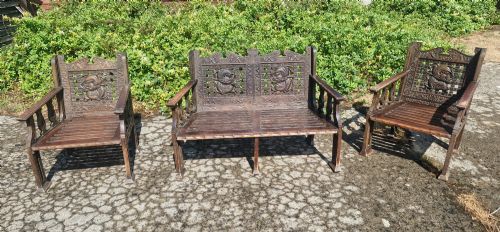
Colonial Indian carved furniture spans the nineteenth century, encompassing versatile tables, armchairs, and storage pieces designed for British colonial life. You will frequently encounter side tables, occasional tables, and seating fashioned in Anglo-Indian and Burmese styles.
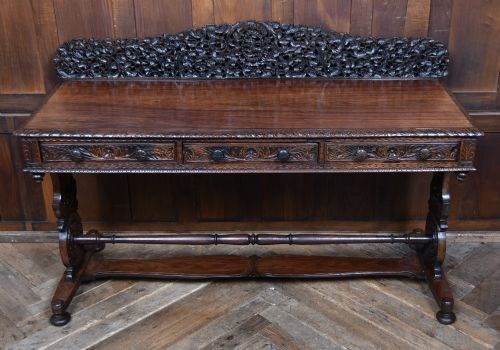
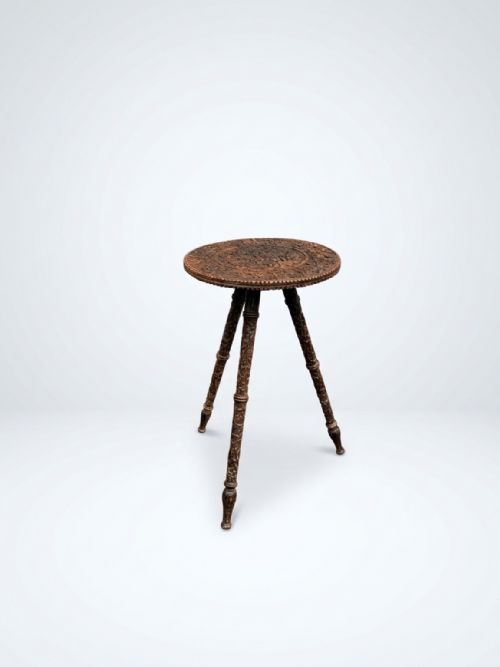
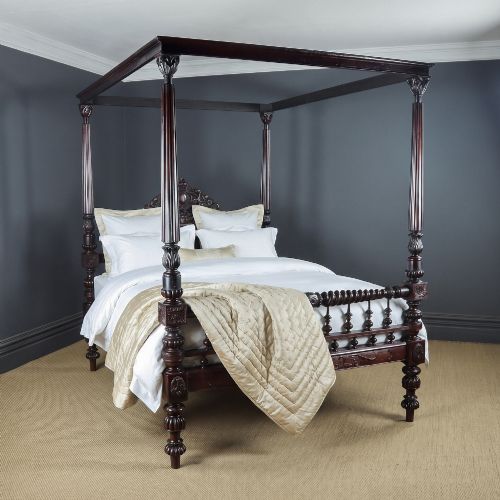
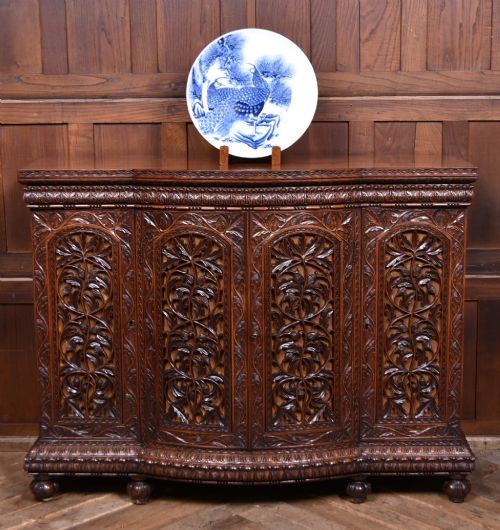
Makers drew upon regional traditions from Bombay, Ceylon, and Hoshiarpur, producing everything from tripod tables to heavy sideboards and four-poster beds. These items combined traditional local joinery with forms familiar to British occupants.
The material palette shifts between dense imported woods, whilst execution ranges from simple village work to elaborate urban production meant for official residences.
Materials and Technique
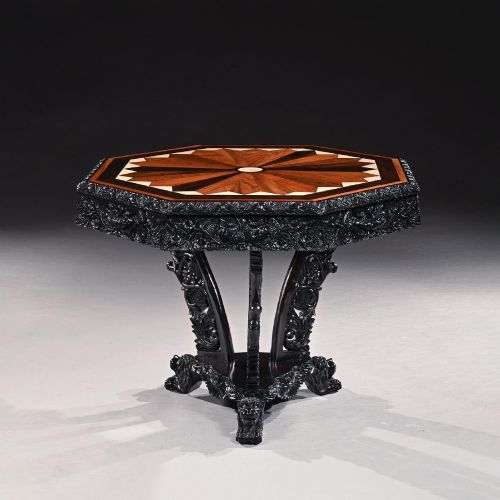
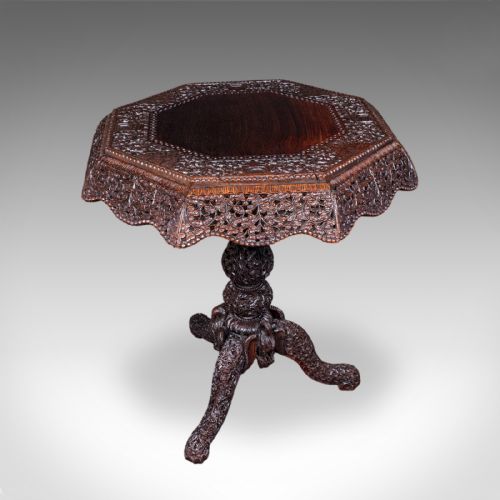
Artisans built these pieces from solid tropical timbers including teak, padauk, rosewood, and ebony, relying on their natural weight and stability. Such woods permitted deep, crisp relief carving without splintering.
Inlay work incorporated contrasting brass wire, bone, and mother-of-pearl set flush into geometric or floral surfaces. Structural joints frequently married indigenous techniques with British case furniture proportions.
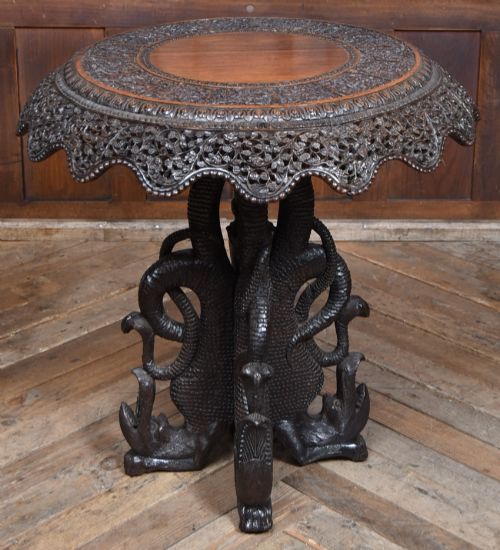
Several tables stare back with painted wooden tusks.
Quality and Execution
The distinction between ordinary and exceptional pieces lies entirely in the depth and crispness of the carving. Superior examples show undercut foliage and sharp anatomical details on animal figures rather than shallow, mechanical stamping.
Timber selection dictates the overall presence of the piece, with dense, unblemished padauk or rich ebony commanding greater attention than composite or stained secondary woods. The integration of metal or bone inlay also marks the distinction between simple utility and high-status commission work.
The Colonial Indian Carved Furniture Glossary
- Padauk
- A heavy tropical hardwood exhibiting a rich reddish-brown colour that darkens with age. It serves as the primary material for many nineteenth-century side tables and desks.
- Hoshiarpur
- A northern town renowned for intricate woodwork. Pieces originating here feature dense geometric inlay in brass, bone, or white wood.
- Teapoy
- A small tea caddy table fitted with a lidded compartment or interior canisters. These portable stands frequently incorporate elaborate carved borders.
- Cane
- Split rattan woven into an open mesh pattern. It appears on chair seats and backs to provide cool seating in warm climates.
- Anglo-Indian
- A descriptive term for furniture made in India under British rule. These designs fuse European furniture forms with local carving motifs.
Colonial Indian Carved Furniture: Frequently Asked Questions
How do I identify Hoshiarpur pieces?
Hoshiarpur pieces are recognised by their dense all-over geometric inlay executed in brass, bone, or contrasting woods. The entire surface of tables, screens, and occasional items is typically covered in intricate mosaic patterns.
Unlike purely carved items from other regions, these tables rely on the visual contrast of the inlay work rather than deep relief foliage.
What is an elephant table?
An elephant table is a small occasional stand featuring carved elephant heads or complete figures supporting the top. Some examples include applied wooden or bone tusks projecting from the base.
These whimsical forms were popular during the late Victorian period as smoking or lamp tables within domestic interiors.
How should I care for teak furniture?
Tropical hardwoods require minimal intervention beyond regular dusting with a dry, soft cloth. Avoid placing them near direct heat sources or strong sunlight, which can dry out the dense timbers.
Applying occasional specialist wax helps maintain the natural sheen of woods like rosewood and padauk without clogging fine carved recesses.
Were these pieces made in Britain?
The majority of these objects were manufactured in workshops across the Indian subcontinent for British officials and export markets. Local craftsmen adapted British furniture types to suit colonial administrative requirements.
European forms such as partners desks and pedestal tables were reinterpreted through local carving traditions and native timbers.