


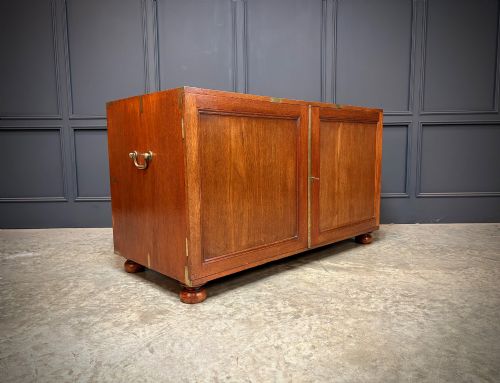


Colonial Furniture Sideboard
Colonial furniture sideboard pieces are dense hardwood serving pieces built for distant outposts, offering robust storage with intricate indigenous carving.
Colonial Furniture Sideboard
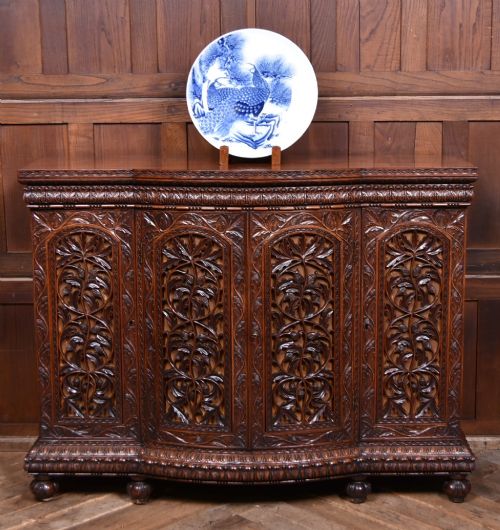
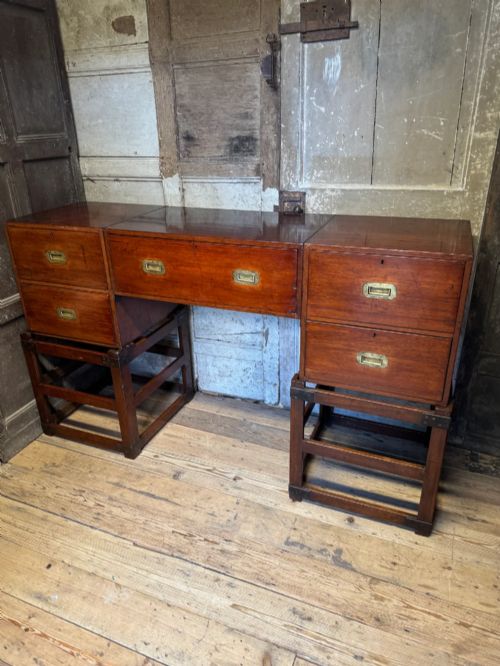
A colonial furniture sideboard represents the meeting of British utilitarian forms with the rich timbers and skilled carving traditions of the colonies. These pieces take the shape of sideboards, side cabinets, buffets, and serving tables designed for administrative and domestic life abroad during the nineteenth century. The examples met on this page lean heavily toward Anglo-Indian and Victorian military campaign styles, reflecting the movement of officers and merchants across the empire.
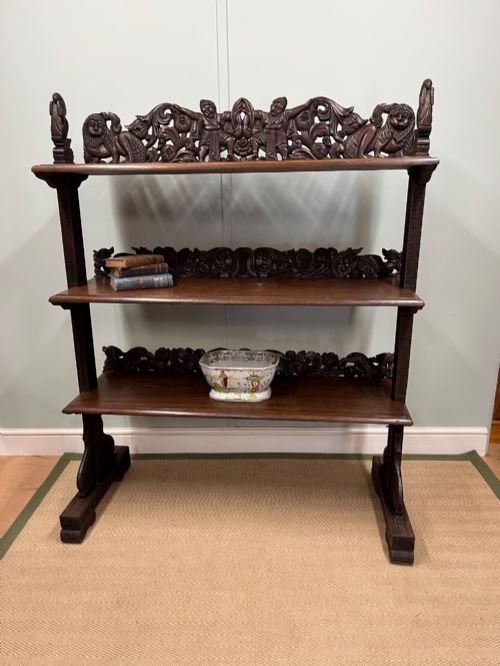
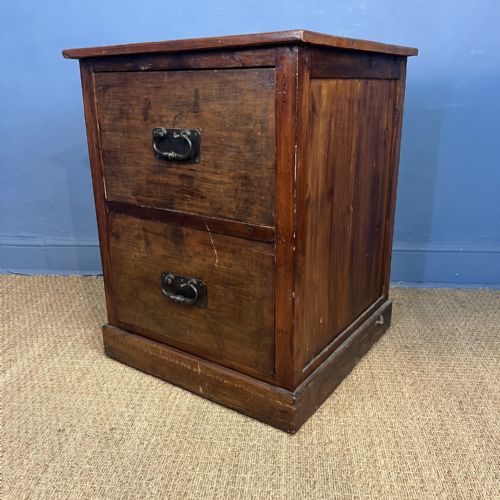
Most pieces date from the nineteenth century, including specific periods like the Regency era, the eighteen-eighties, and the nineteen-tens. Forms range from heavy pedestal sideboards and three-tier buffets to campaign tables and filing cabinets. The makers adapted traditional British dining room storage to suit tropical climates and colonial administration, resulting in robust constructions that survive in remarkable condition.
How they were made
Makers utilised dense exotic hardwoods such as padouk wood, teak, rosewood, and solid satinwood to withstand humid environments and resist insect damage. These heavy timbers were joined with traditional cabinetry methods, often incorporating brass hardware for campaign furniture that needed to dismantle easily for transport.
Carving was executed by local artisans whose skill transformed structural surfaces into dense relief panels featuring foliage, scrollwork, and figurative motifs. Secondary materials such as iron structural braces and painted finishes appear alongside polished hardwood surfaces, showing a practical approach to colonial utility.
Colonial Furniture Sideboard Retail Price Guide 2026
Typical asking prices for colonial furniture sideboard among the pieces listed under this phrase on Sellingantiques today, from the lower quarter to the upper quarter. They describe what is for sale here now, not the wider market.
Several pieces combine British dining room formality with tropical hardwoods sturdy enough to outlive the empires that commissioned them.
What varies in quality
The standard of a colonial furniture sideboard rests primarily on the quality of the timber selection and the depth of the carving. Dense padouk and figured satinwood with strong grain patterns command attention, while simpler timbers show a more utilitarian origin.
Carving execution defines the upper tier of these pieces, moving from stiff, repetitive motifs to fluid, deeply undercut foliage that requires significant artisan time. Original brass mounts, intact campaign fittings, and structural integrity further distinguish fine workshop output from standard domestic utility pieces.
The Colonial Furniture Sideboard Glossary
- Padouk wood
- A heavy, durable reddish-brown tropical hardwood prized for its stability and fine finish. It forms the primary material for many nineteenth-century Anglo-Indian sideboards.
- Campaign furniture
- Portable furnishings designed for military officers on the move, featuring brass corners, recessed handles, and sections built to dismantle. Teak and mahogany served as standard materials for these pieces.
- Anglo-Indian style
- Furniture made in India during the British colonial period, combining European forms with traditional Indian decorative carving and native hardwoods. This style dominates the carved side cabinets and sideboards seen here.
- Breakfront
- A cabinet design where the central section projects forward from the flanking outer sections. This architectural arrangement appears on pedestal sideboards from the Victorian era.
- Satinwood
- A lustrous yellow-brown hardwood with a fine grain that takes a high polish. Solid satinwood appears on select side cabinets and chiffoniers from the nineteenth century.
Colonial Furniture Sideboard: Frequently Asked Questions
What is a colonial furniture sideboard?
A colonial furniture sideboard is a nineteenth-century serving piece built in regions under British administration, combining European dining room forms with native hardwoods and local carving traditions.
These pieces range from heavy padouk pedestal sideboards to teak campaign cabinets, reflecting the practical needs and aesthetic exchanges of the period.
How do I identify an Anglo-Indian sideboard?
Anglo-Indian sideboards show distinctive dense relief carving, often featuring foliage or scrollwork executed by local artisans on timbers like padouk or teak.
They merge standard British forms such as pedestals and breakfronts with regional craftsmanship characteristic of nineteenth-century workshops.
Where were these sideboards used?
These sideboards served in dining rooms and administrative spaces within British outposts, colonial residences, and military quarters across the empire during the nineteenth century.
Their robust construction in tropical hardwoods made them suitable for distant postings where standard domestic furniture might fail.
What woods were used for colonial sideboards?
Makers relied on dense exotic hardwoods including padouk, teak, rosewood, and solid satinwood to construct these serving pieces.
These timbers offered natural resistance to humidity and insect damage while providing a stable foundation for intricate hand carving.