


Colonial Ebony Furniture
Colonial ebony furniture brings dense tropical hardwoods and intricate regional carving into domestic spaces, offering both high utility and striking dark silhouettes.
Colonial Ebony Furniture
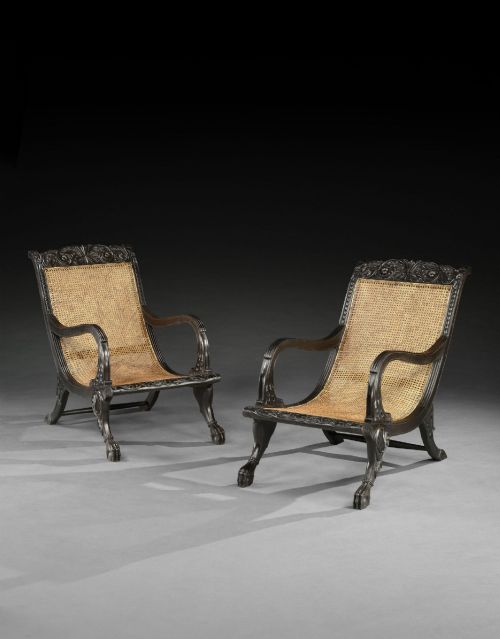
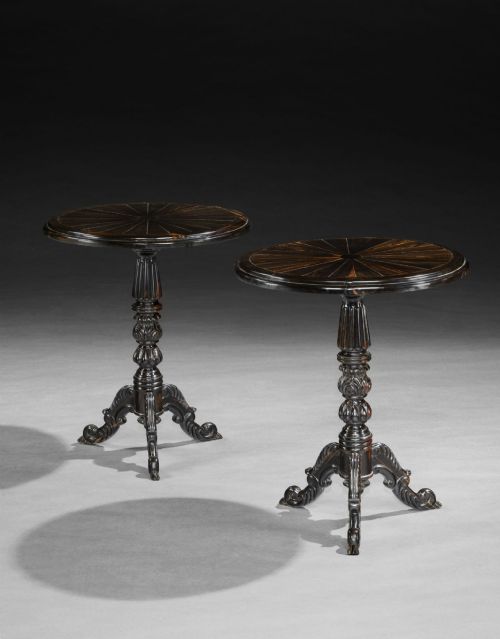
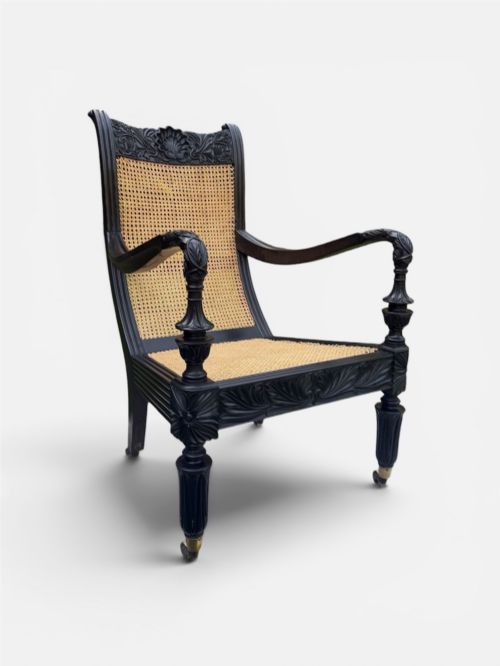
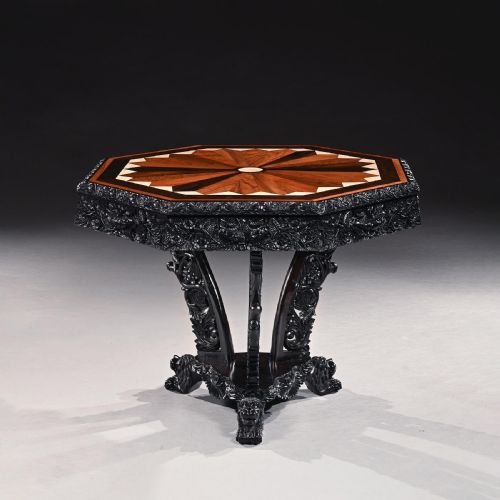
Colonial ebony furniture comprises seating, tables, and cabinets produced across regions influenced by European trade and colonisation, notably through Anglo-Indian, Indo-Portuguese, and Dutch colonial workshops. When searching for colonial ebony furniture, buyers most frequently encounter armchairs, centre tables, and occasional tables dating primarily from the nineteenth century alongside select seventeenth-century examples.
The objects span formal dining chairs, display cabinets, plant stands, and side tables, often originating from centres such as Ceylon and the Coromandel Coast. These pieces combine European furniture forms with local woodworking traditions, resulting in dense, heavy construction and elaborate surface ornamentation.
Regional variations define the inventory, ranging from Ceylonese armchairs and tripod tables to Hoshiarpur occasional tables and Dutch colonial cabinets. The selection reflects global exchange, uniting solid tropical timber with contrasting secondary woods and intricate inlay work.
What varies in quality
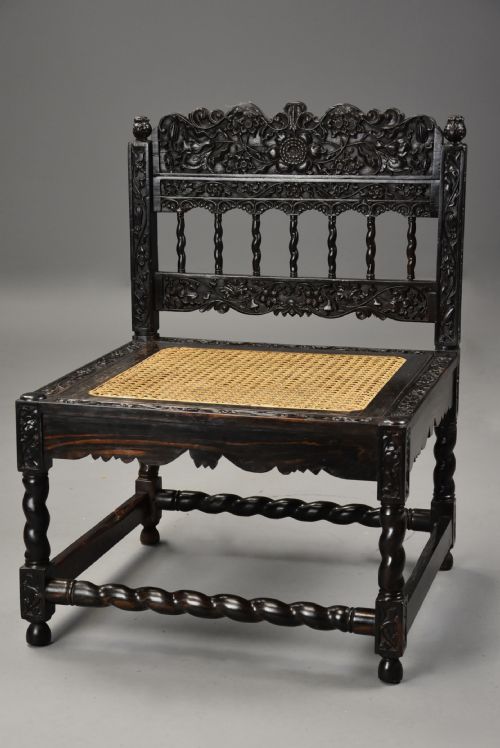
Quality in these pieces rests upon the crispness and depth of the hand-carving across the ebony surface, distinguishing routine regional production from masterwork execution. The handling of dense tropical timber requires precise control to maintain sharp relief without splintering the brittle wood.
The integration of secondary materials such as bone inlay, contrasting satinwood, or specimen wood sections dictates the visual success of a piece. Finer examples maintain structural integrity despite the heavy weight of solid ebony while balancing proportion with elaborate ornament.
Materials recorded across the inventory include bone inlay, cane, brass, and varied specimen woods originating from South Asian workshops.
The Colonial Ebony Furniture Glossary
- Bergere
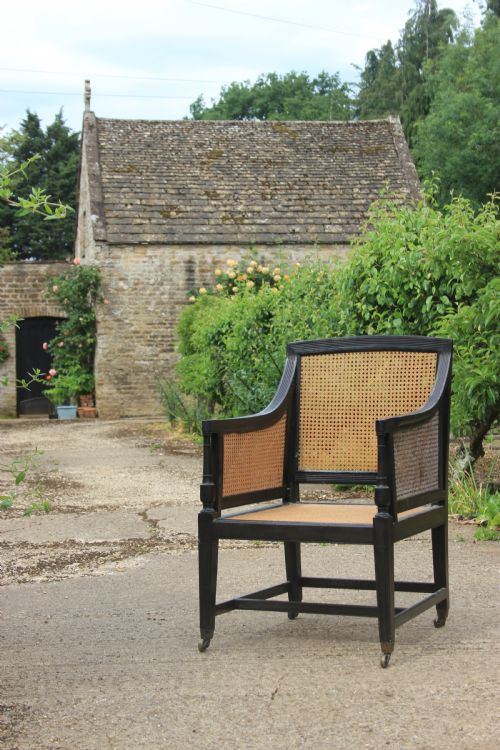
- An enclosed upholstered armchair with wooden framing, often featuring cane panels to the sides and back for lighter weight.
- Specimen wood
- Furniture constructed using a variety of contrasting decorative timbers arranged in geometric patterns or tabletops.
- Etagere
- An open tiered shelving unit used for displaying small objects, sometimes constructed with slender supports and multiple platforms.
- Jardiniere
- A decorative container or stand designed to hold plants or floral arrangements, frequently raised on a tripod base in these collections.
- Coromandel Coast
- The southeastern coast of India historically known for distinctive regional furniture production and intricate carving styles.
Colonial Ebony Furniture: Frequently Asked Questions
How do I identify Ceylonese ebony pieces?
Ceylonese pieces often feature dense solid ebony combined with contrasting satinwood or intricate floral and foliage carving. They frequently appear as armchairs, occasional tables, and etageres.
Look for regional motifs and construction details typical of Sri Lankan workshops from the nineteenth century. The integration of cane work and exotic specimen woods further signals Ceylonese origin.
Where was this furniture made?
These items were produced in workshops across South Asia and Dutch colonial territories during periods of trade and occupation. Production centres included Ceylon, the Coromandel Coast, and regions associated with Hoshiarpur.
Local artisans adapted European furniture forms such as Regency armchairs and tripod tables to local materials. This fusion created distinct regional styles under Anglo-Indian and Dutch colonial influence.
How do I care for solid ebony furniture?
Solid ebony requires stable indoor humidity levels to prevent the dense wood from cracking or splitting over time. Avoid placing heavy pieces near direct heat sources or strong sunlight.
Dust regularly with a soft, dry cloth and apply minimal conditioning only when necessary. The heavy construction means pieces should be lifted rather than dragged during relocation.