


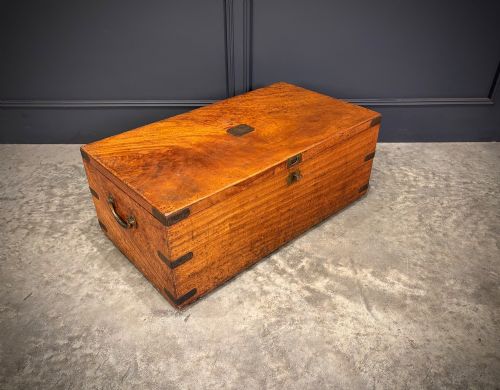


Colonial Camphor Chest
A colonial camphor chest is a sturdy portable trunk built for travel, prized for its aromatic wood and robust metal mountings.
Colonial Camphor Chest
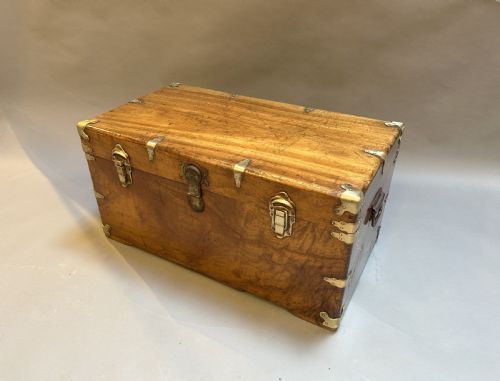
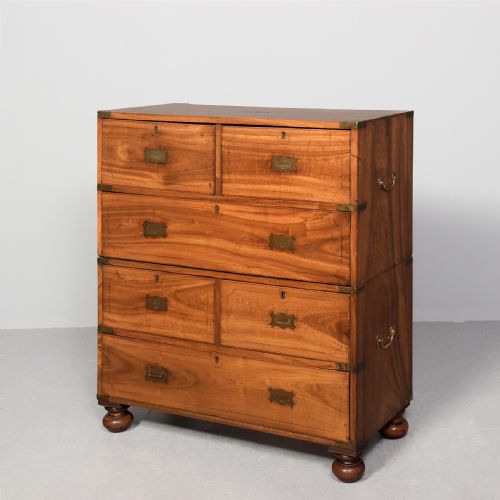
A colonial camphor chest is a durable storage piece designed for transport during military and maritime journeys across distant regions. These trunks range from simple blanket boxes and steamers to sophisticated two-part military secretaire chests fitted with internal drawers.
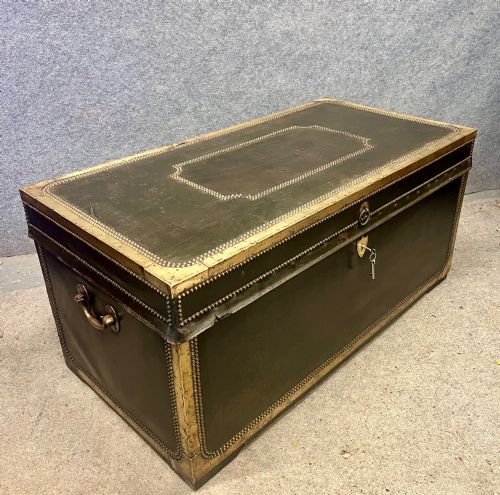
The version most commonly met on this page is the nineteenth-century brass-bound campaign trunk, often originating from China Trade or Anglo-Chinese workshops. They appear in forms from small travelling trunks to large storage chests, frequently retaining their original hardware and recessed handles.
Materials and construction
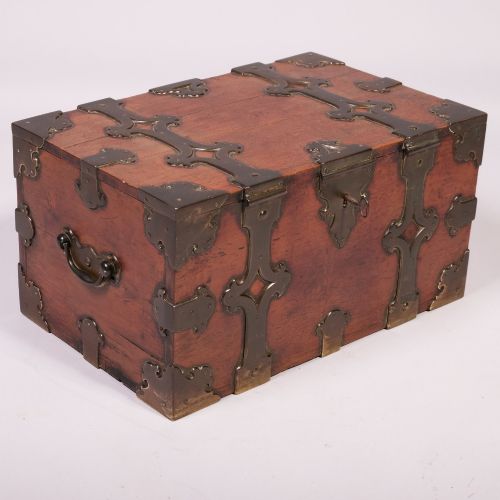
Makers utilised solid camphor wood for its natural insect-repellent properties, pairing the fragrant timber with heavy brass bindings, corner brackets and carrying handles to withstand rough journeys. Some examples incorporate contrasting ebony details, leather coverings or iron reinforcements.
Construction techniques focus on portability and strength, featuring sectional designs like two-part military chests that separate for easier carriage. Flush-fitting hardware and robust joints protected the chests against the rigours of transit while maintaining a clean exterior.
Colonial Camphor Chest Retail Price Guide 2026
Typical asking prices for colonial camphor chest among the pieces listed under this phrase on Sellingantiques today, from the lower quarter to the upper quarter. They describe what is for sale here now, not the wider market.
Opening an antique camphor trunk instantly releases a wave of unmistakable fragrance that has survived intact across multiple centuries of travel.
Assessing quality and finish
Quality separates through the integrity of the timber, the weight and finish of the brass hardware, and the complexity of the interior fittings. Solid camphor wood bodies with crisp, original brass mountings and well-preserved secretaire drawers sit at the upper end of the scale.
Construction details such as dovetailed joints, tight-fitting lids and the retention of original leather or ebony accents distinguish superior pieces. Simpler blanket boxes and later vintage steamer trunks represent more utilitarian examples of the form.
The Colonial Camphor Chest Glossary
- Campaign chest
- A portable piece of furniture designed to break down into sections for military transport. These chests typically feature recessed brass handles and corner braces to prevent damage during travel.
- China Trade
- Furniture and decorative objects manufactured in China during the eighteenth and nineteenth centuries specifically for export to Western markets. These pieces often combine traditional British forms with Asian materials and craftsmanship.
- Secretaire chest
- A chest of drawers featuring a fitted top drawer that pulls down to reveal a writing surface and small pigeonholes. This hybrid form offered officers a desk and storage combined within a single portable trunk.
- Brass bound
- Furniture reinforced at the edges and corners with brass strips and brackets. This metalwork provided structural strength and protected the wood against the impacts of transit.
Colonial Camphor Chest: Frequently Asked Questions
What is a colonial camphor chest?
A colonial camphor chest is a portable wooden trunk originally built for travel by officers and merchants during the nineteenth century. The fragrant wood protected stored uniforms and textiles from insects.
These pieces combine practical utility with distinctive brass hardware, reflecting their origins in military campaigns and maritime trade routes across the British Empire.
How do I care for camphor wood?
Camphor wood requires minimal maintenance, benefiting from a gentle dusting and occasional treatment with natural wax to keep the timber nourished. Avoid placing the chest in direct sunlight or near extreme heat sources.
Keep the interior clean and dry to preserve the natural aromatic qualities of the wood, which continue to protect the contents naturally over time.
Were these chests made for military use?
Many of these chests were indeed constructed for military officers on active service, featuring sectional designs and robust brass reinforcements that made packing and transport straightforward.
Other examples served domestic storage needs in colonial households or functioned as commercial cargo trunks for merchants travelling between Britain and Asia.
How can I tell the period of a chest?
Dating relies on examining the construction methods, the style of the brass hardware and the overall form of the chest. Earlier examples often display hand-cut dovetailing and heavier mounts.
Later Victorian and vintage pieces from the end of the nineteenth century into the twentieth century introduce different construction tolerances and standardised fittings.