




Collectible Pottery Figures
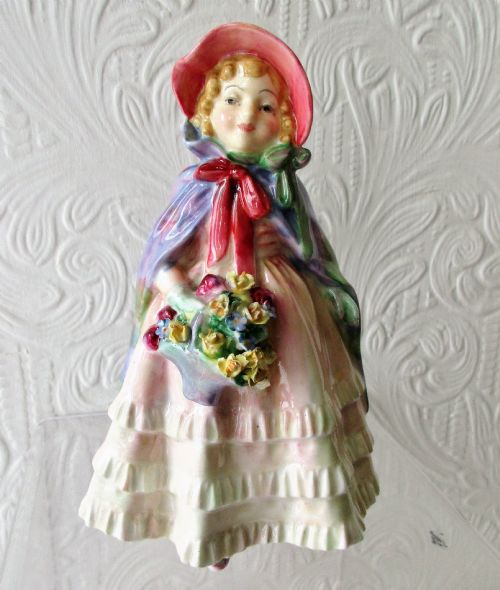
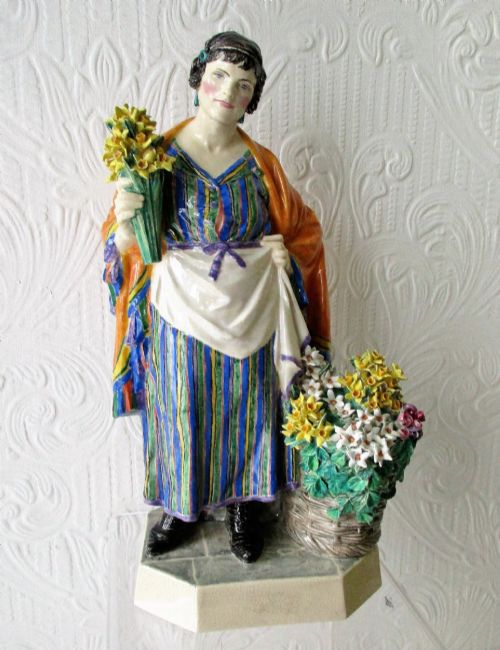
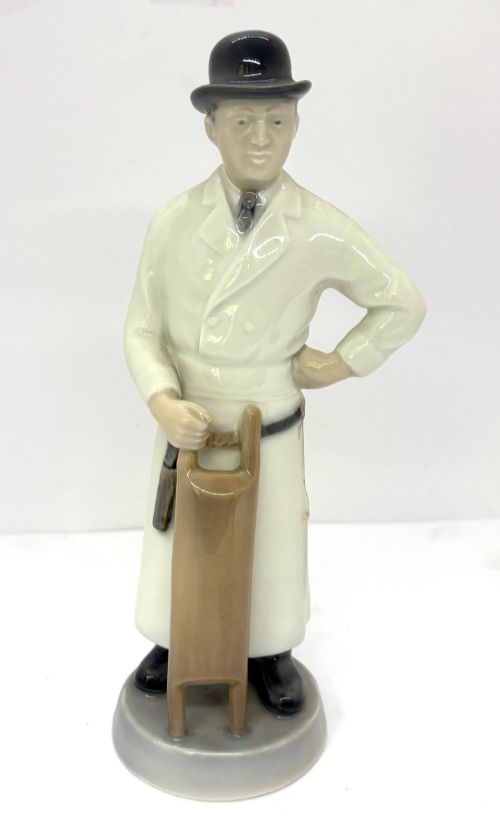
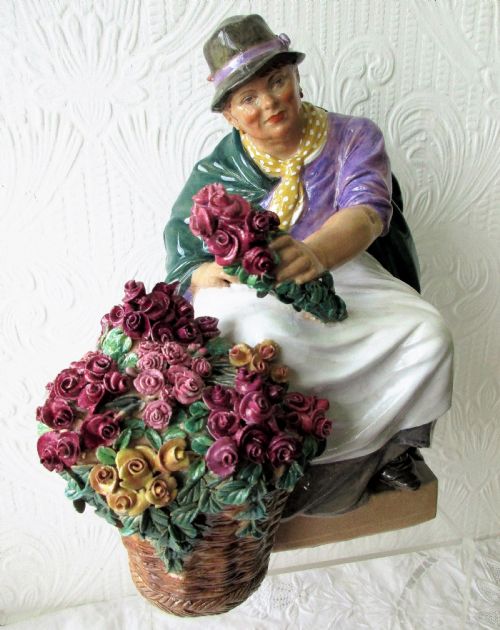
Collectible pottery figures bring character to a room, spanning studio ceramics, Victorian portrats and glazed earthenware.
Collectible Pottery Figures
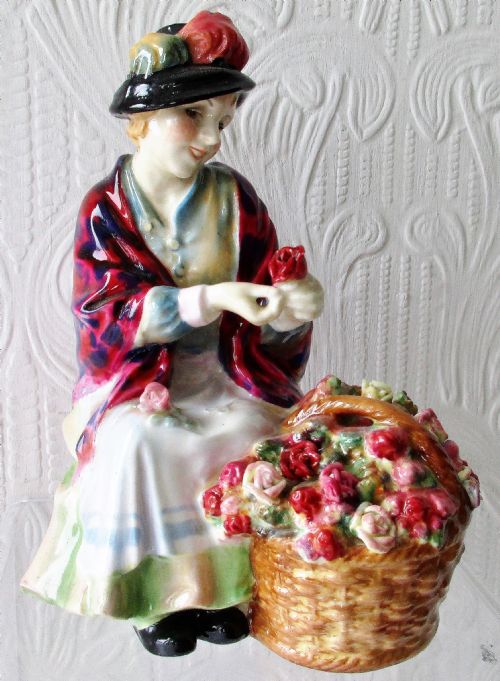
Collectible pottery figures encompass a broad range of ceramic and porcelain sculptures produced across the nineteenth and twentieth centuries. When exploring collectible pottery figures, buyers encounter diverse forms including decorative figurines, vases and portrait pieces originating from English, European and Japanese makers.
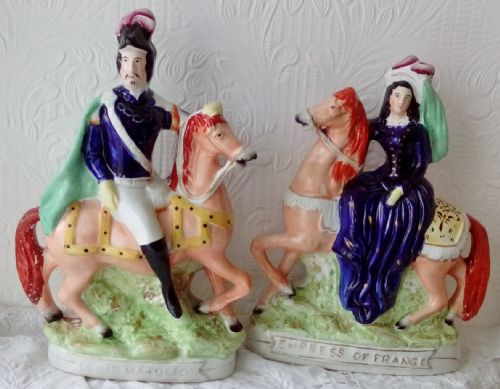
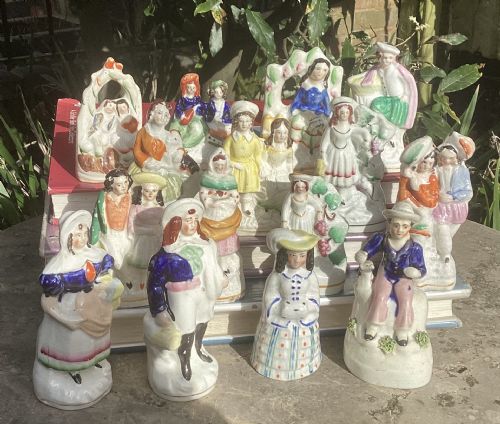
The selection on this page relies heavily on nineteenth century Staffordshire pottery alongside twentieth century studio pottery and porcelain works. Domestic subjects, historical figures and animals appear frequently within the groupings.
Makers span traditional factories and individual studio artists, offering varied scales from miniature Staffordshire groups to substantial earthenware figures.
How they were made
Makers shaped these pieces primarily in earthenware, porcelain, terracotta and pearlware, applying glazes and enamel colours to the finished ceramic body. Studio potters and factory modellers utilised pressing, moulding and hand-modelling techniques before firing the clay in kilns.
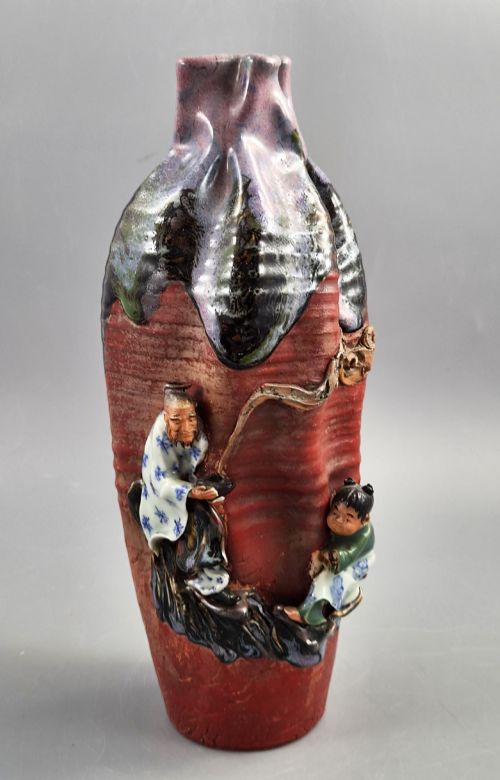
Surface decoration ranges from simple monochrome finishes to complex painted enamels and lavender flambé glazes. Signed studio pieces often display deliberate brushwork and individual glaze reactions specific to the potter's kiln.
Collectible Pottery Figures Retail Price Guide 2026
Typical asking prices for collectible pottery figures among the pieces listed under this phrase on Sellingantiques today, from the lower quarter to the upper quarter. They describe what is for sale here now, not the wider market.
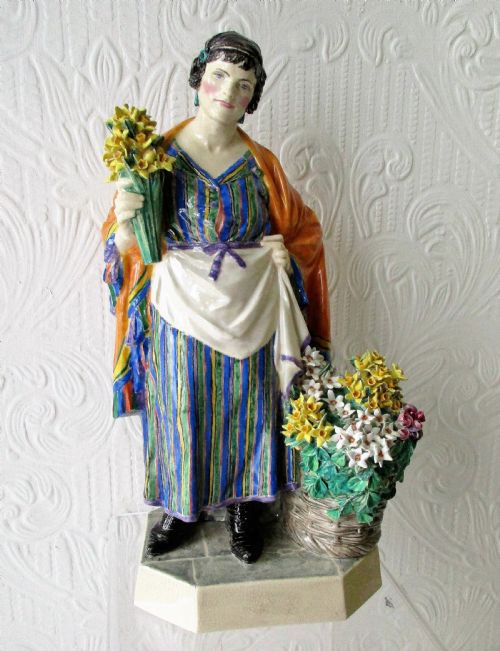
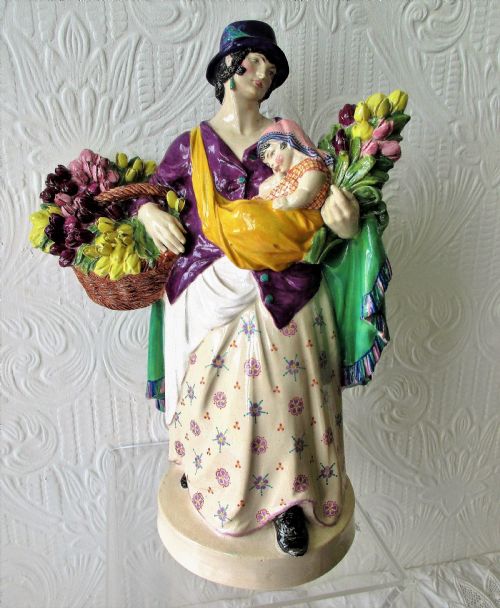
Snow leopards, puppies and characters named Tulip and Daffodil populate the ceramic landscape alongside historical emperors and prime ministers.
What varies in quality
Quality rests upon the crispness of the modelling and the precision of the hand-painted enamels or glaze application. Finer studio and factory examples exhibit thoughtful detail in expression and drapery, whereas mass-produced commercial pieces can display simpler, looser decoration.
The reputation of the maker or studio heavily influences standing, with named artists and established potteries demonstrating superior artistic ambition in their sculptural forms.
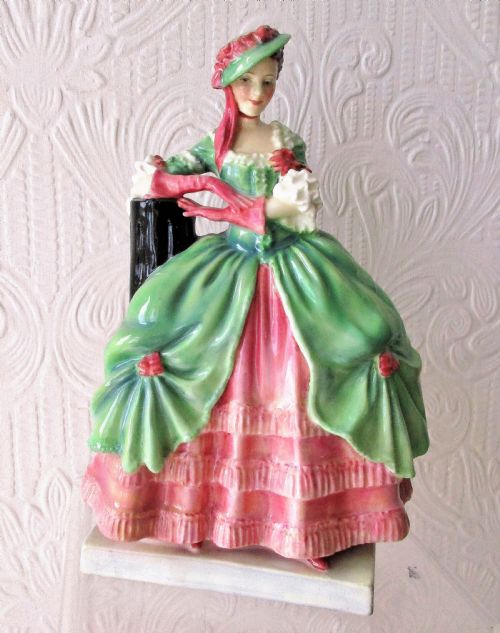
Royal Copenhagen·Charles Vyse·Royal Doulton·Wedgwood And Co Ltd·Rozenburg
The Collectible Pottery Figures Glossary
- Earthenware
- A porous pottery body fired at lower temperatures, commonly glazed to ensure it holds water and displays colour effectively.
- Pearlware
- A refined fine earthenware developed in the eighteenth century featuring a subtle bluish glaze pooled in the recesses.
- Flambé
- A rich, variegated glaze achieved through controlled reduction firing in the kiln, producing streaked or mottled colour effects.
- Enamel
- Opaque glass-like pigments applied over the fired glaze and fixed by a subsequent low-temperature firing.
Collectible Pottery Figures: Frequently Asked Questions
What are collectible pottery figures?
These pieces are glazed ceramic and porcelain sculptures produced by factories and independent studios, ranging from historical portrait figures to animal models and studio art pieces.
They serve primarily as decorative objects for display on mantelpieces, cabinets and shelves within domestic interiors.
How do I date these figures?
Dating relies on stylistic markers, studio signatures, impressed factory marks and the specific ceramic body used, such as pearlware or bone china.
Comparing glaze characteristics and subject matter against known periods like the Victorian era or the nineteen-thirties helps narrow down the time of production.
How do I clean ceramic figures?
Maintenance requires gentle dusting with a soft, dry brush to prevent the accumulation of dirt on painted surfaces and delicate protruding details.
Water and liquid cleaners should generally be avoided unless the glaze is entirely stable and free from old repairs or vulnerable enamel decoration.
Are studio figures different from factory pieces?
Studio pottery figures were typically modelled and glazed by individual artists working on unique or small-batch designs rather than industrial assembly lines.
Factory pieces, by contrast, involved specialised division of labour within large potteries to produce consistent editions for the commercial market.