





Collectible Porcelain Saucer
These collectible porcelain saucer examples span centuries of ceramic artistry, offering small-scale elegance for the dedicated tabletop display collector.
Collectible Porcelain Saucer
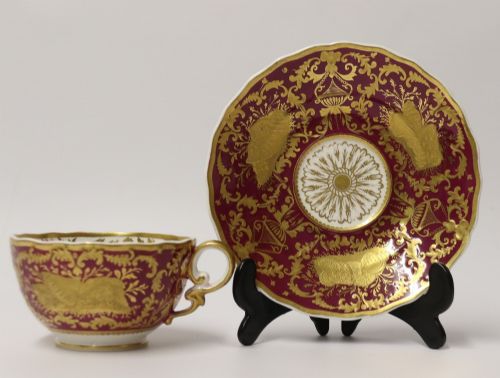
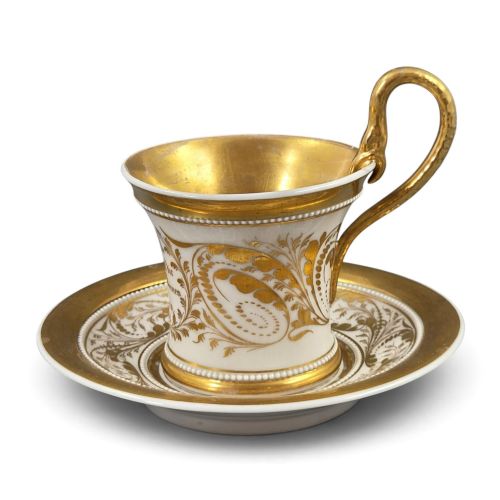
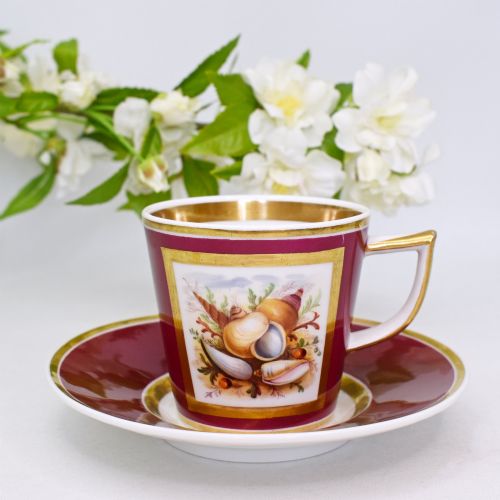
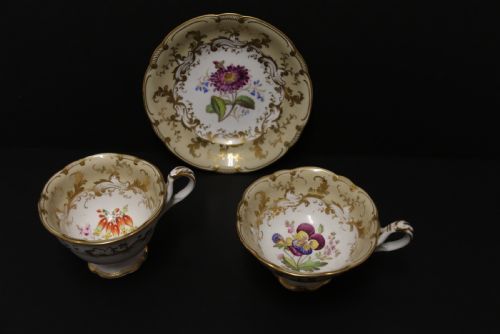
A collectible porcelain saucer represents refined ceramic history, appearing predominantly in forms from the 18th century, Georgian period, and 19th century alongside later 1920 and 1940 pieces. These small vessels frequently arrive paired with cups as teacups and saucers, cabinet cups and saucers, coffee cup and saucer sets, and tea bowls and saucers.
The pieces on this page originate from esteemed European houses and English manufacturers, reflecting diverse stylistic movements including Regency, Biedermeier, Rococo Revival, and Edwardian designs. Buyers encounter individual saucers or matched trios designed for formal dining and cabinet display rather than everyday service.
Domestic and continental workshops produced these items to complement changing social rituals around tea and coffee consumption. Collectors select them to appreciate historical painting techniques and ceramic bodies that survived centuries of domestic use.
Distinctions in quality
Quality rests upon the precision of the handpainted details and the crispness of the porcelain body, where superior examples exhibit meticulous brushwork and unblemished glaze surfaces. Finer items incorporate raised or burnished gold leaf and complex transfer-printed or hand-drawn patterns such as compartmentalised dragon designs.
The reputation of the manufactory and the complexity of the shape further differentiate standard utility wares from exhibition-grade cabinet pieces. Superior forms demonstrate advanced potting skills that maintain thin, translucent walls without warping during high-temperature kiln firings.
Collectible Porcelain Saucer Retail Price Guide 2026
Typical asking prices for collectible porcelain saucer among the pieces listed under this phrase on Sellingantiques today, from the lower quarter to the upper quarter. They describe what is for sale here now, not the wider market.
Early tea drinkers once poured hot brew into their saucers to cool it faster, making these little dishes the original soup spoons.
Spode·H & R Daniel·KPM Berlin·Rockingham·Flight Barr & Barr·Meissen·Hutschenreuter·Davenport·Ridgeway·Royal Crown Derby
The Collectible Porcelain Saucer Glossary
- Hard-paste porcelain
- A durable ceramic composition fired at very high temperatures, made from kaolin and petuntse. It yields a dense, vitrified body that resists scratching.
- Soft-paste porcelain
- An artificial ceramic mixture fired at lower temperatures, popular in 18th-century European factories. It produces a warm, creamy texture with a softer glaze.
- Bone china
- An English ceramic body incorporating bone ash for strength and translucency. It allows for thinner vessel walls while maintaining durability.
- Gold gilding
- The application of metallic gold leaf or liquid gold to ceramic surfaces. Artisans burnish the metal after firing to achieve a bright reflective finish.
- Tea bowl
- A handleless drinking vessel used before the widespread adoption of teacups with handles. It accompanies a matching saucer for cooling the beverage.
Collectible Porcelain Saucer: Frequently Asked Questions
What is a collectible porcelain saucer?
A collectible porcelain saucer is a small ceramic dish produced by historical European and English potteries for table service or cabinet display. These items showcase period painting techniques, gilding, and specific regional porcelain bodies.
Collectors prize them for their decorative merit and connection to historical dining customs. They survive either individually or paired with matching cups.
How do I identify eighteenth century pieces?
Eighteenth century pieces typically feature soft-paste porcelain bodies, hand-painted motifs, and distinct glaze characteristics associated with early European factories. Examining the foot ring and weight helps distinguish these older items from later nineteenth century reproductions.
Stylistic cues such as Rococo forms or early Orientalist patterns also guide period attribution. Expert reference books on specific factory marks confirm the exact era of manufacture.
How should I display cabinet saucers?
Cabinet saucers require stable plate stands or dedicated wall mounts that distribute weight evenly across the ceramic rim. Placing them away from direct sunlight protects enamel colours and gold gilding from fading over time.
Enclosed display cabinets shield the fragile porcelain from accidental knocks and dust accumulation. Proper lighting within the cabinet highlights the handpainted details and gilded borders.
Are these items safe for daily use?
Historical porcelain saucers are generally reserved for display or careful handling rather than routine modern dining. The delicate enamel decorations and gold leaf can wear away when subjected to frequent washing or cutlery contact.
Hand washing in lukewarm water with mild soap is necessary if the pieces are ever used. Collectors primarily treat them as historical artworks to be admired visually.