



Collectible Percussion Pistol
A collectible percussion pistol offers a direct connection to 19th-century military history and civilian defence through its mechanical ingenuity.
Collectible Percussion Pistol
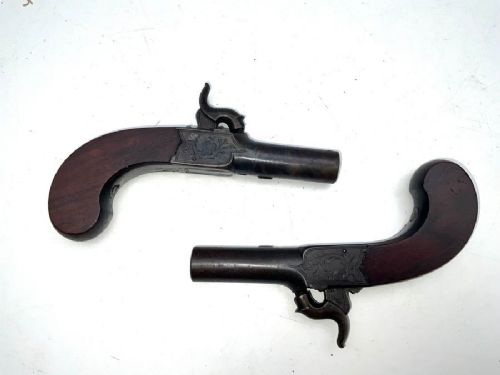
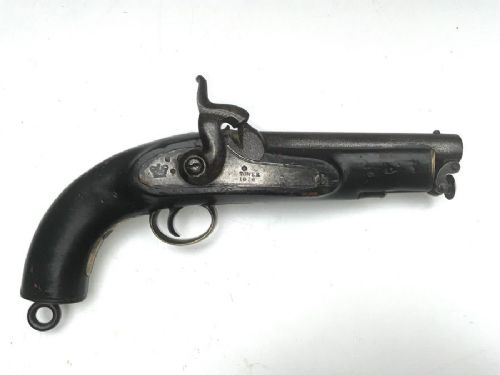
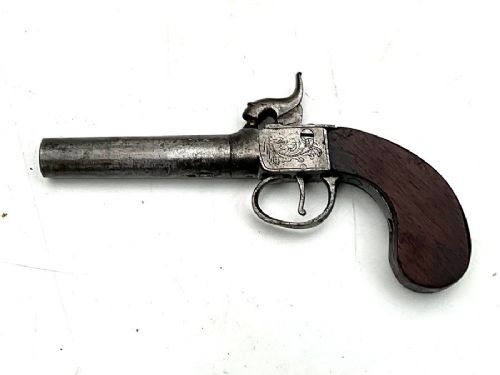
A collectible percussion pistol encompasses nineteenth-century firearms that rely on the percussion cap ignition system, moving away from earlier flintlock mechanisms. You will encounter various forms here, ranging from pocket pistols and boxlock designs to military belt pistols and pepperpot revolvers.
The selection spans periods such as the Regency era, Victorian military contexts, and the mid-nineteenth-century American civil war period. Many pieces reflect British and European origins, alongside notable American martial issues like the Colt Model 1860 Army revolver.
Makers and stamps often indicate civilian London workshops, Tower of London ordnance, or continental production centres such as Liège. These items range from single-barrel pocket pieces to complex transitional revolvers and double-barrelled variants with sliding rear sights.
How they were made
Makers constructed these firearms using steel and iron for barrels, frames, and internal lock mechanisms to withstand the pressures of black powder charges. Brass and sometimes silver appeared in mountings, trigger guards, and decorative wire inlay.
Stocks typically utilised walnut, oak, or general hardwoods, shaped to fit the hand and occasionally housed in fitted wooden presentation boxes lined with velvet. Metal components often received blued, bright, or engraved finishes, while barrels incorporated rifling or smoothbore designs depending on intended use.
Collectible Percussion Pistol Retail Price Guide 2026
Typical asking prices for collectible percussion pistol among the pieces listed under this phrase on Sellingantiques today, from the lower quarter to the upper quarter. They describe what is for sale here now, not the wider market.
What varies in quality
The standard of a piece depends on the crispness of the engraving on the metalwork and the quality of the timber selection in the grip. Superior examples display matching serial numbers across components and retain legible maker signatures or ordnance stamps.
Complexity of mechanism also dictates distinction, such as the inclusion of flick bayonets, hidden triggers, or revolving clusters in pepperpot designs. Preservation of original finish and accessories, like dedicated loading tools in fitted boxes, elevates a piece within its category.
Auguste Francotte·John Manton·Colt
The Collectible Percussion Pistol Glossary
- Percussion cap
- A small metal cup containing fulminate of mercury placed on the nipple of a firearm to ignite the powder charge when struck by the hammer.
- Boxlock
- A pistol design where the hammer and lockwork are contained within an integral frame rather than mounted on a sideplate.
- Pepperpot
- A multi-barrelled revolver in which the entire cylinder block rotates around a central axis to fire successive shots without a separate barrel.
- Flick bayonet
- A spring-loaded blade attached beneath the barrel that releases forward instantly for close-quarters combat.
- Tower stamp
- An official government inspection or property mark originating from the Tower of London ordnance facility.
Collectible Percussion Pistol: Frequently Asked Questions
How do percussion pistols work?
The mechanism relies on a hammer striking a percussion cap placed on a hollow nipple. This action creates a spark that travels directly into the powder chamber to fire the projectile.
This system replaced the earlier flintlock by offering greater reliability in wet weather and a faster lock time.
Were these pistols used in war?
Many nineteenth-century percussion pistols served military officers and enlisted personnel during conflicts such as the American Civil War. Martial issues bore specific inspection stamps and serial numbers for military accountability.
Civilian versions were simultaneously carried for personal protection by travellers and officers alike.
What accessories come with them?
Some collectible revolvers and pistols include fitted wooden boxes containing original accessories like bullet moulds, powder flasks, and cleaning rods. These complete sets reflect how the firearms were originally stored and maintained by their owners.
Cases are often lined with velvet and fitted with compartments tailored to each tool.