

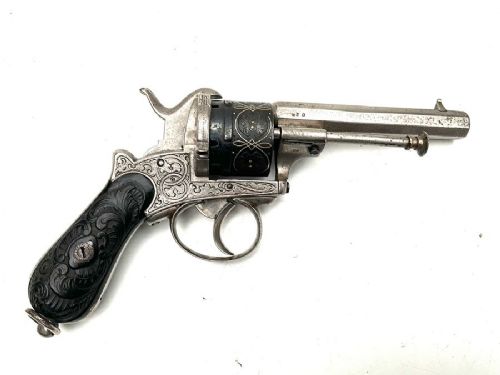


Collectable Steel Handgun
These collectable steel handgun examples span centuries of mechanical evolution, offering collectors tactile pieces of military and personal history.
Collectable Steel Handgun
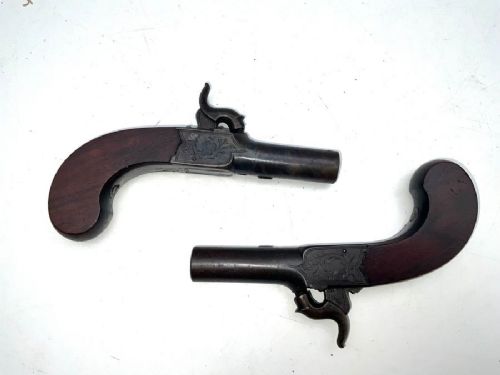
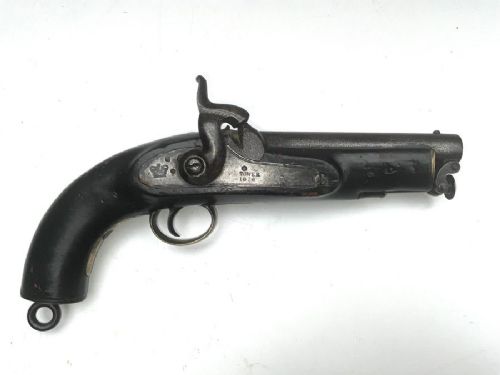
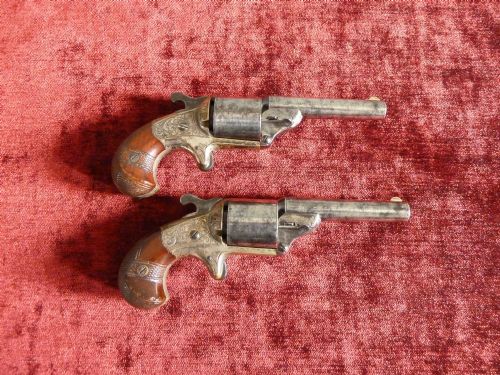
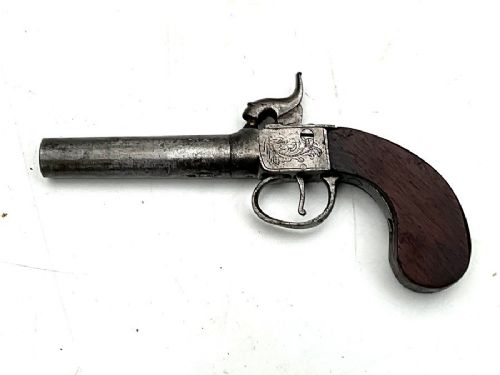
A collectable steel handgun encompasses flintlock and percussion firearms originating from the eighteenth and nineteenth centuries. These pieces include pocket pistols, belt pistols, revolvers and military service arms spanning Georgian and Victorian eras.
The versions most frequently met on this page are mid-nineteenth century percussion pocket pistols and military revolvers. Many display distinct British, American or European origins, ranging from regulation military issues to civilian pocket pieces.
Buyers encounter specialised configurations such as boxlock pistols with flick bayonets, double-barrelled variants and silver-mounted officers' sidearms. Each category reflects the specific defensive or military requirements of its period.
How they were made
Construction relies heavily on forged steel barrels and iron mechanisms paired with stocks of walnut, ebony or other dense hardwoods. Makers incorporated brass for mounts and trigger guards, alongside intricate silver wire inlay for decorative enhancement.
Early examples utilise flintlock firing mechanisms, while mid-nineteenth century pieces adopt percussion cap systems and pinfire technology. Metal components often bear proof marks, workshop stamps and engraved detailing applied by hand.
Listings feature steel and iron components paired with walnut, ebony, and brass across Georgian and Victorian military periods.
What varies in quality
Quality differences depend upon the crispness of maker signatures, the depth and precision of metal engraving, and the preservation of original stock wood. Signed examples by notable makers command greater interest than unmarked pieces.
Henry Nock·James Barber·Timothy Hughes·Auguste Francotte·Meyer And Mortimer·Barber Of Newark·Dutton
The Collectable Steel Handgun Glossary
- Flintlock
- An ignition mechanism utilising a piece of flint struck against a steel frizzen to generate sparks. This system dominated military and civilian firearms throughout the eighteenth century.
- Percussion cap
- A small priming charge detonated by the hammer falling on a nipple, which replaced the flintlock system during the nineteenth century. It offered superior reliability in damp weather.
- Boxlock
- A pistol design where the breech and action form a single forged unit, often with the hammer positioned centrally. This configuration allowed for compact pocket variants.
- Pinfire
- An early metallic cartridge design featuring a protruding pin struck by the hammer to ignite the internal priming powder. Popular during the mid-nineteenth century.
- Frizzen
- The vertical steel plate struck by the flint in a flintlock mechanism to create sparks for the gunpowder. Its grooved surface is essential for proper ignition.
Collectable Steel Handgun: Frequently Asked Questions
How do flintlock and percussion pistols differ?
Flintlocks rely on a flint striking steel to create sparks for ignition, whereas percussion pistols use a hammer striking a cap containing priming compound.
Percussion systems emerged later in the nineteenth century, offering faster lock times and greater reliability in wet conditions compared to older flintlock mechanisms.
What periods do these handguns represent?
The available pieces primarily date from the eighteenth and nineteenth centuries, encompassing the Georgian, Napoleonic and Victorian eras.
Dates range from early eighteenth-century military arms to mid-nineteenth-century American Civil War revolvers and pinfire pocket pistols.
Were these pistols used in military service?
Many examples are regulation military pieces issued to cavalry troopers, naval personnel and commissioned officers across British, American and European forces.
Other specimens are civilian pocket weapons designed for personal protection during the Georgian and Victorian periods.
How should I care for antique steel firearms?
Keep the metal surfaces lightly oiled to prevent oxidation and store the pieces in a dry, stable environment away from humidity.
Avoid aggressive cleaning agents that might remove the historic patination accumulated across centuries of existence.