




Coin Chest Drawers
Coin chest drawers bring together compact multi-drawer storage and neat craftsmanship for small treasures.
Coin Chest Drawers
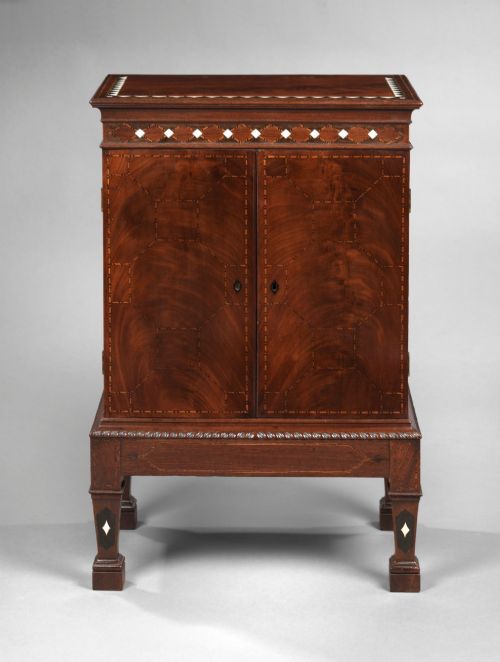
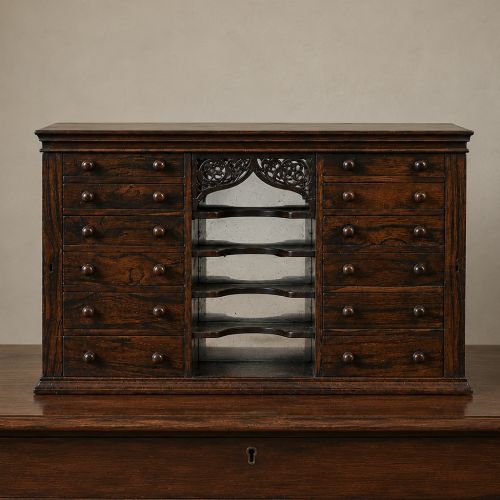
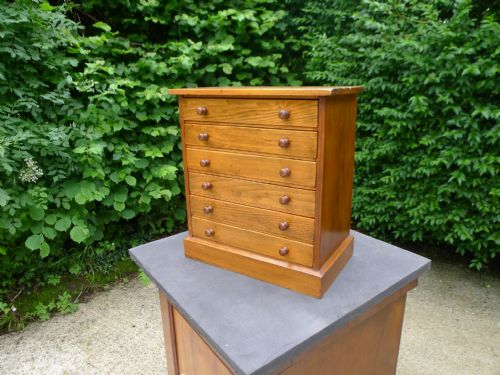
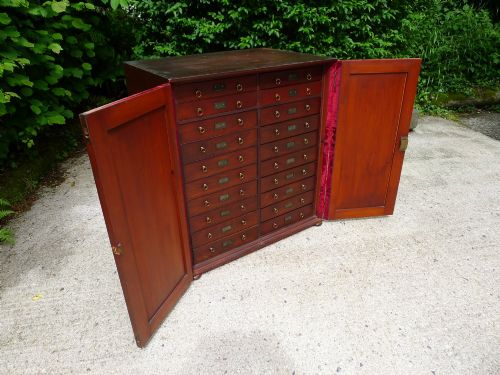
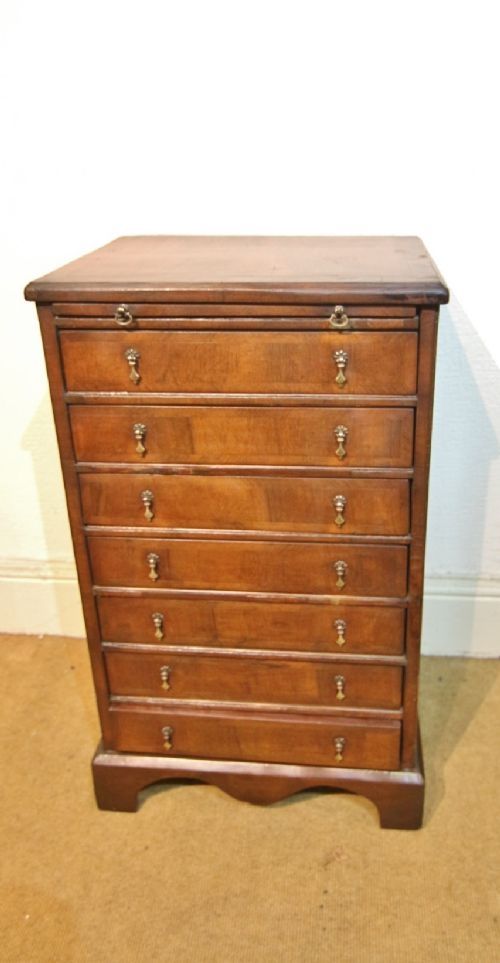
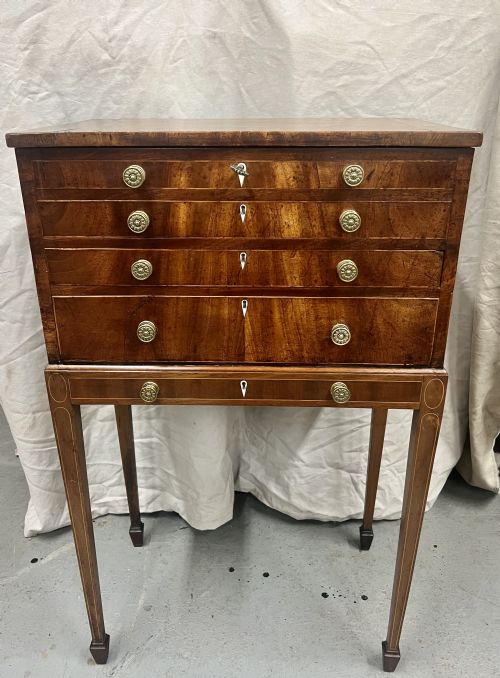
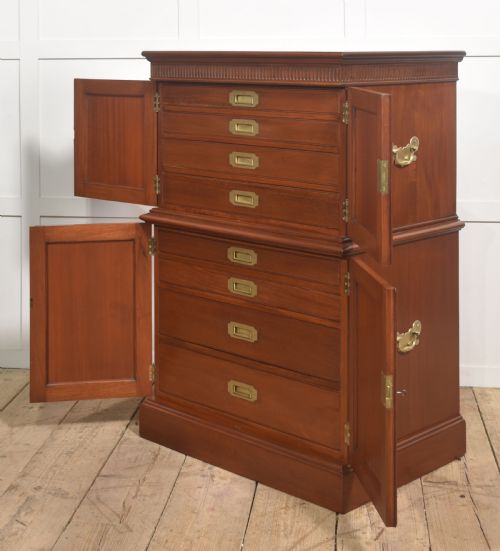
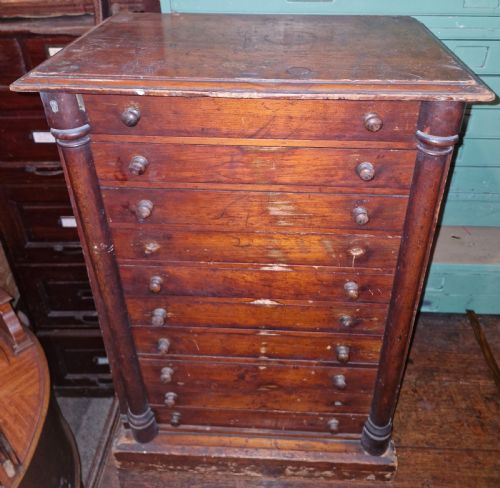
When buyers search for coin chest drawers, they are looking at specialist storage designed to house small specimens, medals, and coins safely in multiple shallow tiers. The pieces listed on this page span the Georgian, Regency, William IV, Victorian, and Edwardian periods, taking forms such as freestanding cabinets, chests on stands, Wellington chests, and compact desktop specimen cases.
The version most likely to meet you on this page is a mahogany or walnut cabinet featuring a bank of small drawers, occasionally secured by a locking door or brass drop handles. These items originate from British workshops and cabinet makers, providing secure, partitioned storage tailored for orderly arrangement.
Materials and Joinery
Makers utilised timber chosen for durability and grain figure, predominantly solid mahogany, oak, walnut, rosewood, and satinwood, alongside secondary woods like deal and pine. Brass hardware such as drop handles, escutcheons, and locking mechanisms provided functional strength and contrast to the dark hardwoods.
Construction relied on tight tolerances within the drawer banks to ensure smooth operation across numerous shallow tiers. Cabinets often incorporated locking side stiles or glass fronts to protect the contents while allowing visual inspection.
Listings feature coin chests and specimen cabinets spanning the Georgian, Regency, Victorian, and Edwardian periods.
Standards of Construction
Quality separates along the scale of timber selection and the precision of the drawer construction, where fine figured grains and solid hardwoods command attention over stained deal or pine. The density of the drawer count, ranging from compact five-drawer boxes up to substantial multi-drawer cabinets by known makers, dictates the scale of the piece.
The inclusion of original locking stiles, working keys, glass viewing panels, and brass drop handles elevates the integrity of surviving examples. The crispness of the internal drawer fit and the choice of secondary woods complete the division between standard utility chests and superior workshop productions.
Brady of Edmonton·Charles William Schofield
The Coin Chest Drawers Glossary
- Wellington chest
- A tall, slender chest of drawers secured by a hinged vertical locking stile on one side that fastens with a key.
- Specimen cabinet
- A piece of furniture designed with multiple shallow drawers specifically intended for the storage of natural history objects or coins.
- Standish
- A portable stand or cabinet holding writing equipment or small collectables, sometimes adapted for specialised drawer storage.
- Deal
- Fir or pine timber commonly used as a secondary wood in the carcase construction of British cabinetry.
- Escutcheon
- A protective brass plate surrounding a keyhole, often integrated into the drawer fronts or locking doors of these cabinets.
Coin Chest Drawers: Frequently Asked Questions
What were coin chest drawers used for?
These cabinets served collectors, naturalists, and numismatists who needed systematic storage for delicate items. The numerous shallow drawers kept coins, medals, and small specimens separated and safe from dust.
Inside the drawers, specialised partitions or felt-lined trays often held individual pieces securely in place. This layout allowed collectors to browse large reference collections without handling the items constantly.
How do I date a coin chest?
Dating relies on observing the cabinet timber choices, construction techniques, and hardware styles across different eras. Georgian pieces often display solid Cuban mahogany with hand-cut dovetails, while Victorian and Edwardian examples may incorporate walnut, satin birch, or deal.
Secondary woods and lock types also offer clues to the period of manufacture. Makers' stamps or brass plaques, when present, provide a direct link to specific workshops and dates.
Are all coin chests made of mahogany?
Mahogany is prevalent, particularly in Georgian and Victorian examples, but makers utilised a wide variety of timbers. Walnut, burr walnut, oak, rosewood, and satinwood appear frequently across the listings.
Simpler workshop pieces utilised stained deal or pine for the carcase and drawer interiors. The choice of exterior timber usually reflects the fashion of the period and the budget of the original commission.
How do I care for a wooden coin chest?
Keep the cabinet away from direct sunlight and heat sources to prevent the timber from drying out and splitting. Maintain a stable indoor humidity level to protect both the exterior polish and the internal drawer fits.
Clean the wood gently using a soft, dry cloth and avoid harsh chemical polishes. Ensure the locking mechanisms and brass handles are operated with care to preserve their original condition.