

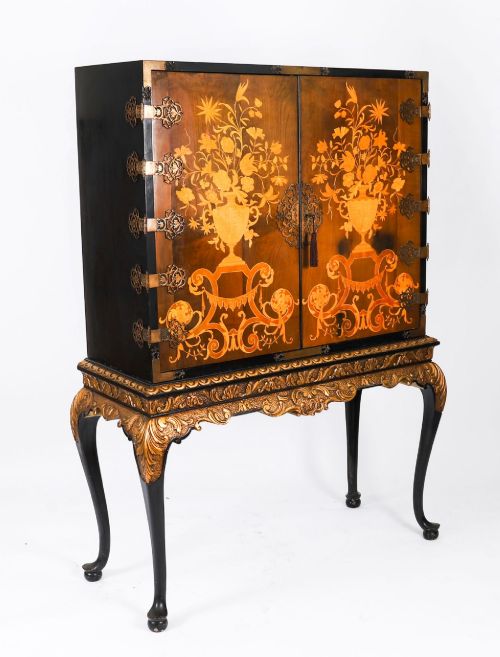
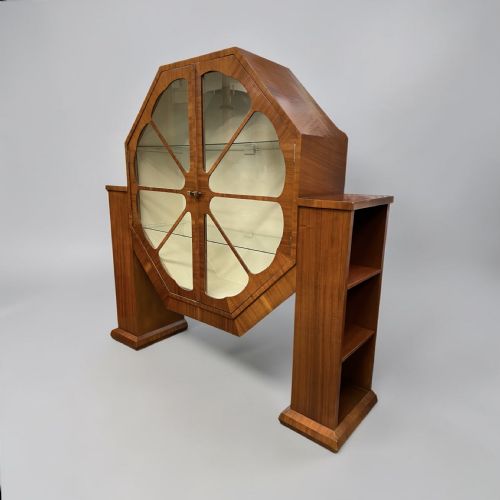
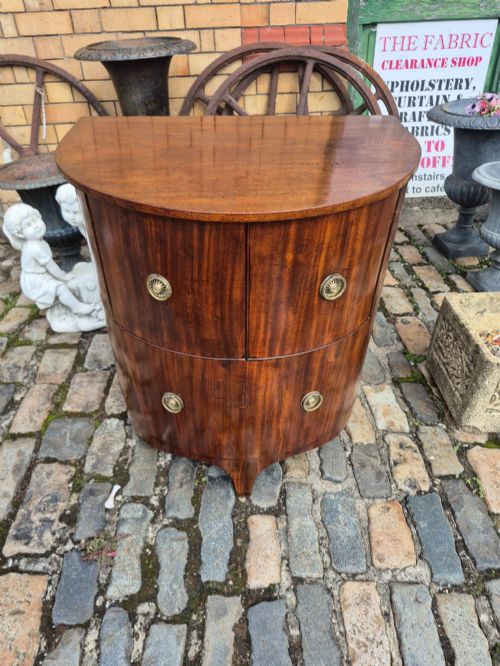
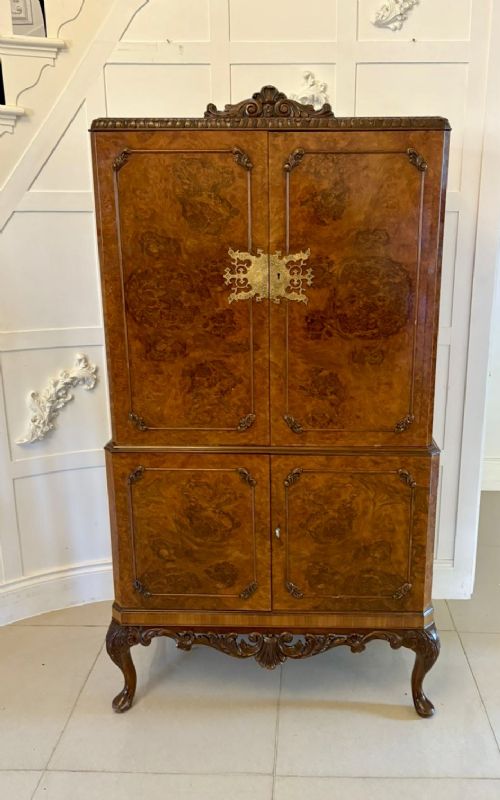
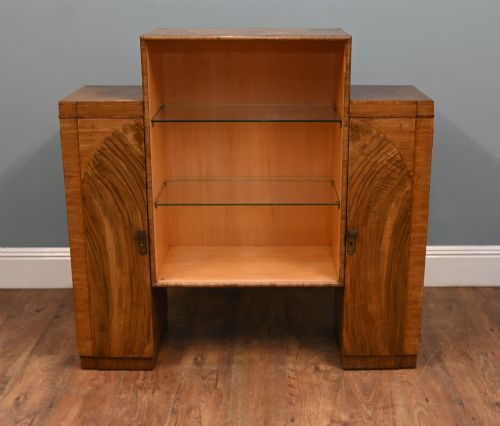
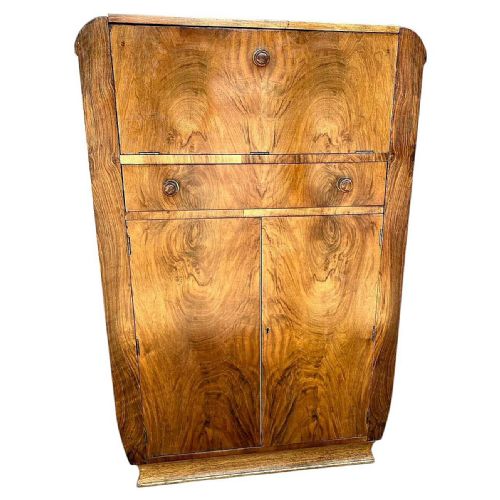
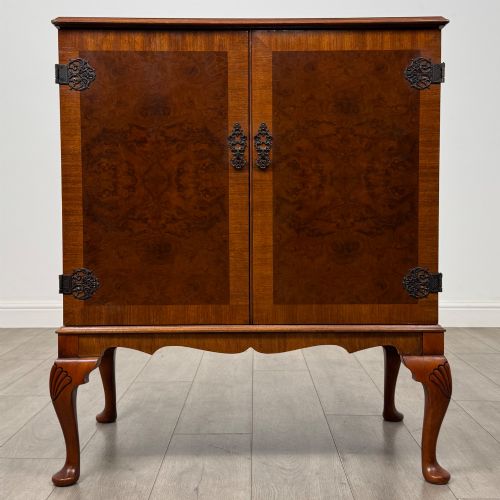

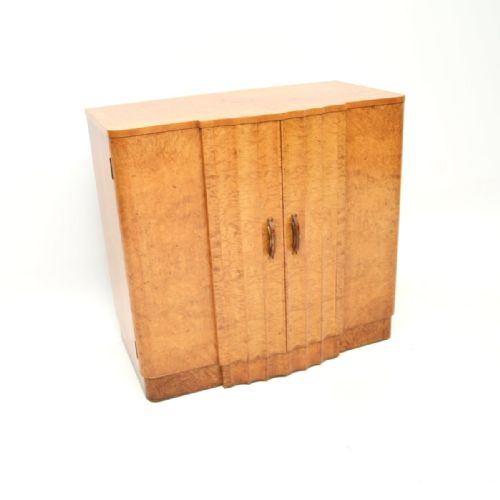
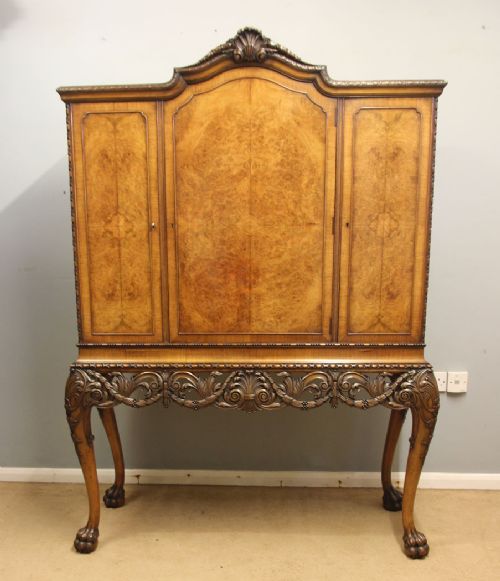
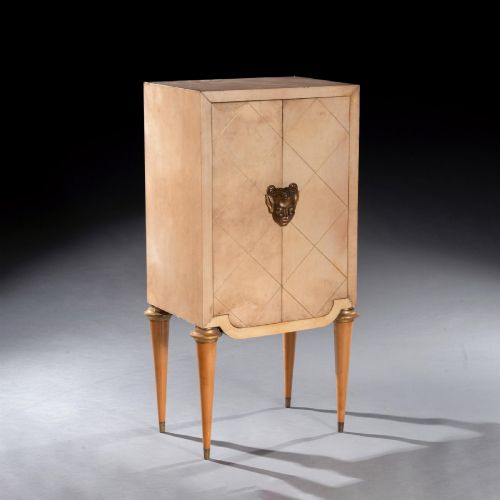
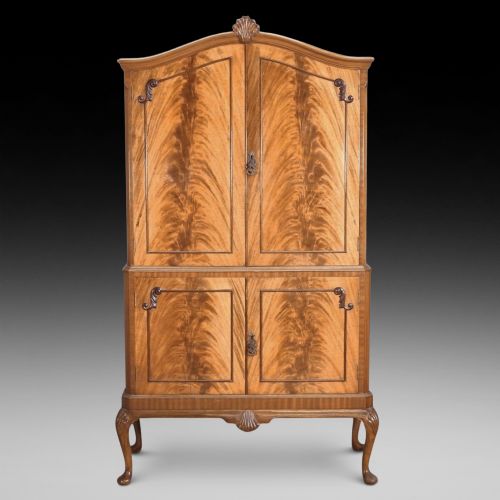
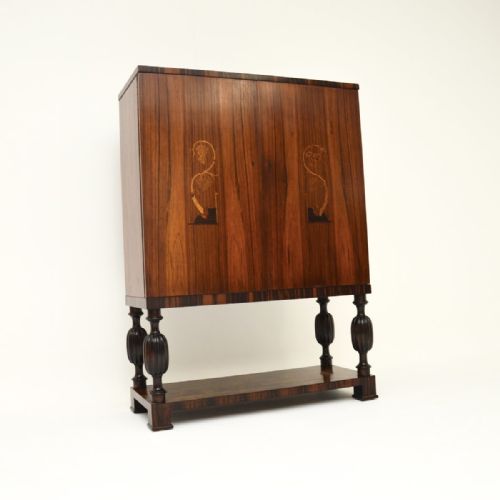
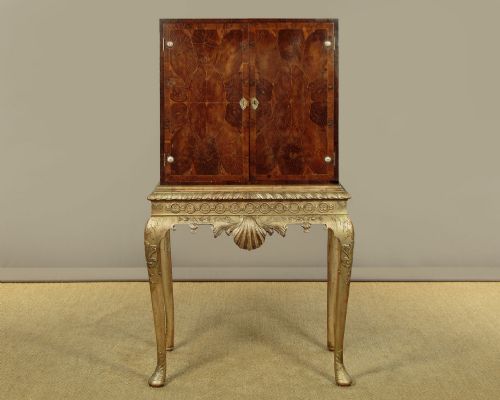
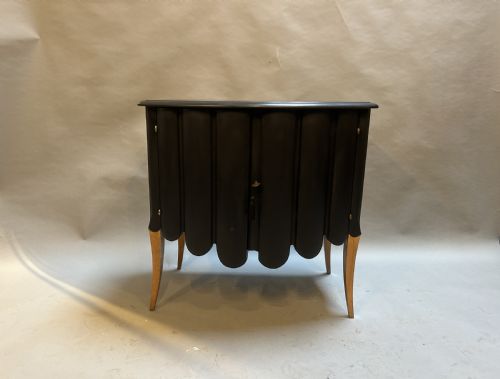
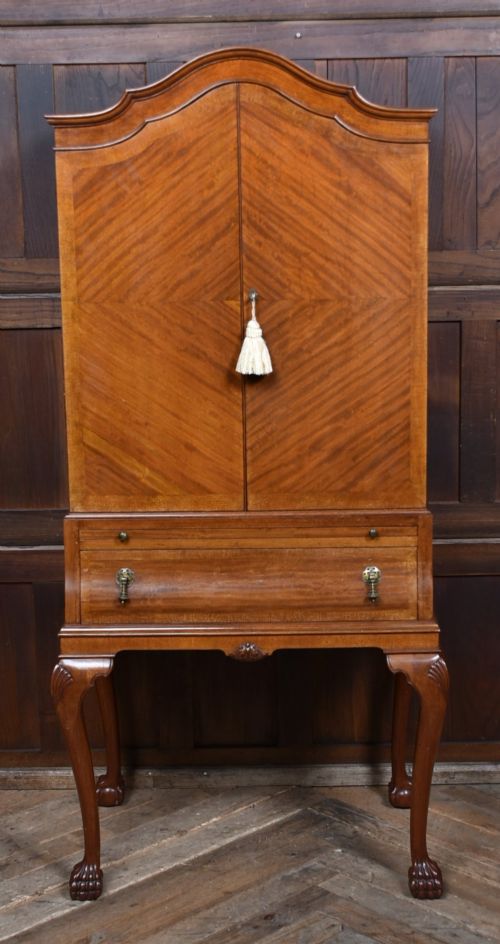
Cocktail Cupboard
A cocktail cupboard brings home the glamour of the interwar lounge, offering a dedicated place to store bottles and glassware.
Cocktail Cupboard
A cocktail cupboard is a specialist piece designed to house drinks, glassware and bar accessories behind fitted doors. When you search for this phrase, you meet forms that range from compact stands to larger multi-door cabinets.
The pieces on this page appear most frequently in Art Deco burr walnut designs from the 1920s and 1930s, alongside Edwardian mahogany examples and lacquered Chinoiserie variations. They span styles from straightforward geometric modernism to revivals of Queen Anne and Regency forms.
Makers and workshops of the period utilised fitted interiors, pull-out slides for mixing drinks, and mirrored compartments. These functional details separate dedicated drinks furniture from standard storage cupboards.
Materials and construction
Construction relies heavily on walnut and burr walnut veneers applied over solid timber frames to create striking grain patterns on the main exterior surfaces. Mahogany and oak also appear in Edwardian and revival pieces, providing heavier traditional structures.
Decorative surfaces often incorporate brass hardware, glass panels, marquetry inlay, and painted lacquer finishes depicting Chinoiserie scenes. Parchment and rosewood occasionally feature in continental works, adding distinct texture and colour to the exterior.
Cocktail Cupboard Retail Price Guide 2026
Typical asking prices for cocktail cupboard among the pieces listed under this phrase on Sellingantiques today, from the lower quarter to the upper quarter. They describe what is for sale here now, not the wider market.
Listings feature walnut, mahogany, oak, and rosewood alongside specialised finishes like red and green lacquer.
Factors that influence quality
Quality depends upon the select choice of burr walnut veneer and how symmetrically the grain patterns match across the cabinet doors. Finer examples display continuous figuring that wraps harmoniously around the curves and edges.
Internal sophistication dictates the tier of the piece, with better workshops supplying fully fitted mirrored interiors, pull-out mixing trays, and original internal lighting. The integration of solid brass handles and sturdy cabriole or plinth supports completes the build.
Harry and Lou Epstein·Maurice Jallot·Hille·Harrods
The Cocktail Cupboard Glossary
- Burr walnut
- A wood veneer taken from the warted growths of walnut trees, prized for its swirling and knotty patterns.
- Chinoiserie
- European decorative style inspired by Chinese artistic traditions, frequently featuring painted lacquer and gilt motifs.
- Cabriole leg
- A furniture leg that curves outward and then tapers inward, common on Queen Anne revival pieces.
- Marquetry
- Decorative patterns formed by fitting together thin pieces of wood veneer on a solid background.
- Crossbanded
- A border technique where veneer strips are applied across the grain to frame a central panel.
Cocktail Cupboard: Frequently Asked Questions
What is inside a cocktail cupboard?
These pieces generally contain mirrored back panels, glass shelves for glassware, and pull-out slides or shelves lined with durable surfaces for mixing drinks. Many include specialised racks for bottles and built-in compartments for storing bar accessories.
Interior layouts vary by maker and period, but the focus remains on organised storage for entertaining. Some designs also incorporate internal lighting to highlight glassware.
How do I style a cocktail cupboard?
Position the piece in a dining room, living area, or hallway where it can serve as a functional focal point during gatherings. Keep the top surface uncluttered or style it with a few complementary bar items.
Let the rich grain of the walnut or the detail of the lacquer work stand out against neutral walls. Opening the doors reveals the illuminated interior, adding depth and atmosphere to an evening room.
Are these cabinets from the Art Deco period?
A large proportion of the pieces available date from the 1920s and 1930s, displaying characteristic Art Deco styling through streamlined geometry and figured veneers. These modernist designs often embrace curved fronts and striking wood patterns. n Earlier examples from the Edwardian era also appear, utilising mahogany and traditional revival styles such as Queen Anne. Examining the leg shape, hardware, and overall silhouette helps determine the era.
How do I care for burr walnut veneer?
Protect the polished wood surfaces by avoiding direct sunlight, which can fade the rich tones of the walnut over time. Use soft, dry cloths for dusting and avoid harsh chemical cleaners that might damage the historical finish.
Maintain a stable room temperature to prevent the wood or veneer from warping or cracking. Conditioning oils should be used sparingly and only when the finish appears dry.