




Cobalt Glass Bottle
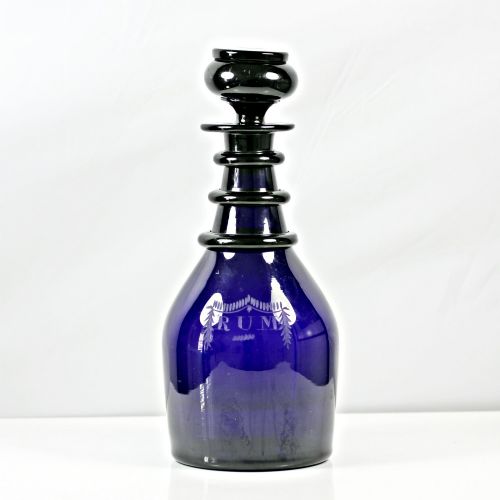
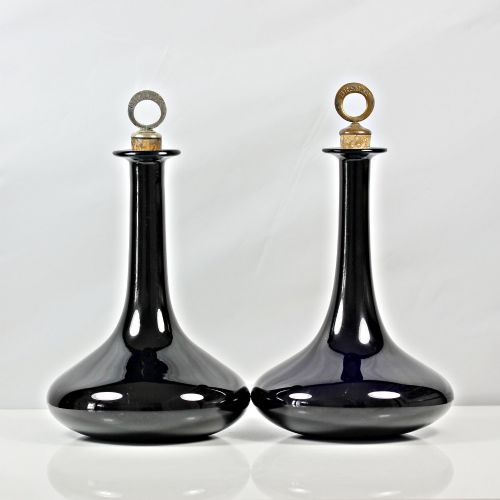
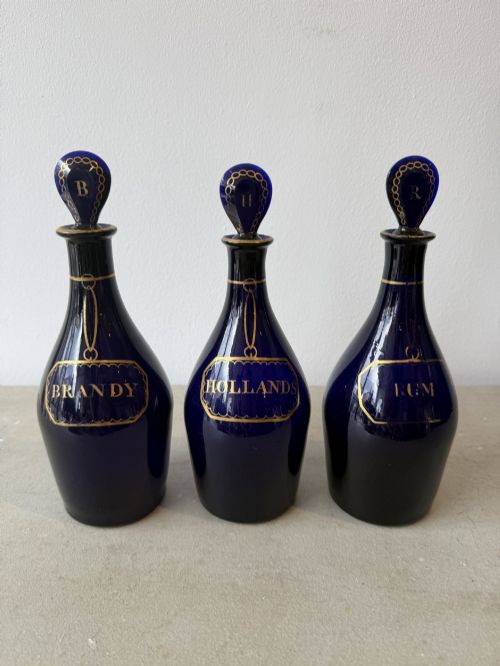
Cobalt glass bottle pieces bring intense deep blue colour to a room, ranging from Georgian decanters to Victorian apothecary jars.
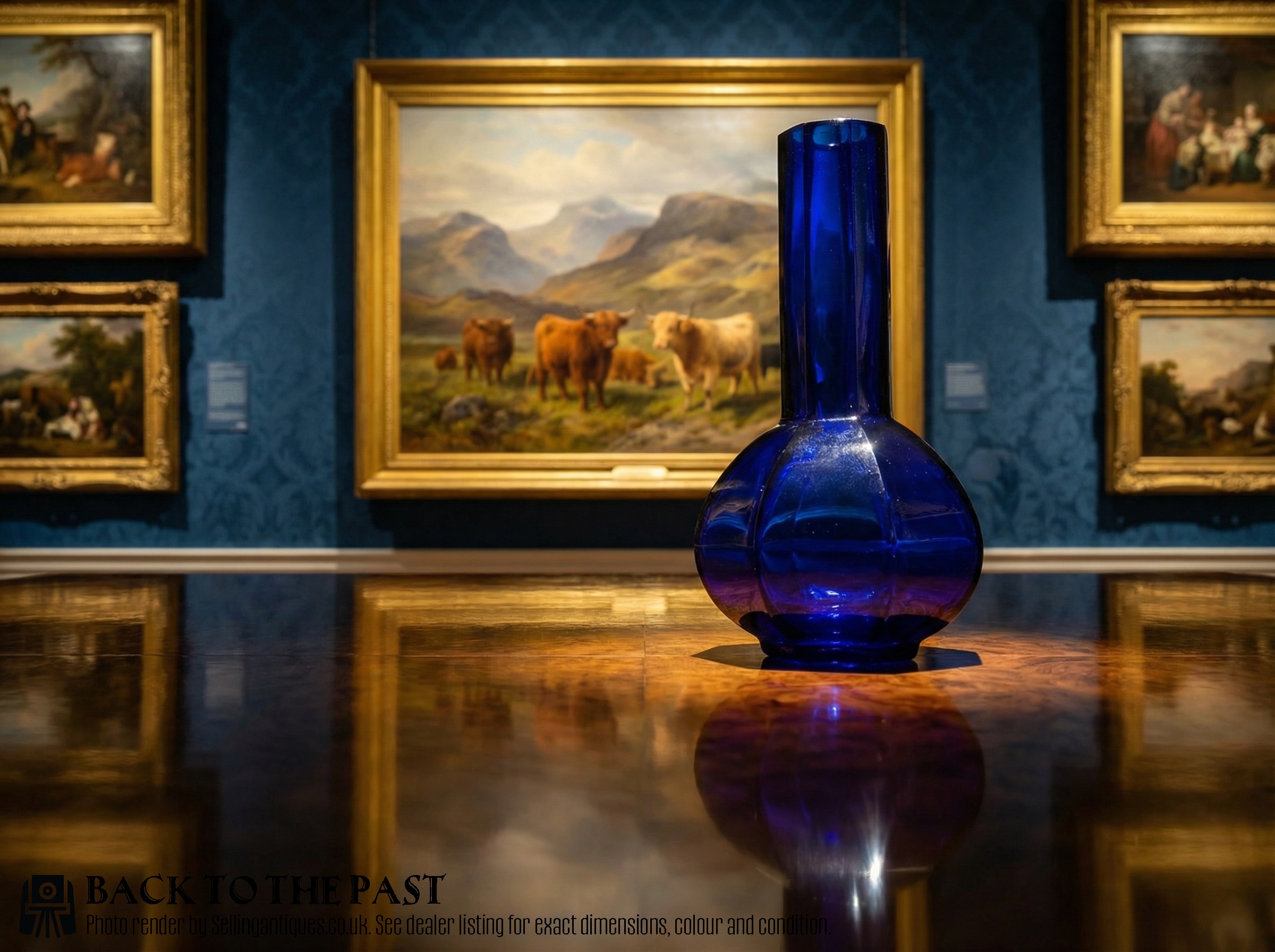
Cobalt Glass Bottle
When searching for a cobalt glass bottle, buyers encounter a diverse selection of vessels spanning the Georgian, Victorian, and later periods. The inventory includes utilitarian apothecary bottles alongside decorative decanters, scent bottles, and vases.
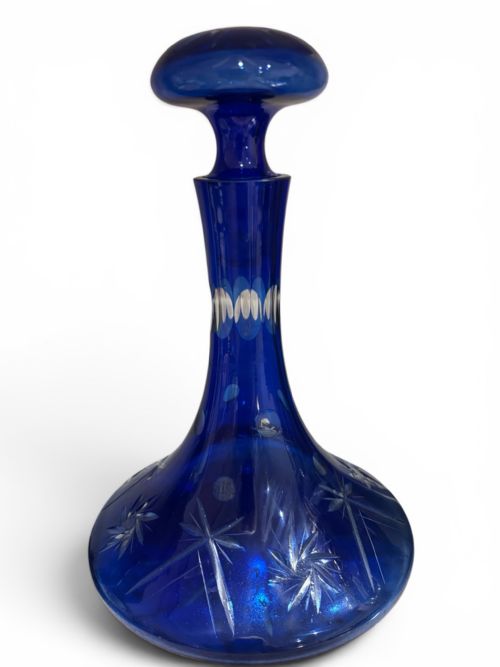
The most common examples on this page are British Bristol blue decanters and nineteenth-century apothecary vessels. Alongside these English pieces appear continental examples, including Bohemian and French productions.
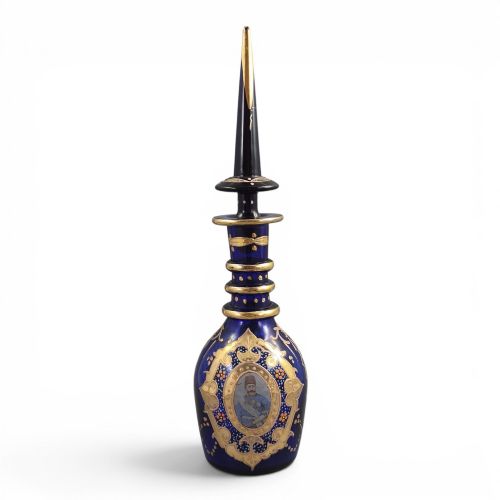
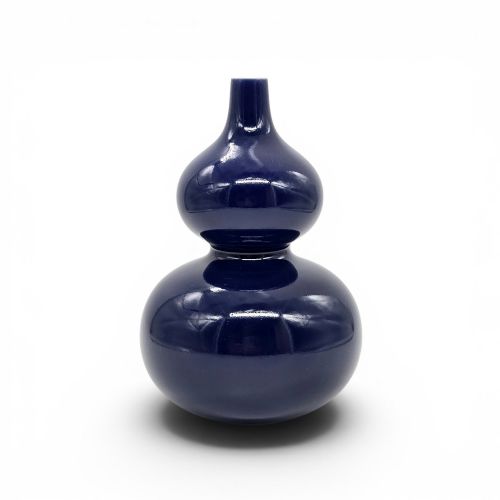
Makers and exporters adapted the intense blue material for international tastes, producing items such as Bohemian enamelled decanters intended for the Persian Qajar market and Chinese Peking glass vases.
Materials and technique
The foundation of every piece is glass coloured with cobalt oxide to achieve its characteristic deep hue. Many items are hand-blown, showing the subtle irregularities typical of nineteenth-century manufacture.
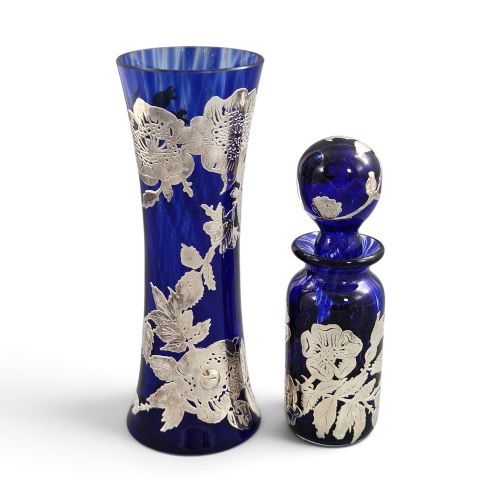
Higher-status vessels incorporate precious metals and decorative overlays. Makers mounted glass bodies in sterling silver or silver plate, applied delicate gold leaf, or hand-painted enamel designs directly onto the surface.
Listings feature items spanning the Georgian, Victorian, Edwardian, and Art Deco periods, created in Britain, Bohemia, France, and China.
Judging quality and execution
Quality rests upon the depth and uniformity of the blue glass itself, alongside the crispness of any hand-cut facets or applied decoration. Thicker glass with rich colour saturation indicates superior production.
The integration of metalwork distinguishes finer examples. Secure silver mounts, intricate overlay work, and well-preserved enamel or gold leaf elevate the piece above plain utilitarian glassware.
Laugharne Glass·Franchini And Bigaglia
The Cobalt Glass Bottle Glossary
- Bristol blue
- A deep cobalt blue glass traditionally associated with manufacturers in Bristol during the Georgian and Victorian eras. It was widely used for decanters, finger bowls, and apothecary jars.
- Mell decanter
- A specific bottle shape featuring a broad body tapering towards the neck, often utilised for serving wine or spirits in the nineteenth century.
- Apothecary bottle
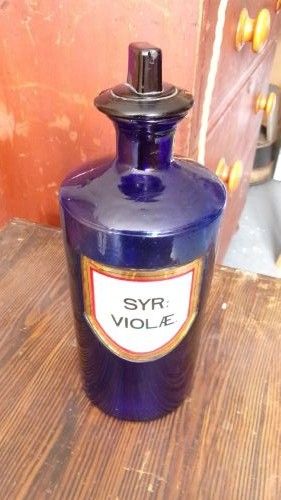
- A utilitarian container designed to hold medical drugs or chemicals, frequently fitted with a large stopper and sometimes featuring a painted white label.
- Overlay glass
- A technique where a layer of coloured glass is fused over a clear or contrasting body, then partially cut away to reveal the underlayer in a pattern.
- Chatelaine scent bottle
- A small perfume container equipped with a chain or hook to suspend from a belt, popular in Victorian times for carrying liquid refreshers.
Cobalt Glass Bottle: Frequently Asked Questions
How do I date an old blue bottle?
Dating relies on manufacturing traits, pontil marks, and stylistic markers such as silver mounts or cut glass rings. Georgian pieces often display heavy lead metal content and pontil scars on the base.
Later Victorian and twentieth-century examples shift towards machine-moulded forms or incorporate stamped sterling silver hallmarks that provide exact calendar years.
What were apothecary bottles used for?
Apothecary bottles held medicinal preparations, tinctures, and dry chemicals in pharmacies and dispensaries. Their dark blue colour protected light-sensitive contents from degrading.
Chemists displayed them on shelves in rows, often identifying the contents through painted labels on the glass surface.
How should I clean cobalt glass?
Cleaning requires warm water and mild soap, avoiding harsh abrasives that scratch the surface or damage delicate enamel and gold leaf. Metal mounts need separate care to prevent tarnishing.
Submerging antique bottles with silver components for prolonged periods can weaken old adhesives and corrode internal residues.
Are all blue decanters from Bristol?
Not all blue decanters originated in Bristol, despite the common trade term Bristol blue. Factories across Britain, Bohemia, and France produced similar cobalt glass wares.
Regional variations in cutting styles and stopper shapes help distinguish English production from continental European counterparts.