
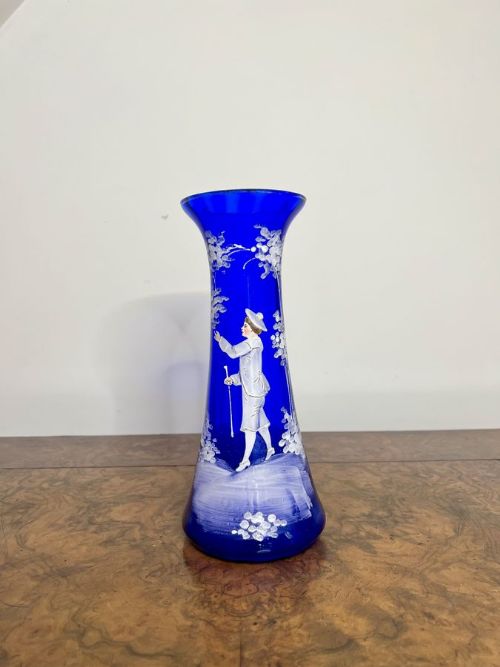


Cobalt Blue Flower Vases
Cobalt blue flower vases bring deep, rich colour to a room, spanning from Victorian porcelain to Art Deco glass.
Cobalt Blue Flower Vases
Cobalt blue flower vases encompass a wide range of decorative vessels designed to hold stems while displaying deep blue mineral colour. You encounter forms stretching from nineteenth-century porcelain and stoneware to nineteen-thirties cut glass and art pottery.
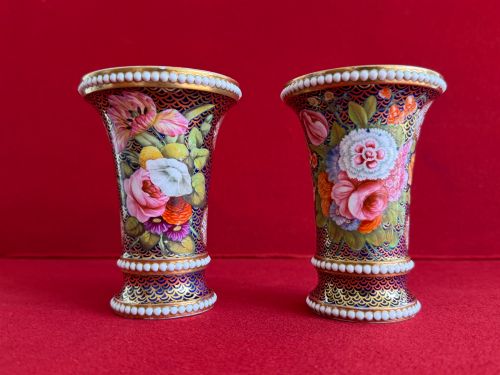
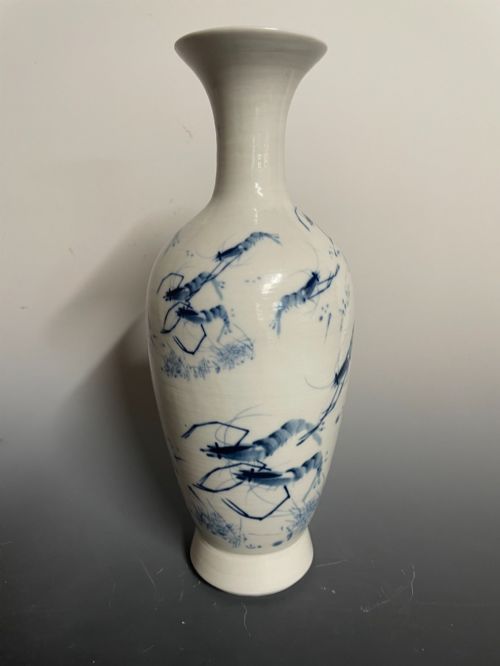
The selection on this page demonstrates various international traditions, including English factories, continental makers, and Japanese Imari pieces. You will find small bud vases alongside large jardinieres and cachepots.
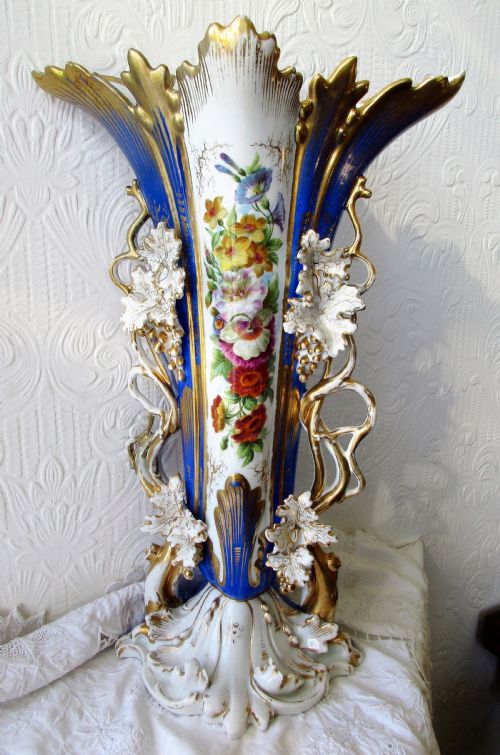
Many items date across the Victorian, Edwardian, and Art Deco eras, showing stylistic shifts from Rococo Revival curves to clean geometric lines. Each piece utilises cobalt pigment or glass to achieve its striking visual depth.
How they were made
Makers achieved the characteristic deep blue through cobalt glaze applied to ceramics or through coloured molten glass. Artisans often enhanced these surfaces with hand-painted details, enamel, or applied gold leaf.
Ceramic pieces underwent high-temperature kiln firing to fuse the cobalt glaze with the underlying porcelain, stoneware, or earthenware body. Glass vessels utilised techniques such as moulding, cutting, or casing layers of clear crystal over cobalt glass.
Listings feature items spanning the nineteenth century through the nineteen-thirties, incorporating materials like porcelain, stoneware, and cut glass.
What varies in quality
Quality rests in the crispness of the modelled form, the precision of hand-painted decoration, and the depth of the cobalt colour. Maker attribution also plays a role, with documented factory marks or artist signatures elevating a piece.
The weight and clarity of glass vessels, or the finesse of gilding and enamel work on porcelain, distinguish standard production from exceptional studio output.
William Adams and Sons·Stevenson and Hancock·Val St. Lambert·Royal Doulton·Meissen·René Lalique·William Moorcroft·Ernst Wahliss·Coalport
The Cobalt Blue Flower Vases Glossary
- Cobalt glaze
- A metallic oxide pigment that turns deep blue when fired at high temperatures on ceramic bodies. It provides the signature hue seen across many antique vessels.
- Jasperware
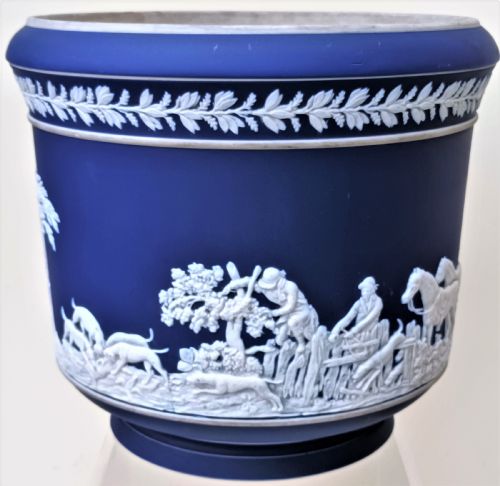
- A type of fine stoneware developed by Josiah Wedgwood, characterised by a matte surface and contrasting applied white reliefs. Blue variations frequently feature classical figures.
- Imari
- A style of Japanese porcelain decorated in underglaze blue and overglaze red, gold, and other colours. Western makers frequently copied these vibrant traditional patterns.
- Jardiniere
- A large decorative pot or stand designed to hold live plants or floral arrangements rather than cut stems. They often sit on tabletops or pedestals.
- Cut glass
- Glassware shaped and patterned by grinding facets or geometric designs into the surface using a wheel. This technique creates sparkling reflections across the cobalt body.
Cobalt Blue Flower Vases: Frequently Asked Questions
Are these vases safe for fresh flowers?
Most glazed ceramic and glass vessels hold water safely, but older unglazed earthenwares or pieces with interior hairline cracks require caution. Use a small plastic liner if you feel uncertain about water resistance.
Change the water frequently and avoid placing heavy stems inside delicate bud vases to prevent tipping.
How do I date a ceramic vase?
Look underneath the base for factory stamped marks, impressed numbers, or painted ciphers that correspond to manufacturer production records. Style indicators like Art Nouveau curves or Victorian flourishes also narrow the timeframe.
Examine the wear on the base rim, known as the footring, to gauge the age of the piece through handling marks.
What is the difference between porcelain and stoneware?
Porcelain is a fine, translucent ceramic fired at very high temperatures using kaolin clay. It rings slightly when tapped and usually has a smooth white body beneath the glaze.
Stoneware is denser, opaque, and heavier, made from clay that vitrifies during firing to create a durable, non-porous material often used for robust jardinieres.