



Cobalt Blue Bottles
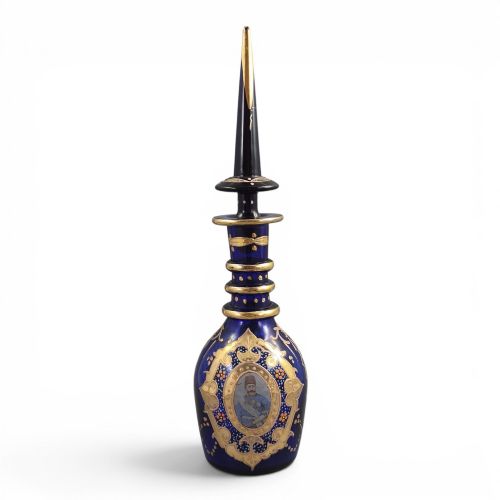
Cobalt blue bottles bring deep indigo and vibrant sapphire tones to domestic spaces, taking the form of apothecary wares, drinking decanters, and cabinet vases.
Cobalt Blue Bottles
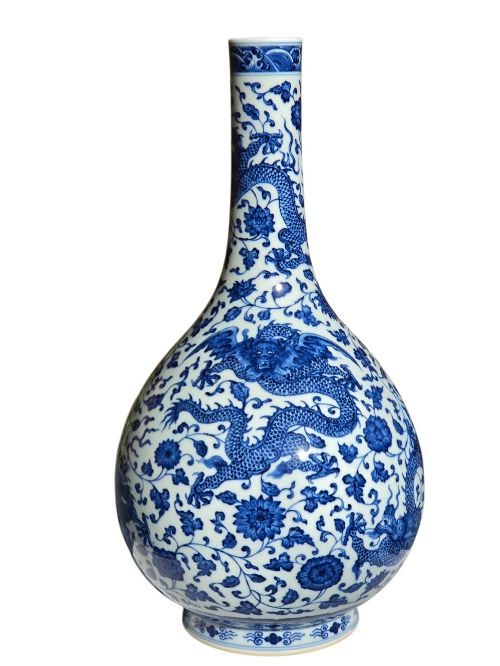
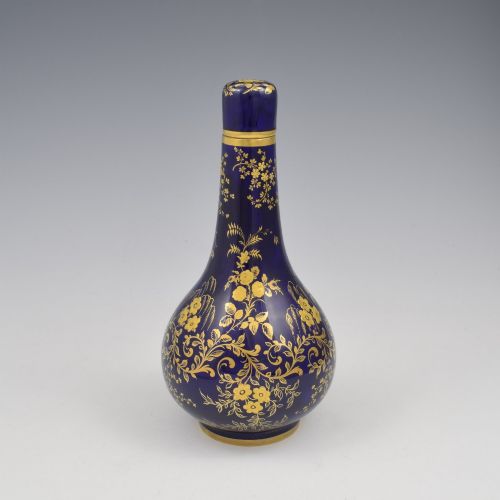
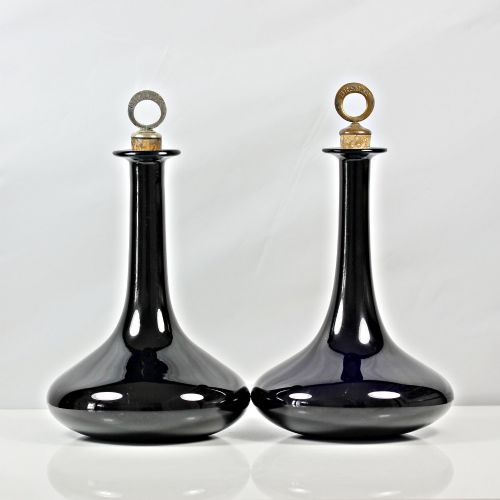
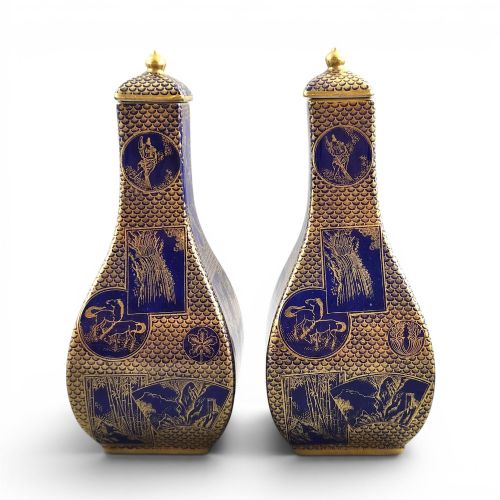
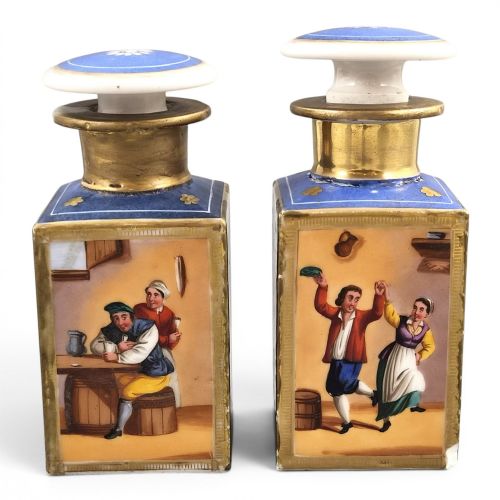
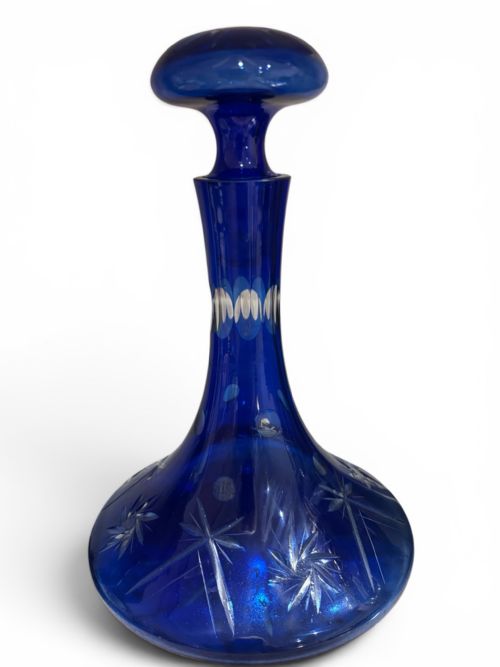
Cobalt blue bottles encompass a wide array of functional and decorative vessels spanning Georgian, Victorian, and Edwardian periods alongside earlier Asian exports. The selection on this page relies heavily on English glass decanters, Chinese porcelain vases, and European porcelain scent bottles.
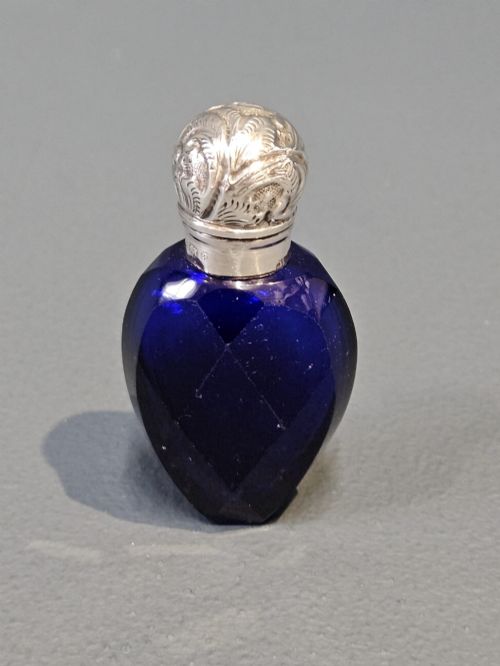
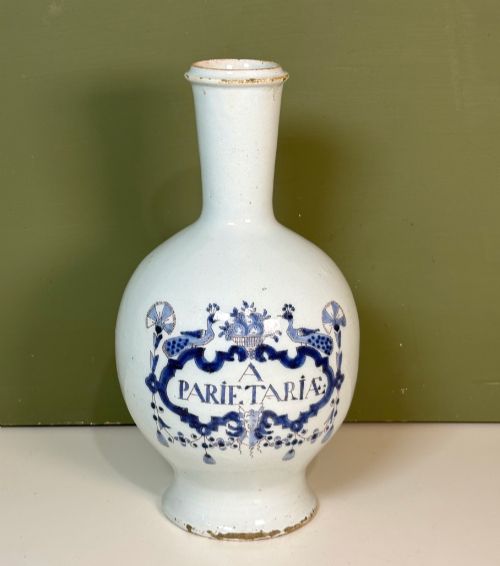
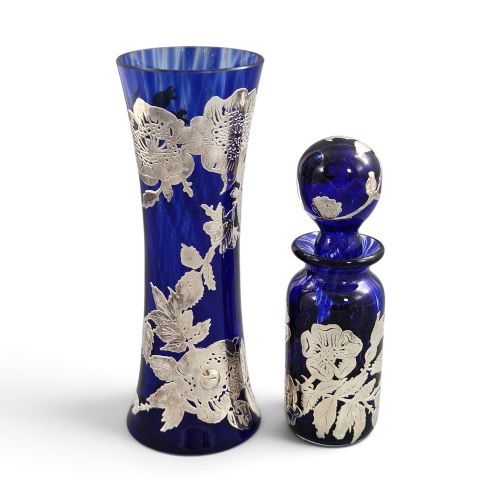
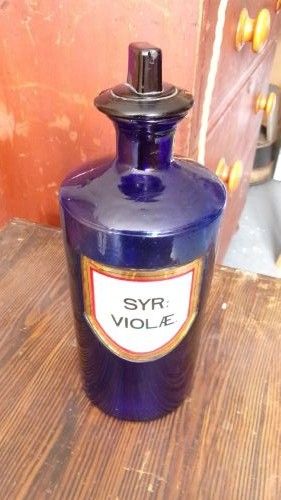
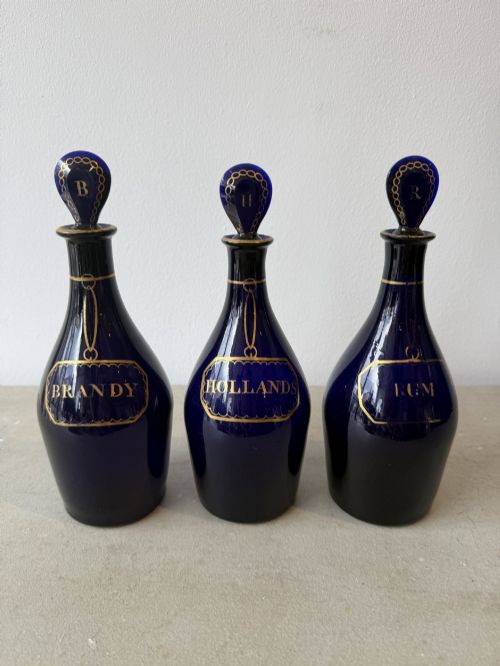
Buyers encounter everything from utilitarian chemist jars with lollipop stoppers to gilt-accented table decanters and delicate silver-mounted perfume bottles. Production reaches across English potteries, Welsh glassworks, and continental export markets.
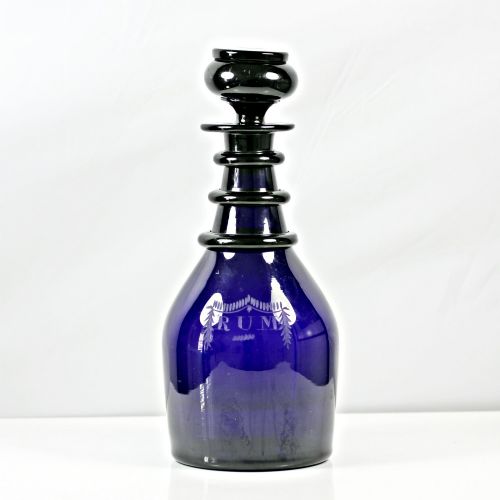
The utilitarian origins of apothecary jars contrast with high-status porcelain and overlay glass created for display. Collectors navigate diverse forms ranging from three-ring rum decanters to double-gourd vases.
Materials and technique
Glass vessels rely on cobalt oxide introduced to the molten batch or applied as a rich surface glaze, often shaped by hand-blowing into moulds or free-hand manipulation. Artisans added weight and substance through thick walls, sometimes layering glass to achieve rich triple-overlay effects.
Porcelain and pottery examples utilise cobalt pigments painted directly onto the clay body before glazing or fired beneath a clear glaze. Many pieces incorporate supplementary metalwork, mounting sterling silver collars, hinged chatelaine caps, or applied gold leaf directly onto the ceramic or glass substrate.
Cobalt Blue Bottles Retail Price Guide 2026
Typical asking prices for cobalt blue bottles among the pieces listed under this phrase on Sellingantiques today, from the lower quarter to the upper quarter. They describe what is for sale here now, not the wider market.
Materials range from simple apothecary glass and pottery to sterling silver, gold leaf, and fine porcelain.
What varies in quality
Quality rests upon the depth and saturation of the blue colour alongside the crispness of any painted scenes, gilding, or moulded details. Finer examples display precise hand-painted decoration, such as intricate Teniers scenes or delicate enamel work, rather than simple mechanical stamping.
The integrity of metal mounts and the retention of original stoppers heavily influence a piece's standing. Superior glass specimens show clean pontil marks and minimal interior residue, while ceramics demand sharp underglaze blue definition and well-preserved glaze surfaces.
The Cobalt Blue Bottles Glossary
- Bristol Blue
- A deep, vibrant shade of cobalt glass traditionally associated with West Country glasshouses during the Georgian and Victorian eras. This intensely coloured glass found common use in spirits decanters and apothecary storage.
- Mell Decanter
- A heavy-bottomed glass decanter featuring a tapered body designed to hold sediment securely during pouring. These bottles often incorporate applied glass rings around the neck for a secure grip.
- Underglaze Blue
- A decoration technique where cobalt oxide pigment is applied directly to the raw clay body before the transparent glaze is applied and fired at high temperatures. This method seals the pigment permanently beneath the glossy surface.
- Chatelaine Scent Bottle
- A small perfume container attached to a belt hook by chains, popular during the Victorian period. These vessels frequently feature sterling silver mounts and overlaid glass.
- Imari
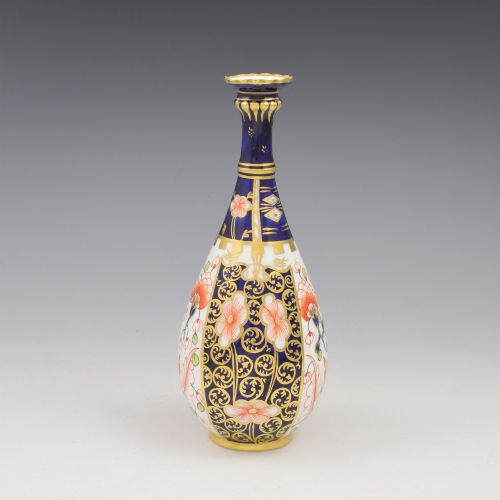
- A decorative style originating in Japan and later emulated by European porcelain factories, typically combining underglaze blue, iron red, and gilt highlights. Pieces utilising this palette display dense, contrasting patterns.
Cobalt Blue Bottles: Frequently Asked Questions
How do I clean antique glass bottles?
Washing antique glass requires lukewarm water and mild soap, avoiding harsh scrubbing brushes that scratch the surface. Metal mounts must be kept dry to prevent corrosion of silver components.
Internal staining calls for specialised bottle brushes or natural cleaning beads rather than chemical solvents. Careful drying preserves any delicate gilding or painted enamel details.
What is the difference between a decanter and a vase?
Decanters feature fitted stoppers and sturdy necks designed for pouring liquids such as wine or spirits. Their bases provide stability on dining tables and serving trays.
Vases remain open at the top to display floral arrangements or stand as decorative objects. Their interiors lack the specific pouring lips found on drinking vessels.
How can I date a cobalt bottle?
Dating relies on examining pontil marks, manufacturing seams, and stylistic markers such as Victorian silver hallmarks or Georgian neck rings. Unpolished pontils typically indicate older production methods.
Maker marks, factory stamps, and Asian dynastic seals help narrow down the period of porcelain pieces. Comparing the depth of the cobalt colour and wear patterns offers further clues.
Were apothecary bottles meant for display?
Chemist and apothecary bottles served a strictly practical function in working dispensaries, holding ingredients and medicines behind shop counters. Their distinct cobalt colour protected light-sensitive contents from degradation.
Modern collectors prize these utilitarian objects for their robust glass and bold lettering. Their survival reflects durable historical manufacturing standards.