

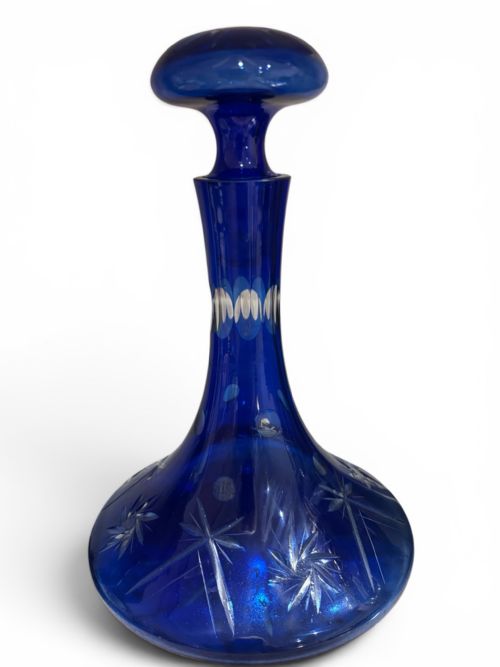
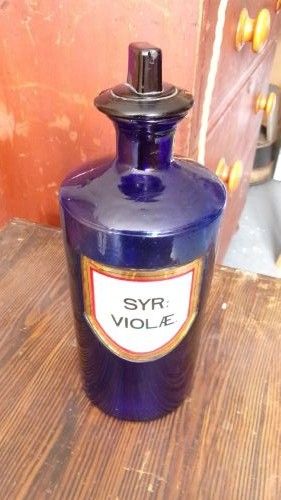


Cobalt Blue Bottle
A cobalt blue bottle brings rich, saturated colour to a room, appearing in forms from Georgian decanters to delicate Victorian scent bottles.
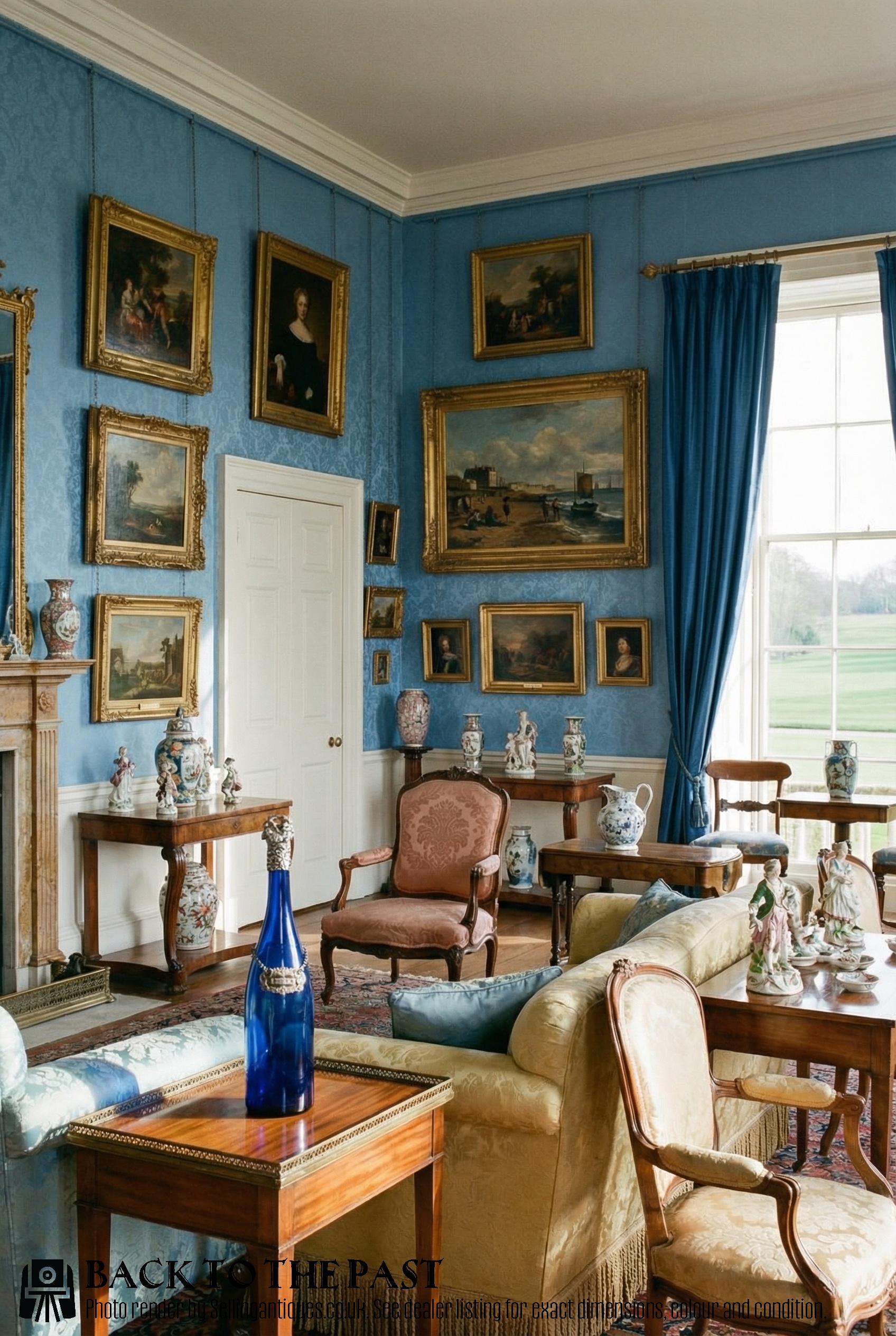
Cobalt Blue Bottle
A cobalt blue bottle encompasses a diverse array of utilitarian and decorative vessels, ranging from sturdy apothecary and chemist jars to refined table decanters and miniature vanity glassware. Buyers seeking this category encounter pieces stretching from the eighteenth century through the Victorian era and into twentieth-century studio glass.
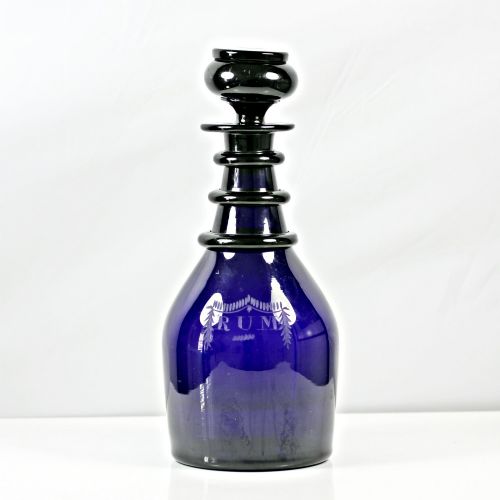
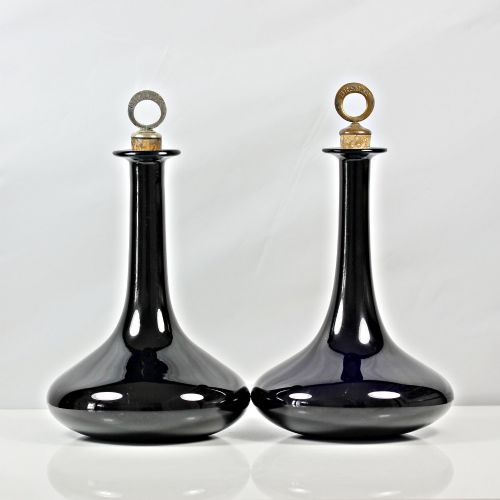
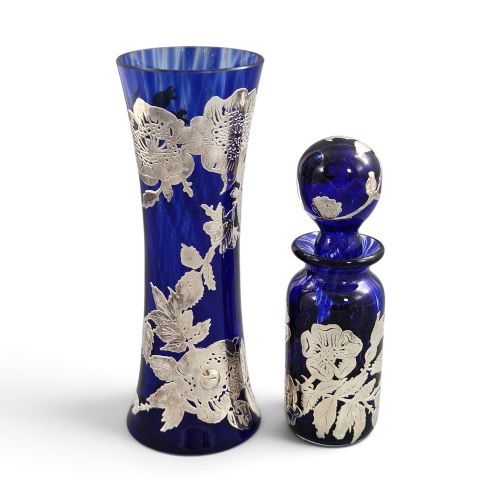
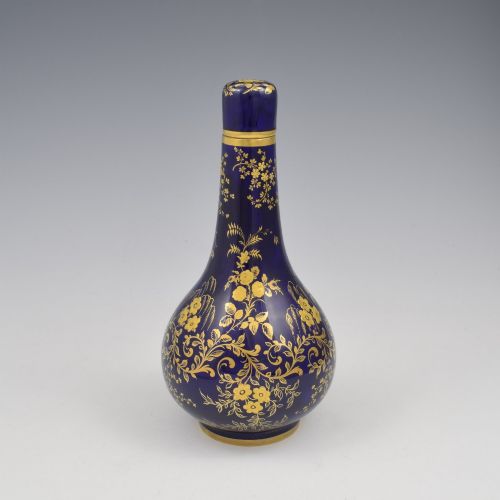
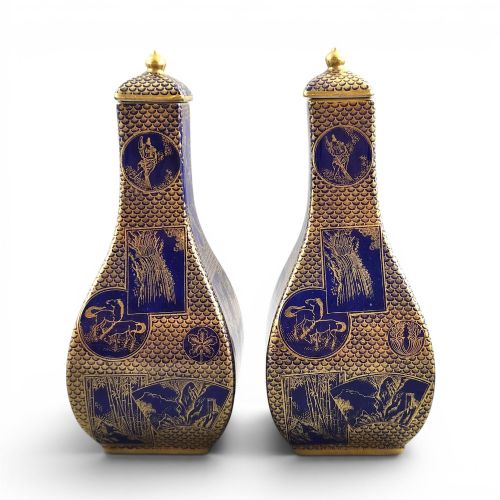
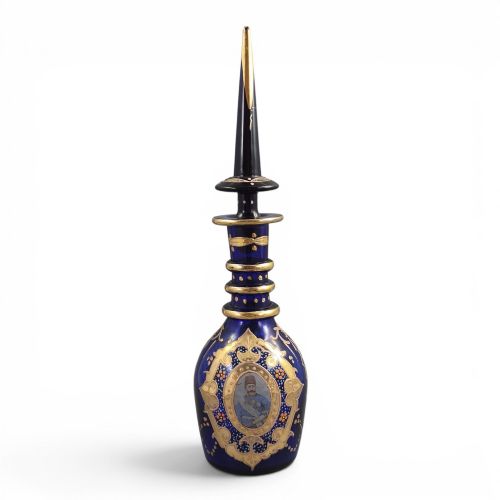
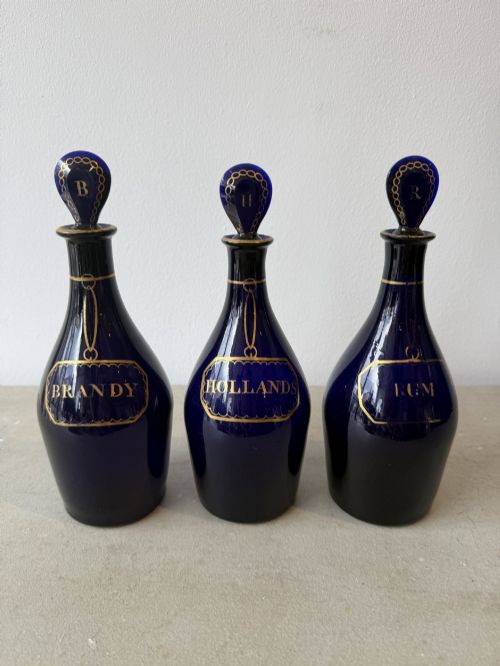
The selections on this page lean heavily towards nineteenth-century examples, particularly Bristol blue wine and rum decanters, alongside porcelain vase forms and silver-mounted scent bottles. Forms span simple blown glass serving bottles, heavy lead crystal decanters, and intricate Chinese porcelain vase shapes.
Origins are similarly broad, moving from English glasshouses and West Country potteries to Bohemian workshops, French ateliers, and East Asian kilns. Whether intended for the dining table, the chemist's shelf, or the dressing table, each vessel utilises intense cobalt pigments to achieve its distinctive hue.
How they were made
Makers achieved the deep blue coloration by incorporating cobalt oxide into molten glass batches or ceramic glazes, producing consistent saturation across diverse vessel types. Glass pieces typically relied on hand-blowing techniques, sometimes utilising multi-layered overlay methods where clear or coloured glass was cut back to reveal the vibrant blue beneath.
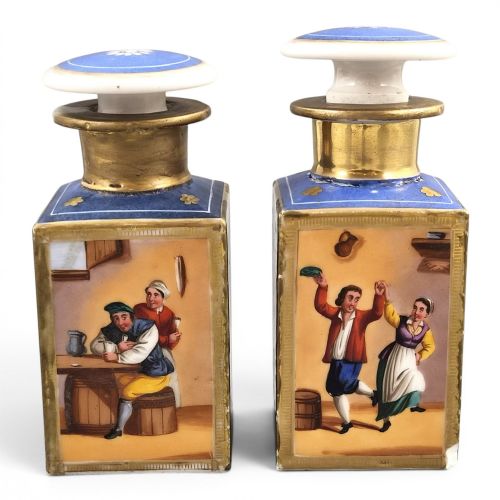
Ceramic and porcelain versions involved applying cobalt glaze or underglaze blue pigments before high-temperature firing, occasionally enhanced with gold leaf, enamel painting, or hand-painted figural scenes. Metal mounts in sterling silver or silver plate were frequently added to glass bottle rims and stoppers, requiring specialist silversmithing to secure the fragile material.
Listings feature items spanning the 18th century to the late 20th century, utilising porcelain, glass, gold leaf, enamel, and silver plate.
What varies in quality
Quality separates along the lines of material purity, decorative handwork, and the crispness of applied metalwork. Early hand-blown glass vessels show individual character through slight bubbles and pontil marks, whereas superior examples display precise wheel-cutting, flawless overlay casing, and heavy lead weight.
In porcelain and pottery, fineness is determined by the clarity of the underglaze blue painting, the delicacy of the potting, and the preservation of any supplementary gold leaf or enamel work. The integration of hallmarked sterling silver mounts and matching stoppers elevates a piece above standard utilitarian production.
Laugharne Glass·Derby Porcelain·Mason's Patent Ironstone·Jacob Petit·Lambeth Pottery·Franchini And Bigaglia·Crown Staffordshire·Doulton·Flight Barr And Barr
The Cobalt Blue Bottle Glossary
- Bristol blue
- A deep, vibrant type of cobalt-tinted glass historically produced in the West of England, frequently utilised for nineteenth-century decanters and apothecary bottles.
- Mell decanter
- A specific bottle shape featuring a wide shoulder tapering sharply to a narrow base, commonly found in nineteenth-century English glass production.
- Overlay glass
- A technique involving two or more distinct layers of glass fused together, where the outer layer is partially cut away to expose the contrasting colour underneath.
- Pontil mark
- A rough scar left on the base of a hand-blown glass vessel where the pontil rod was snapped off after shaping.
- Bleu de Roi
- A rich royal blue ceramic glaze developed at the Sèvres porcelain manufactory in France during the eighteenth century.
Cobalt Blue Bottle: Frequently Asked Questions
How do I clean an old glass decanter?
Cleaning requires patience and gentle handling to preserve the interior surface and any original gilding. Warm water and non-abrasive bottle brushes remove residue without scratching the cobalt glass.
Harsh chemical detergents or submerging silver-mounted pieces should be avoided. Thorough air drying prevents moisture marks inside narrow necks.
Are these glass bottles safe for serving wine?
Many nineteenth-century decanters were made specifically for holding and serving wine at the dining table. The stable nature of glass and high-fired glaze makes them generally suitable for modern use.
However, collectors often limit functional use to protect fragile stoppers and delicate silver mounts from wear. Checking the interior for sediment or old residue is recommended before pouring.
How can I tell a Victorian piece from an earlier one?
Victorian examples often display heavier press-moulded details, brighter gilding, and machine-threaded silver mounts where applicable. Earlier Georgian pieces tend to exhibit deeper hand-blown pontil marks and simpler, heavier lead glass walls.
Stylistic cues such as heavy ring necks on decanters point towards the earlier decades of the nineteenth century. Comparing the weight and base finish helps confirm the manufacturing era.
What is the best way to display cobalt glass?
Placing pieces near natural daylight allows the deep cobalt pigment to illuminate fully. Shelving positioned in front of windows or illuminated cabinets highlights the intense colour saturation.
Spacing vessels apart prevents crowding and lets the individual shapes of mell decanters and vase forms stand out. Direct, prolonged harsh sunlight should be balanced against the desire for illumination.