

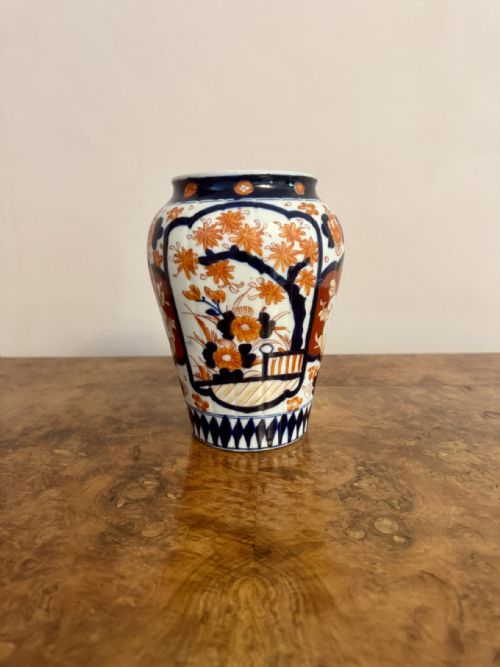


Cobalt and Iron Red Vases
These cobalt and iron red vases bring together deep blue underglaze pigments and vibrant red enamel highlights in striking ceramic forms.
Cobalt and Iron Red Vases
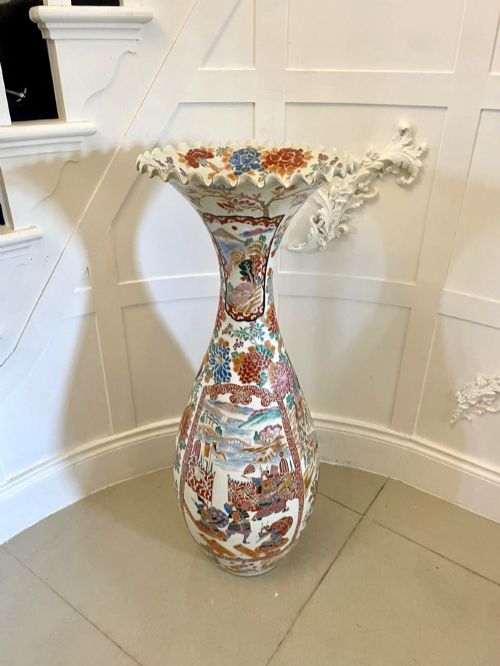
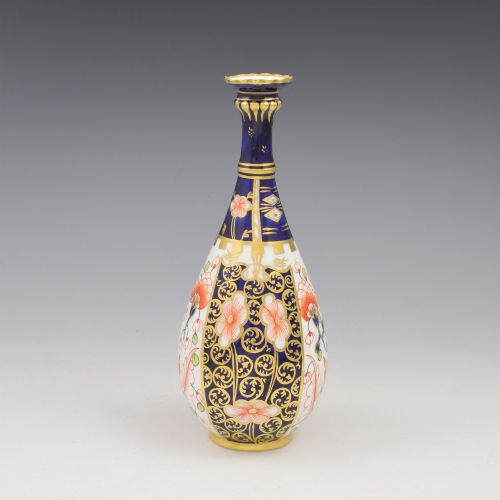
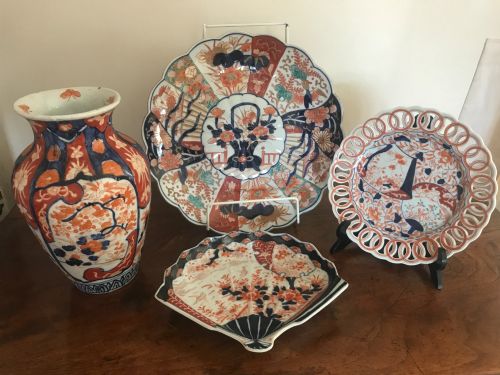
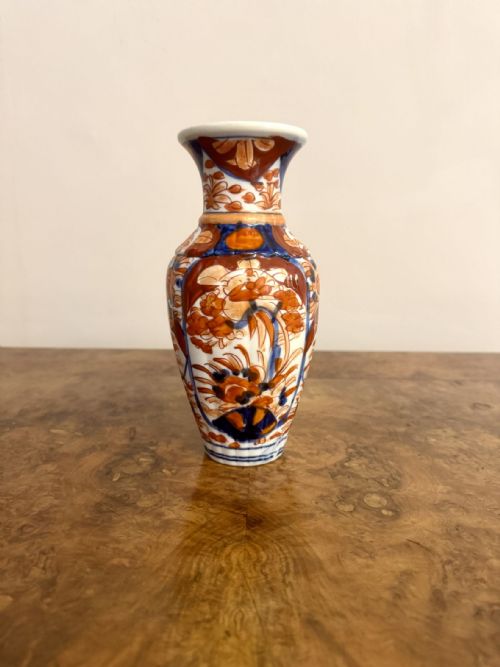
Cobalt and iron red vases span the nineteenth and early twentieth centuries, drawing heavily upon traditional Imari aesthetics from both Japanese and British makers. Buyers seeking these cobalt and iron red vases encounter a diverse range of forms, from large floor-standing vessels and garnitures to delicate bud vases and lidded jars.
The selections available here showcase distinct stylistic periods, notably the Meiji era in Japan alongside Victorian and Edwardian productions from English potteries like Derby. Vases appear as single decorative pieces, matched pairs, or larger sets, often utilising hexagonal, fluted, or baluster body shapes.
Materials and methods
Makers shaped these vessels from fine porcelain and ceramic bodies, applying cobalt blue pigments beneath the clear glaze before firing at high temperatures. Artisans then added iron red enamel and gold leaf accents on top of the glaze in subsequent, lower-temperature firings to achieve the characteristic rich palette.
Techniques varied across regions, with Japanese kilns and English factories such as Stevenson and Hancock employing intricate hand-painted decoration. Gilt details and enamel glazes were carefully brushed onto the porcelain surface to complement the dominant cobalt and red tones.
Some nineteenth-century makers hid tiny painter's marks beneath the glaze, inviting close inspection with a magnifying glass.
Evaluating quality and execution
The distinction between standard production and exceptional work rests upon the precision of the hand-painted detailing within the cobalt and iron red areas. Finer examples display crisp demarcation between the underglaze blue and the enamel colours, with balanced compositions across shaped or fluted surfaces.
Scale and proportion also define the upper tier of these pieces, particularly in large floor vases and matched garniture sets where symmetry is paramount. The skillful application of gold leaf and secondary enamel glazes elevates the visual depth of superior pieces.
Royal Crown Derby·Stevenson and Hancock
The Cobalt and Iron Red Vases Glossary
- Imari
- A style of ceramic decoration originating in Japan, heavily featuring cobalt blue, iron red, and gold. This palette was widely adopted by European potteries during the nineteenth century.
- Meiji Period
- The era in Japanese history spanning from 1868 to 1912, associated with a vast increase in export ceramics reaching Western markets. Pieces from this time often show exceptional pictorial detail.
- Baluster
- A vase shape characterised by a rounded body that tapers toward the base and swells near the lower middle section. This classic form provides a stable base for complex decorative schemes.
- Garniture
- A set of three or more matching vases designed to be displayed together on a mantelpiece or sideboard. These sets frequently include combinations of jar and beaker forms.
- Underglaze
- Pigment applied to the ceramic body before the application of a transparent glaze and subsequent firing. Cobalt blue is the most common underglaze colour capable of withstanding high kiln temperatures.
Cobalt and Iron Red Vases: Frequently Asked Questions
How do I clean an antique vase?
Dust these porcelain vessels gently with a soft, dry brush to protect the delicate enamel and gold leaf highlights.
Avoid submerging older ceramics in water, as moisture can infiltrate hairline fractures or degrade historical repairs.
Where were these pieces made?
The listings feature ceramics produced in Japanese kilns during the Meiji period alongside European interpretations from English factories in Derby.
Export trade during the nineteenth century heavily influenced the exchange of these distinct decorative styles between continents.
How are pairs matched?
Paired vases share identical dimensions, body shapes, and corresponding hand-painted motifs that mirror one another.
Craftsmen often painted matching vessels concurrently to ensure consistency in the cobalt and iron red colour palette.
Can I use them for flowers?
Many antique vessels can hold water, but large floor vases and delicate historical pieces are typically displayed purely for decoration.
Using liners helps protect the interior glaze from mineral deposits and moisture damage over time.