


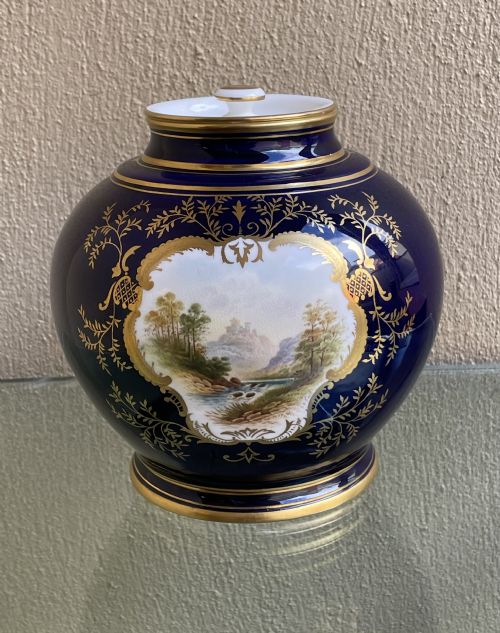


Cobalt and Gold Urns
Cobalt and gold urns bring together deep blue grounds and metallic lustre across porcelain, earthenware, and ironstone vessels.
Cobalt and Gold Urns
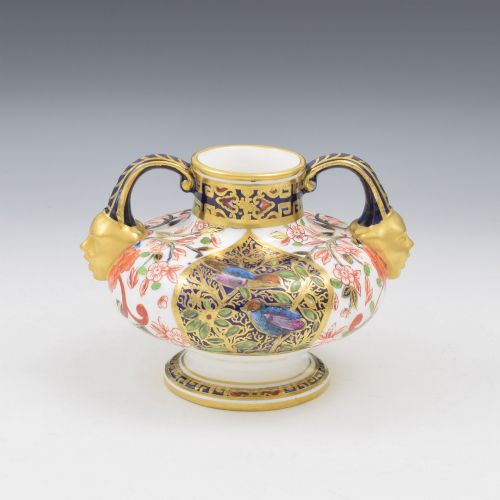
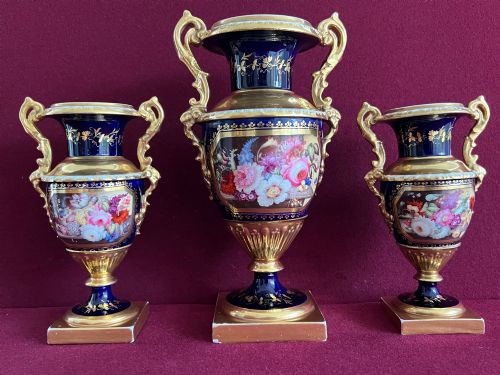
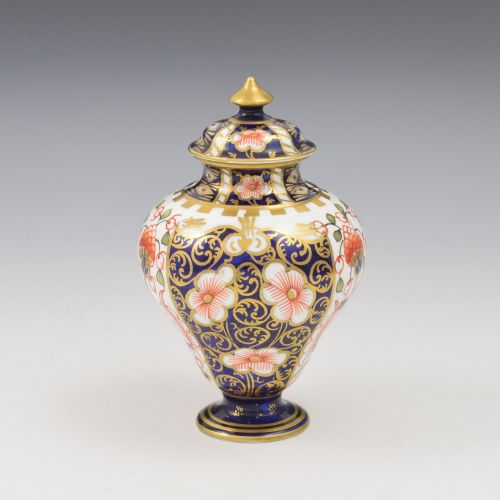
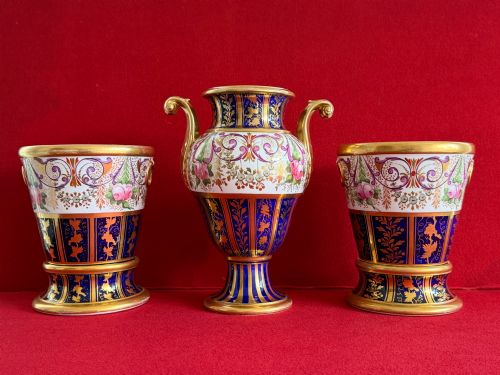
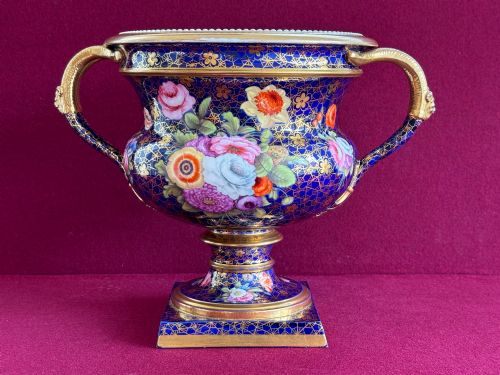
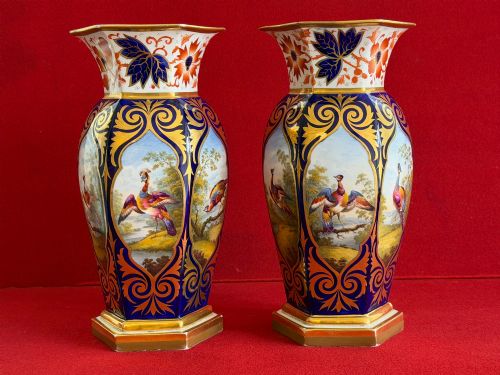
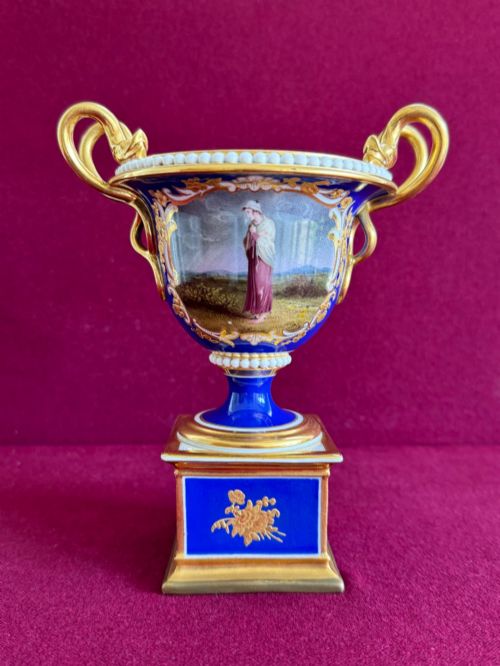
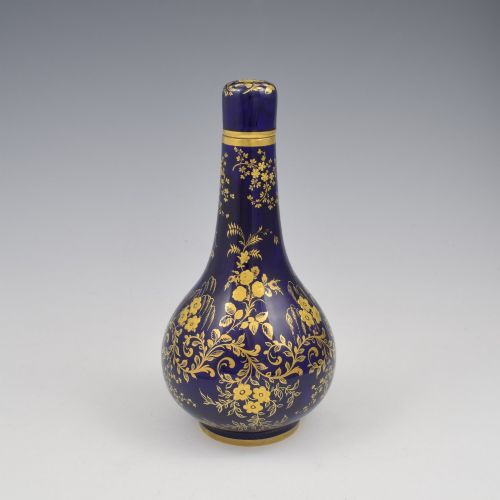
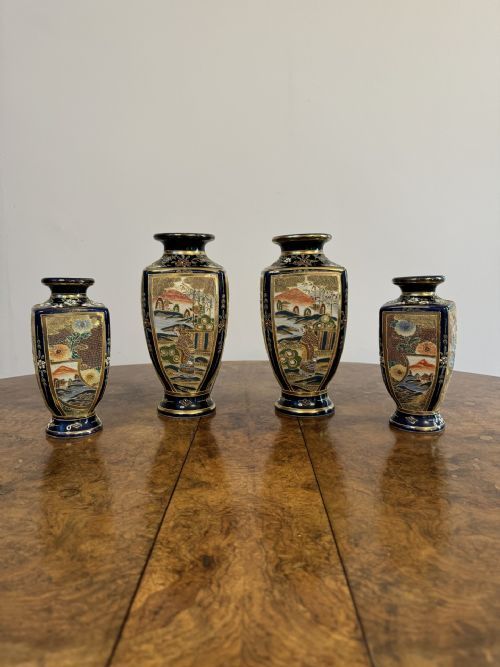
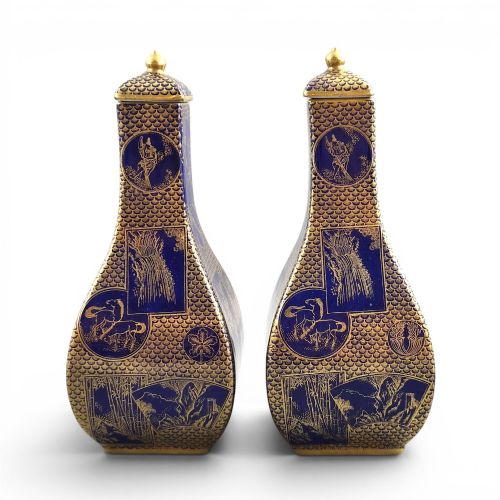
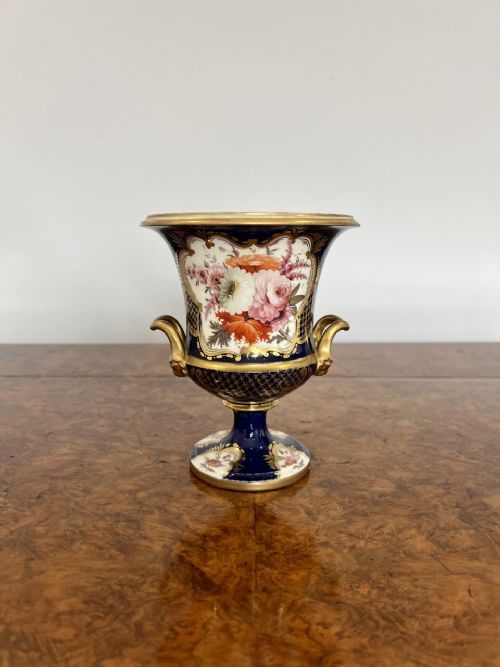
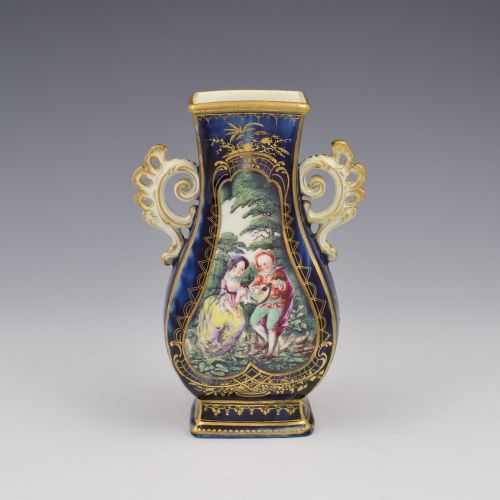
Cobalt and gold urns span decorative urns, lidded vases, campagna shapes, and garnitures designed for display. These ceramic and porcelain vessels appear across Georgian, Regency, Victorian, and Edwardian periods.
The pieces include English porcelain from factories like Spode, Worcester, and Coalport alongside continental European works from Vienna, Sèvres, and Old Paris. Japanese Satsuma ceramics from the Meiji period also contribute dark blue and gilt designs to this selection.
How they were made
Potters shaped porcelain, earthenware, and ironstone into vases and urns before applying cobalt glaze or enamel to achieve deep blue grounds. Artisans then added gold leaf, gilding, or gold gilt by hand, sometimes incorporating raised moriage decoration.
Many items received hand-painted pastoral or landscape scenes within the gilt panels, requiring careful firing to set the enamel colours against the metallic highlights.
Cobalt and Gold Urns Retail Price Guide 2026
Typical asking prices for cobalt and gold urns among the pieces listed under this phrase on Sellingantiques today, from the lower quarter to the upper quarter. They describe what is for sale here now, not the wider market.
Certain nineteenth-century decorators snuck tiny hidden insects into their floral reserves.
What varies in quality
The standard of a piece rests on the crispness of the hand-painted detailing within the reserve panels and the evenness of the cobalt ground. Finer examples display precise, heavy gilding that remains intact without rubbing or loss.
Form and proportion dictate desirability, with symmetrical twin-handled mask vases and balanced garnitures commanding greater attention than simpler vessels. The reputation of the decorating artist or the factory adds distinction to the work.
Flight Barr And Barr·Royal Crown Derby·Royal Doulton·Royal Worcester·Ernst Wahliss
The Cobalt and Gold Urns Glossary
- Garniture
- A set of matching vases or urns designed to be displayed together on a mantelpiece or sideboard. These sets usually consist of three or more pieces of graduated sizes.
- Campagna Urn
- A classical bell-shaped vessel with a flared rim and pedestal foot, modelled after ancient Roman stone urns. English and continental makers frequently rendered this shape in porcelain.
- Moriage
- A Japanese ceramic technique using piped clay to create raised, textured patterns beneath or over the glaze. Artisans often highlighted these raised motifs with heavy gold gilt.
- Ironstone
- A heavy, durable type of earthenware developed in the nineteenth century as a robust alternative to porcelain. Factories like Mason's used this body for large decorative vases.
- Ground
- The background colour applied to the body of a ceramic piece. Cobalt and mazarine blue grounds form the dark field against which gilt decoration stands.
Cobalt and Gold Urns: Frequently Asked Questions
Where were these urns displayed?
These decorative vessels stood upon mantelpieces, side tables, and pedestals in nineteenth-century drawing rooms. Garniture sets were arranged symmetrically to anchor formal interior displays.
Larger urns and jardinieres often occupied floor spaces or entrance halls, functioning purely as ornamental centrepieces rather than functional containers.
How do I care for gilt porcelain?
Dust these ceramic pieces gently with a soft, dry brush to protect the delicate gold leaf and enamel surfaces. Avoid using water or cleaning solutions, which can lift old gilding.
Keep the vessels away from direct sunlight to prevent fading on the hand-painted panels and cobalt grounds.
How do I distinguish factory styles?
English factories like Spode and Worcester often utilised neoclassical shapes with refined floral panels. Continental makers such as Vienna and Sèvres favoured rich empire styles with heavy gilding and mythological scenes.
Japanese Satsuma pieces rely on intricate moriage work and dense gold patterns over dark blue backgrounds.
What is a vase garniture?
A garniture is a matching set of three or more vases or urns intended to be displayed as a single decorative unit. These sets create visual balance across a mantel or large piece of furniture.
Individual pieces within a garniture often share identical cobalt grounds and gilt motifs but vary slightly in height.