





Coastal Wall Decor
Coastal wall decor brings maritime history and seaside views into a room through oil paintings, watercolours, maps, and vintage nautical objects.
Coastal Wall Decor
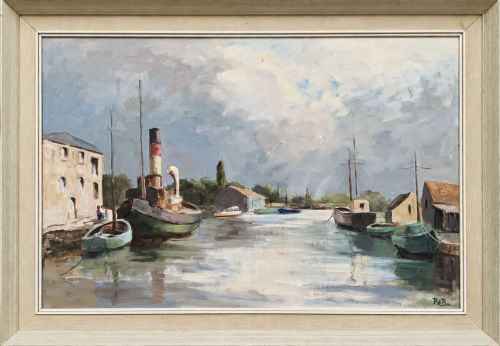
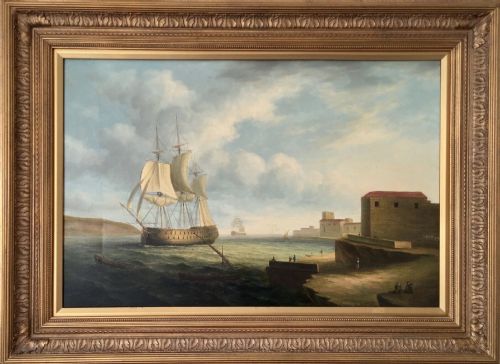
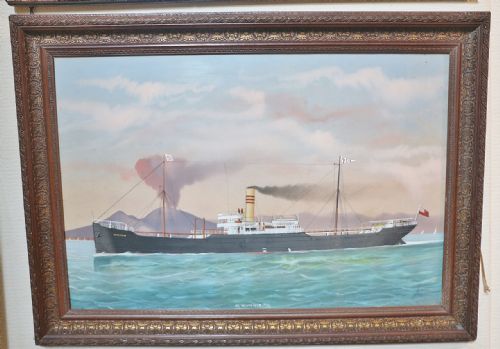
When you search for coastal wall decor, you encounter a selection of maritime art and objects ranging from nineteenth century marine paintings to mid-century seascapes. The pieces on this page lean heavily toward traditional maritime works, British Impressionism, and regional scenes from Cornwall and various harbours.
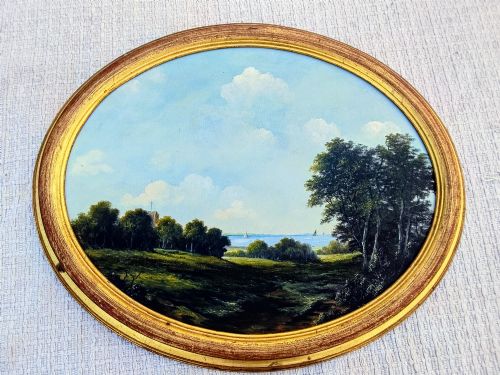
You are most likely to meet framed oil paintings on canvas or panel, alongside watercolours on paper and antique maps. These works capture specific locations such as Valletta Harbour, St Ives, and Whitby, as well as general coastal views and shipping scenes.
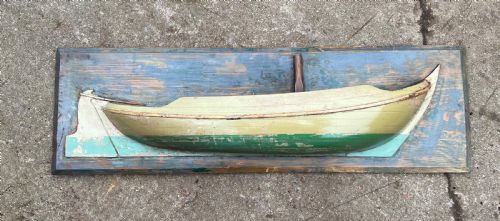
The category extends beyond flat art to include objects that mount directly on a wall, such as half models of boats and vintage yachting signs. Each item reflects a distinct period spanning the Victorian era through the mid-twentieth century.
Materials and techniques
Artists and makers utilised traditional supports including wood panels, stretched canvas, heavy paper, and glass to create these coastal pieces. Oil paint and watercolour provide the primary mediums for the paintings, often applied with varying brushwork to capture the movement of sea and sky.
Framing relies on wood, frequently gilded or oak, which preserves and structures the paintings and watercolours. Three-dimensional items like boat half models and wooden oars involve woodworking techniques suited to marine architecture and display.
Coastal Wall Decor Retail Price Guide 2026
Typical asking prices for coastal wall decor among the pieces listed under this phrase on Sellingantiques today, from the lower quarter to the upper quarter. They describe what is for sale here now, not the wider market.
A nineteenth century fisherman's catch painting hangs beside a tobacco room panel from an ocean liner.
Assessing quality
Quality in these maritime works rests upon the precision of the draughtsmanship and the artist's ability to render light and atmosphere over water. A stronger piece demonstrates confident handling of paint or watercolour, accurately capturing vessel rigging, architectural detail in harbour buildings, and the natural movement of waves.
The integrity of the materials also dictates the standing of a piece, from the stability of the wood panel or canvas to the preservation of the original paper in watercolours and maps. Works by documented painters carry greater artistic weight, while decorative items rely on the clarity of their craftsmanship and original surface condition.
James Hardy·Edward Matthew Elliott·Helen Layfield Bradley·Sir David Murray·Frank Wood·H. Hadfield Cubley·Charles Cameron Baillie·James Kinnear·Johan Jens Neumann·Paul-Louis Barruel·Thomas Bush Hardy·Arthur Joseph Meadows
The Coastal Wall Decor Glossary
- Impasto
- Paint applied thickly to a canvas or panel so that it stands out from the surface. This technique adds tactile texture to depictions of crashing waves or clouds.
- Marine painting
- Artwork that focuses primarily on ships, shipping, and coastal scenes. This genre encompasses historical naval battles, portraiture of specific vessels, and everyday harbour views.
- Half model
- A three-dimensional representation of the starboard or port side of a hull, built for wall mounting. Boatbuilders originally created these to plan vessel proportions before full construction.
- Panel
- A rigid flat support for a painting, typically made of wood rather than canvas. Artists frequently utilised wooden panels for smaller maritime works during the nineteenth century.
Coastal Wall Decor: Frequently Asked Questions
What periods do these coastal items cover?
The listings span from the nineteenth century through the Edwardian period and into the mid-twentieth century, including works from the 1920s, 1940s, and 1950s.
This broad timeline incorporates Victorian marine art alongside mid-century modern interpretations of coastal scenes.
How do I hang a half model?
Half models of boats are built specifically for wall display, usually featuring pre-mounted brackets or flush backing on the flat reverse side.
Ensure you use wall fixings appropriate for the weight of the solid wood structure.
How should I care for antique watercolours?
Watercolours on paper are sensitive to direct sunlight and high humidity, which can fade pigments and discolour the paper support.
Display them away from windows and ensure framing uses acid-free materials to protect the work.