

Coastal Boat Artwork Canvas
Coastal boat artwork canvas pieces capture maritime scenes in oil paint, offering buyers historical views of harbours, shipping lanes and coastal life.
Coastal Boat Artwork Canvas
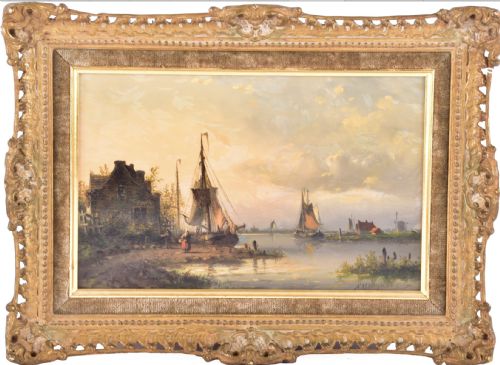
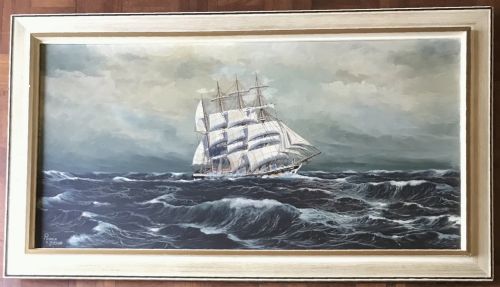
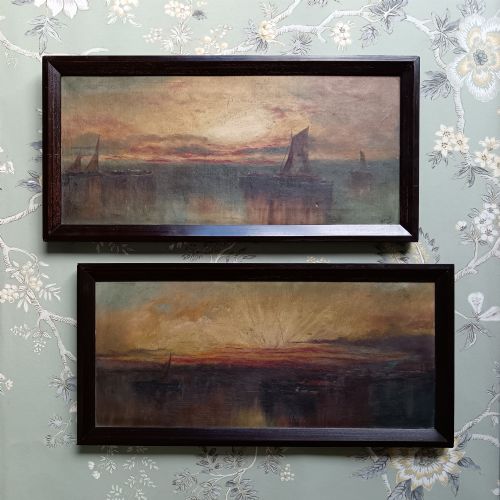
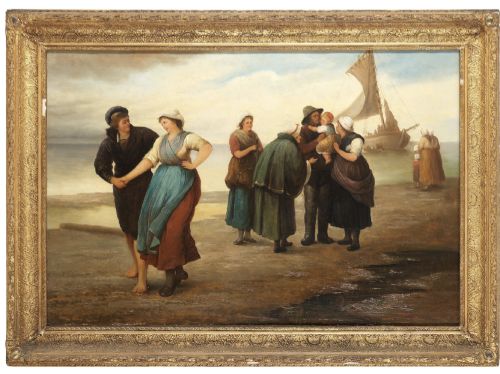
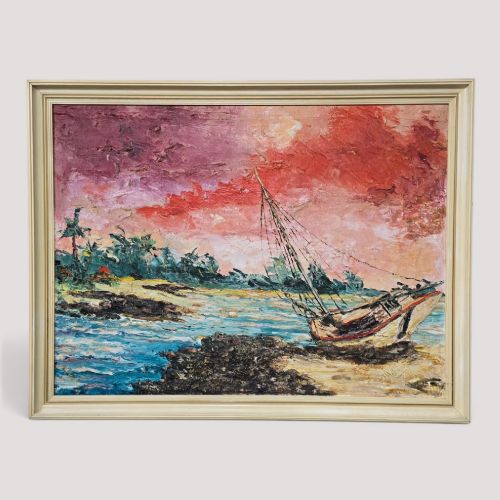
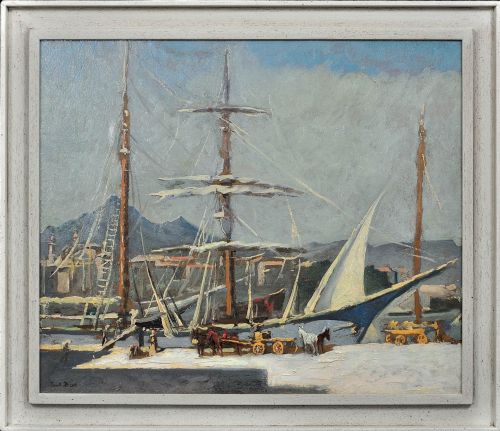
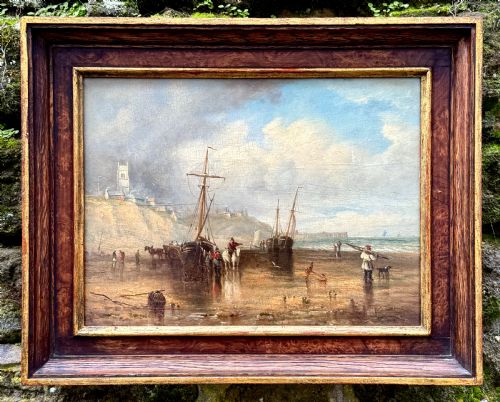
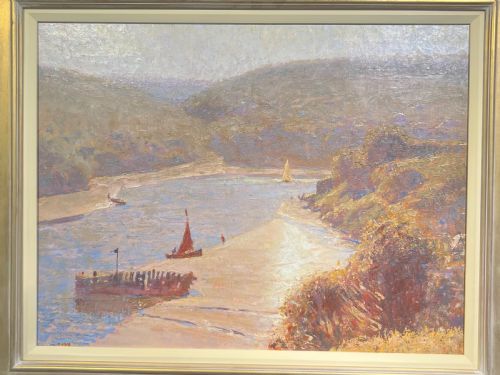
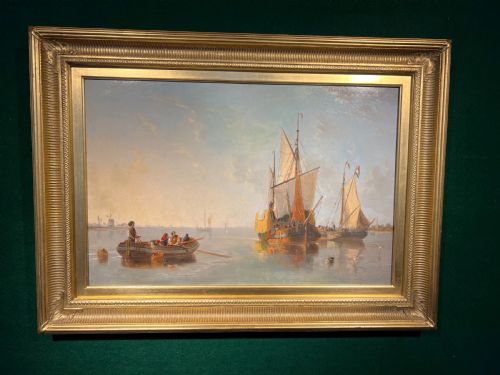
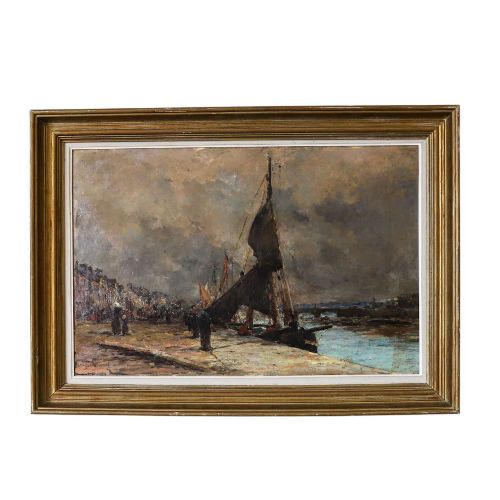
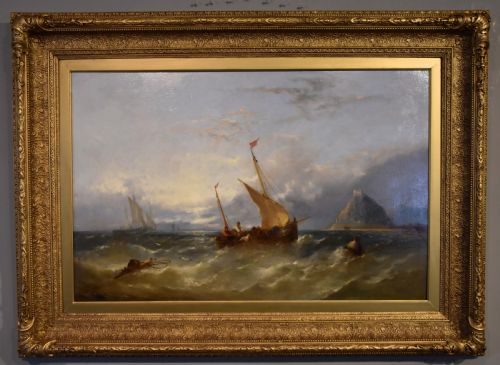
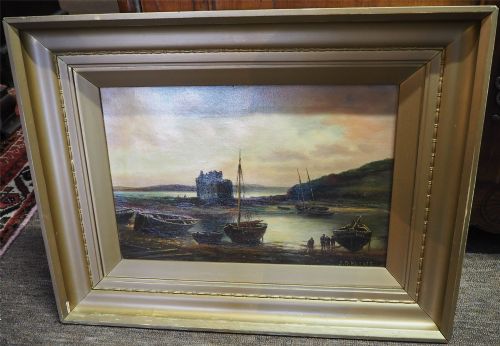
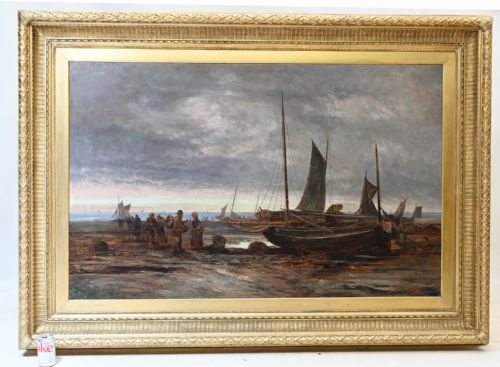
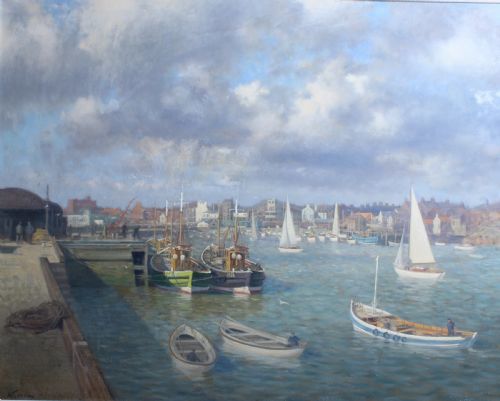
Buyers seeking coastal boat artwork canvas pieces encounter maritime paintings depicting harbours, sailing vessels, and coastal views from various eras. These works range from 19th-century Victorian scenes and British Impressionism to mid-century compositions.
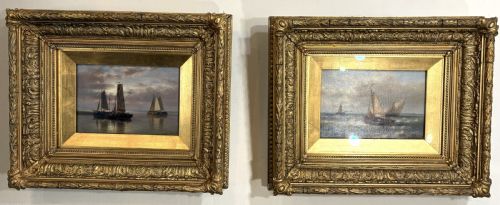
The selections on this page feature oil paintings executed on canvas or board, often housed within period frames such as giltwood. Subjects span specific locations like Cornish harbours and Dutch coasts, alongside broader marine landscapes.
Works originate from British, French, and Dutch schools, reflecting diverse regional interpretations of maritime life, fishing boats, and coastal architecture across different centuries.
Materials and construction methods
Artists applied oil paint to woven canvas or rigid board surfaces, building texture and depth through layered brushwork. Many canvases remain secured to their original stretchers and housed in carved giltwood or wood frames.
Pigments were mixed with oils to achieve luminous effects for water, sky, and sail, while gold leaf or gilt finishes were frequently applied to the surrounding frames to complement the maritime subject matter.
Several canvases record the exact moment fishing boats made a run for home before a gale.
Determinants of quality
Quality in these maritime paintings depends upon the artist's ability to render light, water movement, and atmospheric conditions convincingly. Superior works demonstrate confident brushwork and accurate perspective in rigging, hull structures, and coastal topography.
The condition of the painted surface, the presence of original or period-appropriate framing, and clear attribution or signatures by known marine artists distinguish finer examples within the medium.
Bonaventura Peeters·Thomas Creswick·John Wilson Carmichael·William Henry Williamson·Abraham Hulk·William Edward Webb·Charles Napier Hemy·Jean Baptiste Olive·Gustave De Breanski·Edward Seago·Stephen J Renard·George Gregory
The Coastal Boat Artwork Canvas Glossary
- Canvas
- A heavy woven fabric used as a surface for oil painting. It is typically stretched tightly over a wooden frame before application of the ground and pigment.
- Giltwood
- Wood that has been coated with a thin layer of gold leaf or gilt powder. This material is frequently found on traditional frames enclosing 19th-century marine paintings.
- Seascape
- A work of art depicting the sea, coastal views, ships, or marine engagements. These subjects form the core of traditional maritime painting.
- Impressionism
- An art style focused on capturing the visual impression of the moment, particularly shifting light and colour. British and French practitioners applied this approach to coastal scenes.
- Stretcher
- The wooden framework that holds a painted canvas taut. Period stretchers help date and authenticate older artworks.
Coastal Boat Artwork Canvas: Frequently Asked Questions
What periods do these paintings come from?
The available artworks span from the 17th century through the Victorian era and into the mid-20th century. Many pieces originate from the 19th century and the 1950s or 1960s.
Specific dates are often recorded through artist signatures, exhibition dates, or stylistic indicators inherent to the period frame and canvas construction.
How should I care for an oil painting on canvas?
Keep oil paintings out of direct sunlight and away from rapid temperature fluctuations to prevent the canvas from sagging or the oil paint from cracking. Dust the surface gently with a soft, dry brush.
Avoid using liquid cleaners on the painted canvas or the giltwood frame, as moisture damages traditional oil layers and gilding.
How can I tell a Victorian marine painting apart from a mid-century one?
Victorian marine art typically employs detailed realism, dramatic lighting, and elaborate giltwood frames. Mid-century works often lean towards impressionistic brushwork or simplified abstract forms.
Pictorial subject matter, canvas texture, and framing styles provide clear clues to the era in which the artwork was created.
Were these artworks created outdoors?
Many 19th-century maritime scenes were composed in studios using preliminary sketches drawn on location at harbours and coastal cliffs. By the late 19th and mid-20th centuries, artists increasingly painted en plein air to capture immediate light conditions.
The brushwork and treatment of the atmosphere often reflect whether the artist worked primarily from direct observation or studio synthesis.