

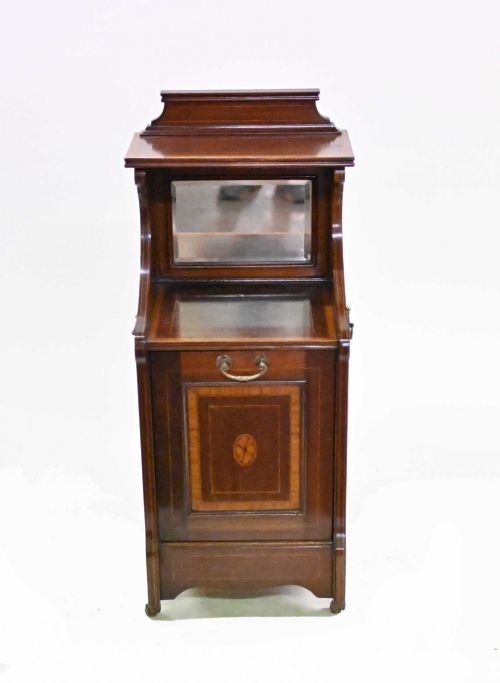
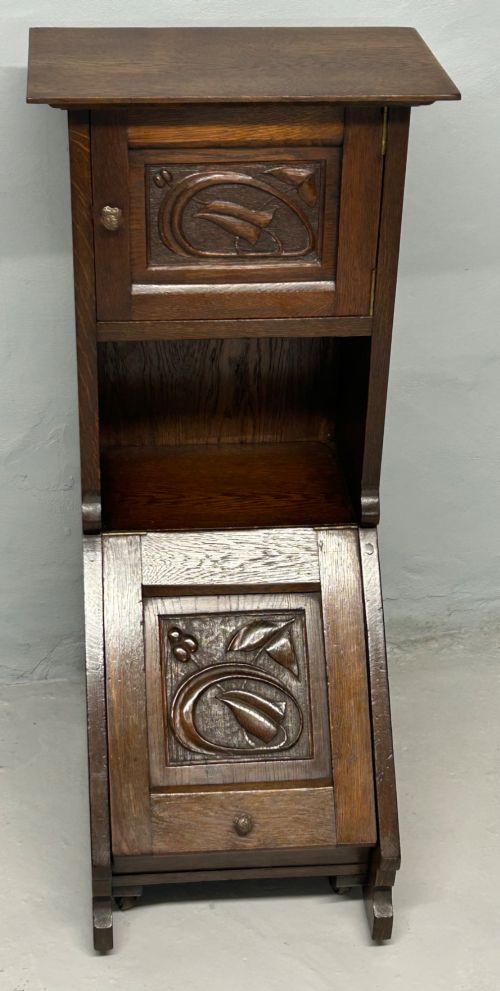


Coal Purdonium Cabinet
A coal purdonium cabinet hides the hearth's mess behind polished wood and brass.
Coal Purdonium Cabinet
A coal purdonium cabinet is a fireside storage piece designed to keep fuel tidy beside the hearth. These items combine the practical function of a coal box with the enclosed form of a small cabinet.
Most examples found here date from the Victorian and Edwardian eras, spanning the late nineteenth and early twentieth centuries. They appear most frequently in oak, mahogany, and walnut, often styled to match the reception rooms of their period.
The form typically incorporates a sloping drop-front or a tilting scuttle mechanism alongside a compartment for a shovel. Some pieces present as straightforward fireside boxes, while others take the shape of elaborate freestanding cabinets.
How they were made
Cabinetmakers utilised solid timbers such as oak, mahogany, and walnut, frequently applying rosewood veneers and marquetry inlay for decorative effect. Carved details and moulded panels appear across Victorian and Edwardian workshop productions.
Metal components played a structural and decorative role, with heavy brass handles, hinges, and liners fitted to contain the coal dust. Ormolu mounts and iron detailing also feature on select revival pieces from the period.
Coal Purdonium Cabinet Retail Price Guide 2026
Typical asking prices for coal purdonium cabinet among the pieces listed under this phrase on Sellingantiques today, from the lower quarter to the upper quarter. They describe what is for sale here now, not the wider market.
What varies in quality
The standard of timber selection and cabinet construction dictates the grade of a piece, separating straightforward utilitarian boxes from elaborately fitted drawing-room furniture. Finer examples display precise marquetry inlay, well-figured veneers, and substantial carved mouldings.
Hardware and interior fittings further distinguish the range, as heavier brass linings, robust drop-front hinges, and original matching shovels indicate a higher tier of domestic production.
The Coal Purdonium Cabinet Glossary
- Purdonium
- A specialised coal container featuring a sloping front and a shovel compartment. This term specifically denotes a Victorian domestic invention designed to store fuel cleanly in a parlour.
- Drop front
- A hinged panel that lowers to grant access to the interior storage space. This mechanism allows coal to slide forward for easy retrieval.
- Marquetry inlay
- Decorative patterns formed by fitting contrasting veneers into a wood base. This technique creates floral or geometric motifs across the cabinet facade.
- Ormolu
- Gilt bronze mounts applied for decorative effect on furniture. This finish adds bright metallic contrast to dark woods like mahogany and rosewood.
Coal Purdonium Cabinet: Frequently Asked Questions
How do I use one today?
Many people use these cabinets to store fireplace accessories, kindling, or logs beside a working hearth. Others adapt them as small side tables or hallway storage.
The enclosed metal-lined interior protects surrounding floors and furniture from dust and debris.
How do I tell Victorian from Edwardian pieces?
Victorian cabinets often feature heavier carved details, darker timbers like rosewood or walnut, and more ornate revival styles. Marquetry and ormolu mounts are common on these earlier examples.
Edwardian pieces tend to lean towards lighter oak or mahogany with simpler lines, reflecting the brighter interiors of the early twentieth century.
Are original shovels usually included?
Some surviving cabinets retain their original brass or metal shovels, which fit into a dedicated side sleeve or interior compartment. Many pieces have lost their original shovel over the decades of use.
The presence of the matching shovel adds completeness to the piece.