



Coal Fire Tools
These coal fire tools are hardworking hearth furniture built to manage a solid fuel fire, combining brass, steel, and iron to outfit a period fireplace.
Coal Fire Tools
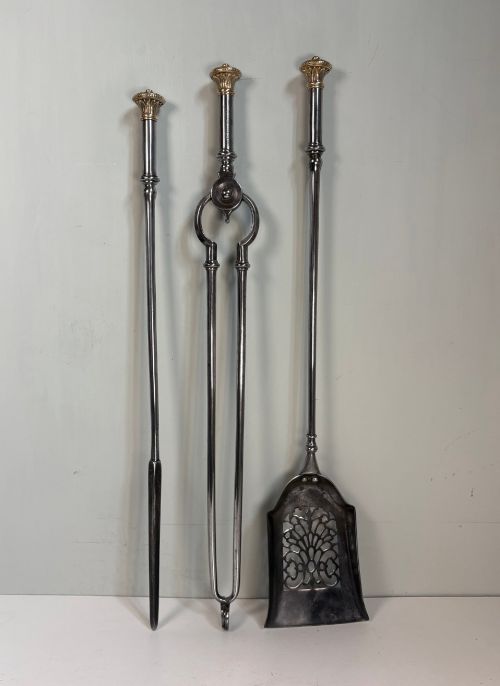
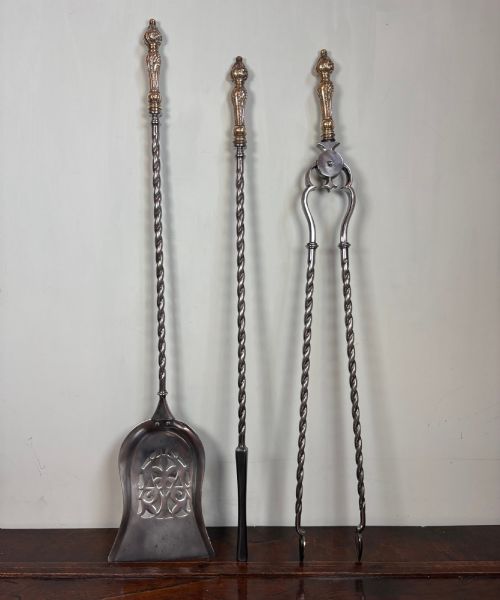
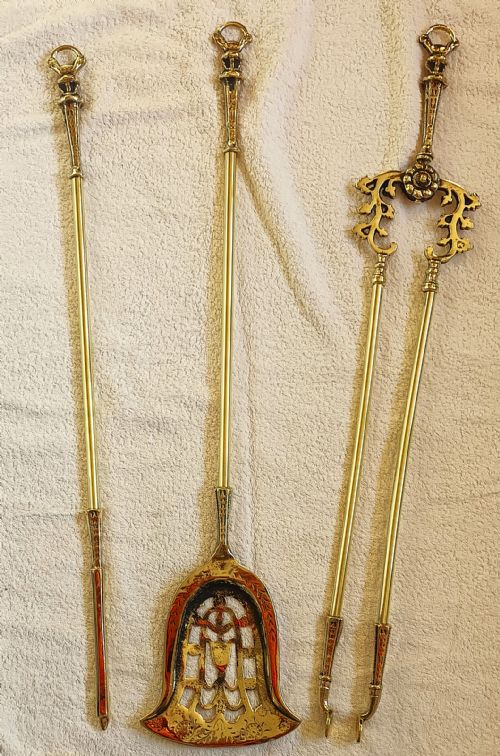
When you search for coal fire tools, you encounter functional sets designed to tend a domestic hearth. These groups typically comprise a shovel, a poker, and tongs, styled to sit neatly together by the grate.
The versions most commonly met on this page date from the nineteenth century and the Victorian era. They appear in combinations of polished steel and warm brass, reflecting the materials of their period.
Originating as practical workshop output for English homes, these sets range from sturdy wrought iron formats to decorative brass companion sets. Each piece serves a direct mechanical purpose in moving coal and ash.
How they were made
Makers fashioned these pieces predominantly from brass, steel, and iron using traditional metalworking techniques. Forged iron and wrought iron provided structural strength for pokers and shovels that faced intense heat.
Brass featured heavily for visual warmth, often cast into handles or shaped into companion stands. Polished steel surfaces offered a bright finish that required careful forging and finishing by the smith or metalworker.
Coal Fire Tools Retail Price Guide 2026
Typical asking prices for coal fire tools among the pieces listed under this phrase on Sellingantiques today, from the lower quarter to the upper quarter. They describe what is for sale here now, not the wider market.
Listings feature items spanning the eighteenth century through to the early twentieth century, with a heavy concentration of Victorian brass and steel goods.
What varies in quality
The distinction between standard utility sets and superior examples lies in the weight of the metal and the finish of the handles. Better sets display crisp casting in the brass elements and balanced proportions across all three implements.
Durability in construction separates robust pieces from lighter alternatives. A well-made set maintains structural rigidity in the shaft of the poker and a secure joint where handle meets stem.
The Coal Fire Tools Glossary
- Companion set
- A collection of fireplace implements displayed together on a stand or resting hook. This grouping usually includes a poker, shovel, and tongs.
- Coal shovel
- A flat-bladed implement designed for lifting and placing fuel onto a burning fire. The shallow pan helps control the transfer of small coal pieces.
- Poker
- A rigid metal rod used for stirring and breaking up fuel in the grate. It allows better airflow through the burning coals.
- Wrought iron
- Tough, malleable iron worked by hammering while hot. This material provides high tensile strength for heavy-duty hearth implements.
- Polished steel
- A bright, reflective metal surface achieved through abrasive smoothing. It offers a clean, formal appearance often seen on Regency and nineteenth-century pieces.
Coal Fire Tools: Frequently Asked Questions
What tools come in a standard set?
A standard set generally includes a coal shovel, a poker, and tongs or a second iron. These three pieces cover the basic tasks of moving fuel, stirring the coals, and handling debris.
Historically, they were designed to work together as a cohesive unit beside the hearth. They often hung from a dedicated stand or rested on a fender.
How do I date a set of fire tools?
Dating relies on the prevailing style of the handles, the choice of metals, and manufacturing marks where present. Victorian sets often favour heavy brass casting, while earlier Georgian examples lean towards bright polished steel.
Examining the construction methods at the joints provides further clues to the period. Hand-forged iron elements generally indicate older craftsmanship compared to later mass-produced alternatives.
Are these tools suitable for daily use?
Most antique metal tools remain structurally sound and capable of handling a working fireplace. Wrought iron and steel parts withstand heat and physical pressure quite well.
Care should be taken with older brass handles to preserve their original finish. Regular cleaning helps maintain the metal without wearing away the historic surface.
How should I clean brass and steel tools?
Brass components respond well to gentle cleaning with a soft cloth to remove dust and soot. Avoid harsh chemical dips that strip away the aged patina built up over decades.
Steel parts benefit from a very light application of oil to prevent surface oxidation in damp environments. Keeping them dry is the best preservation method.