
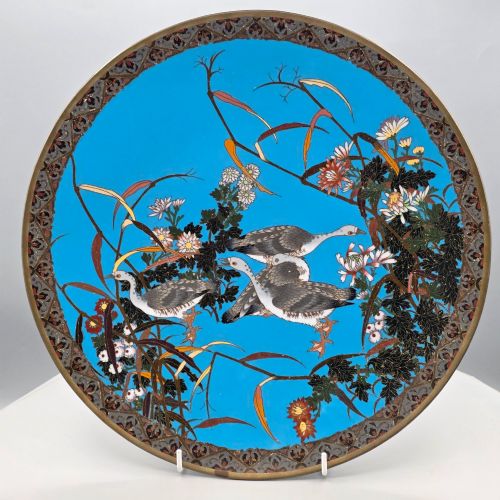
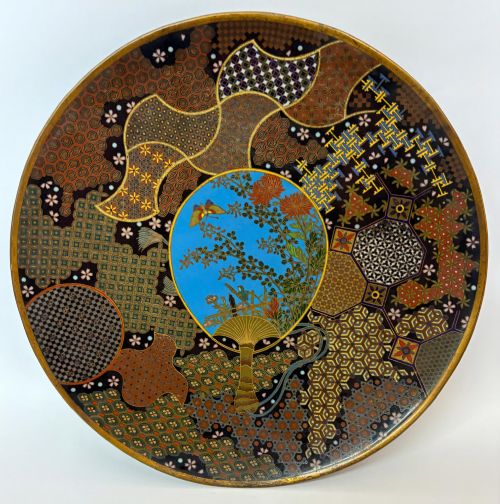


Cloisonne Enamel Wall Platter
When you search for a cloisonne enamel wall platter, you uncover substantial Japanese metalwork chargers and plates from the nineteenth century designed for display.
Cloisonne Enamel Wall Platter
A cloisonne enamel wall platter typically takes the form of a large charger or decorative plate intended for vertical display rather than table service. These pieces emerge predominantly from the Meiji period and the late Edo period, spanning decades from eighteen sixty through to nineteen hundred.
The objects measure from medium plate sizes up to massive fifty centimetre chargers depicting natural scenes, mythical beasts, and auspicious symbols. Common pictorial subjects include dragons, koi fish, cranes, ho-o birds, and landscapes set against detailed backgrounds.
Most items originate from Japanese workshops operating during the nineteenth century, utilising copper and porcelain bases decorated with intricate wirework and vitreous paste. Collectors encounter variants such as totai shippo pieces incorporating tree bark effects alongside standard metal vessels.
How They Were Made
Artisans construct a cloisonne enamel wall platter by soldering thin brass or bronze wire onto a copper or porcelain body to form compartments known as cloisons. These wire outlines map out complex motifs like dragons, flowers, and birds before the application of coloured enamels.
Workers fill the individual cells with vitreous paste using precise colour gradients, then fire the vessel in a kiln multiple times to fuse the glass-like substance. Grinding and polishing the hardened surface brings the metal wires and coloured enamel into a smooth, unified plane.
What Varies in Quality
Quality rests upon the fineness of the wirework and the density of the cloison pattern across the surface of the plate. Finer wires allow for intricate detail in subjects like feathers, scales, and human figures, whereas coarser execution yields simpler, broader fields of enamel.
The clarity and depth of the coloured enamel pastes dictate the visual success of the charger. Superior examples display subtle tonal shading and flawless firing without pitting or cloudiness in the glass fields, while lesser items show uneven colour distribution.
The Cloisonne Enamel Wall Platter Glossary
- Cloisonne
- A decorative metalwork technique where fine wire creates raised partitions that hold coloured enamel pastes. The term also describes objects made using this specific method.
- Charger
- A large ornamental plate traditionally utilised for display on walls or sideboards rather than dining purposes. These vessels offer wide surfaces for pictorial enamel scenes.
- Totai shippo
- A specific Japanese technique where enamel is applied over a translucent porcelain base rather than a solid metal body. This method creates unique visual effects when light passes through the vessel.
- Ho-o bird
- A mythical phoenix symbol frequently depicted in traditional Japanese art alongside floral motifs and auspicious emblems. The creature represents virtue and grace in decorative compositions.
- Meiji period
- The historical Japanese era spanning from eighteen sixty-eight to nineteen twelve characterised by intensive craft production for international export markets.
Cloisonne Enamel Wall Platter: Frequently Asked Questions
How do I hang a heavy charger safely?
Large chargers require robust, adjustable spring-clip wall hangers designed to distribute weight evenly around the rim without slipping. Ensure the wall fixing engages securely with brickwork or stud framing to support the substantial metal and enamel mass.
Position the platter away from direct sunlight and heat sources to protect the delicate enamel surfaces from thermal stress and fading over decades of display.
What is the difference between chargers and plates?
Chargers are substantially larger decorative platters, often measuring forty or fifty centimetres across, whereas plates generally occupy a more modest diameter suitable for intimate cabinet display. Both forms utilise identical wirework and enamel techniques but serve different visual scales on a wall.
Larger chargers frequently command central placement in a room due to their dominant pictorial compositions featuring dragons, mountains, or complex fauna.
How should I clean a cloisonne wall platter?
Dust the surface gently with a soft, dry microfibre cloth to remove ambient particles without abrading the polished metal wires or the glass enamel. Avoid using water, liquid cleaners, or chemical solvents that might seep into micro-fissures or discolour exposed copper elements.
Regular light maintenance preserves the glossy finish of the vitreous paste and keeps the brass wire partitions bright and distinct.
How do I identify Edo period pieces?
Late Edo period pieces date from around eighteen sixty and often exhibit heavier copper foundations combined with dense, rich enamel colour palettes. Artisans of this era laid down robust wirework and deep pigments that distinguish their output from later Meiji production.
Examining the backplate and the style of the pictorial subject helps differentiate these earlier vessels from nineteenth-century export ware.
What do dragon motifs represent?
Dragons symbolize power, wisdom, and protection in traditional East Asian iconography, making them a popular subject for skilled artisans. These serpentine creatures appear coiling across the centre of large chargers, rendered in detailed wire and contrasting enamel colours.
Single-dragon compositions place the mythological beast as the sole focal point against a plain or patterned background field.