

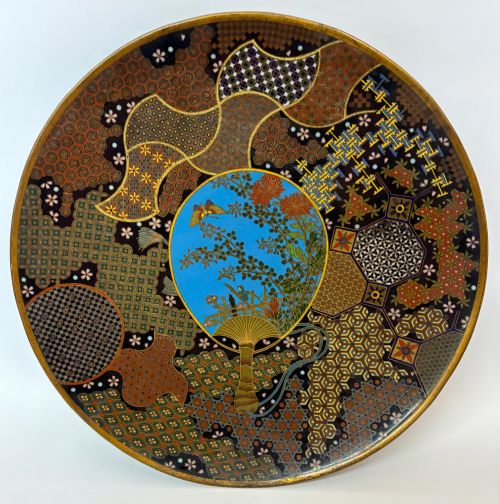


Cloisonne Display Plate
A cloisonne display plate brings together intricate metalwork and coloured enamels, offering rich historic detail for any wall or cabinet.
Cloisonne Display Plate
A cloisonne display plate forms part of a traditional group of decorative chargers and plaques designed primarily for visual appreciation rather than daily use. When exploring a cloisonne display plate, one encounters large, circular vessels that range from moderate cabinet sizes to substantial chargers spanning fifty centimetres across. These pieces function as focal points in a room, drawing the eye to detailed pictorial subjects.
The objects on this page originate predominantly from the Meiji and Edo periods of Japan, alongside examples attributed to the Qing Dynasty and the eighteenth century. Buyers are most likely to meet Meiji period Japanese works featuring elaborate motifs of birds, dragons, and floral scenes. Such items showcase the technical heights achieved by Asian metalworkers during the nineteenth century.
Surviving formats span decorative chargers, trays, and plaques, each shaped to present a flat or gently sloping surface for intricate designs. Common pictorial elements include leaping koi, phoenixes, dragons, and natural scenery like Mount Fuji alongside chrysanthemums. These varied forms offer collectors distinct ways to display traditional Asian craftsmanship in domestic interiors.
Materials and construction
The foundation of these pieces relies on metal bases of copper or brass, shaped into plates and chargers before receiving surface decoration. Artisans also utilised porcelain cores for specific variants known as totai shippo, applying enamel directly onto ceramic bodies to achieve distinctive textures like tree bark effects.
Thin wires of brass or copper are soldered onto the metal or porcelain substrate to form raised compartments, known as cloisons, which outline the chosen motif. Craftsmen then fill these individual cells with coloured enamel pastes before firing the piece in a kiln to vitrify the glass-like surface.
Following the firing process, the entire surface is ground down and polished until the metal wire rims and the hardened enamel rest on a single smooth plane. This meticulous finishing step creates the characteristic tactile quality that defines fine enamelwork from this tradition.
Cloisonne Display Plate Retail Price Guide 2026
Typical asking prices for cloisonne display plate among the pieces listed under this phrase on Sellingantiques today, from the lower quarter to the upper quarter. They describe what is for sale here now, not the wider market.
Listings feature items spanning the eighteenth century, the Edo period, and the Meiji period, constructed from copper, brass, porcelain, and wood.
Assessing quality in cloisonne work
Quality rests upon the precision and thinness of the wirework used to delineate the subject, where tighter and more complex patterns demand greater skill. Finer examples display a level of detail in feathers, scales, and foliage that requires immense patience from the artisan.
The depth and consistency of the enamel colours also separate standard items from superior pieces, with advanced work showing subtle shading and smooth, unblemished surfaces. Purity in the vitrified paste without cloudiness or accidental pitting indicates superior kiln control during production.
The Cloisonne Display Plate Glossary
- Cloisonne enamel
- A decorative metalwork technique where fine wire creates small compartments filled with coloured paste and fired. This method allows artisans to produce complex pictorial designs with distinct outlines.
- Charger
- A large decorative plate intended for display on a wall or stand rather than for serving food. These substantial vessels provide a wide canvas for intricate enamel scenes.
- Totai shippo
- A specific Japanese technique involving porcelain bases decorated with cloisonne wires and enamels. This style often mimics natural textures such as tree bark.
- Meiji period
- The era of Japanese history spanning from 1868 to 1912, noted for a flourishing of decorative arts for export. Pieces from this time frequently demonstrate technical mastery in metalwork.
- Edo period
- The period in Japanese history lasting from 1603 to 1867, preceding the Meiji era. Surviving works from the late phases of this time show early developments in large-scale decorative chargers.
Cloisonne Display Plate: Frequently Asked Questions
How were cloisonne display plates used?
These large plates and chargers were created primarily for visual display rather than practical utility in serving food. Owners placed them on stands or mounted them on walls to showcase intricate artistry.
In historic interiors, such pieces served as prominent decorative accents that reflected the owner's taste for fine craftsmanship and exotic goods.
How do I hang a heavy charger?
Displaying a heavy metal or porcelain charger requires specialist wall-mounting hardware designed to support the specific weight of the object securely. Spring-loaded plate hangers with rubber-coated grips help distribute the load evenly across the rim.
Alternatively, many collectors prefer sturdy wooden display stands placed securely on tabletops or inside cabinets to avoid wall fixings altogether.
How do I tell Meiji period pieces apart?
Meiji period works often feature highly ambitious pictorial designs, such as leaping koi or single dragons, executed with exceptionally fine wirework and vibrant enamels. These pieces frequently date from the late nineteenth century when Japanese craftsmanship reached international markets.
Earlier items from the Edo period or Qing Dynasty tend to employ different colour palettes and heavier baseline construction methods without the intense export-driven refinement of later decades.
What is totai shippo?
Totai shippo describes a distinct variation where the core material is porcelain rather than copper or brass. Artisans applied the usual wire cells and enamel pastes directly onto the ceramic body.
This method allowed makers to create textured surface effects, such as simulated tree bark, while retaining the colourful appearance of traditional enamelwork.